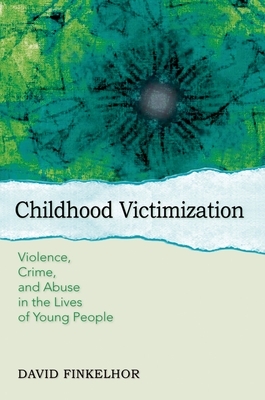
Childhood Victimization : Violence, crime, and abuse in the lives of young people
Book Details
Format
Hardback
Book Series
Interpersonal Violence
ISBN-10
0195342852
ISBN-13
9780195342857
Publisher
Oxford University Press Inc
Imprint
Oxford University Press Inc
Country of Manufacture
US
Country of Publication
GB
Publication Date
Apr 10th, 2008
Print length
248 Pages
Weight
490 grams
Dimensions
24.20 x 16.00 x 2.30 cms
KSh 17,450.00
Temporarily out of stock, due soon
0 in stock
Delivery Location
Delivery fee: Select location
Secure
Quality
Fast
Children are the most criminally victimized segment of the population, and a substantial number face multiple, serious "poly-victimizations" during a single year. Despite the fact that the priority emphasis in academic research and government policy has traditionally gone to studying juvenile delinquents, children actually appear before authorities more frequently as victims than as offenders. At the same time, the media and many advocates have failed to note the good news: rates of sexual abuse, child homicide, and many other forms of victimization declined dramatically after the mid-1990s, and some terribly feared forms of child victimization, like stereotypical stranger abduction, are remarkably uncommon. The considerable ignorance about the realities of child victimization can be chalked up to a field that is fragmented, understudied and subjected to political demagoguery.In this persuasive book, David Finkelhor presents a comprehensive new vision to encompass the prevention, treatment and study of juvenile victims, unifying conventional subdivisions like child molestation, child abuse, bullying and exposure to community violence. Developmental victimology, his term for this integrated perspective, looks at child victimization across childhood''s span and yields fascinating insights about how to categorize juvenile victimizations, how to think about risk and impact, and how victimization patterns change over the course of development. The book also provides a valuable new model of society''s response to child victimization - what Finkelhor calls the Juvenile Victim Justice System - and a fresh way of thinking about barriers that victims and their families encounter when seeking help. These models will be very useful to anyone seeking to improve the way we try to help child victims. Crimes against children still happen far too often, but by proposing a new framework for thinking about the issue, Childhood Victimization opens a promising door to reducing its frequency and improving the response. Professionals, policymakers, and child advocates will find this paradigm-shifting book to be a valuable addition to their shelves.
Children are the most criminally victimized segment of the population, and a substantial number face multiple, serious "poly-victimizations" during a single year. Despite the fact that the priority emphasis in academic research and government policy has traditionally gone to studying juvenile delinquents, children actually appear before authorities more frequently as victims than as offenders. At the same time, the media and many advocates have failed to note the good news: rates of sexual abuse, child homicide, and many other forms of victimization declined dramatically after the mid-1990s, and some terribly feared forms of child victimization, like stereotypical stranger abduction, are remarkably uncommon. The considerable ignorance about the realities of child victimization can be chalked up to a field that is fragmented, understudied and subjected to political demagoguery. In this persuasive book, David Finkelhor presents a comprehensive new vision to encompass the prevention, treatment and study of juvenile victims, unifying conventional subdivisions like child molestation, child abuse, bullying and exposure to community violence. Developmental victimology, his term for this integrated perspective, looks at child victimization across childhood's span and yields fascinating insights about how to categorize juvenile victimizations, how to think about risk and impact, and how victimization patterns change over the course of development. The book also provides a valuable new model of society's response to child victimization - what Finkelhor calls the Juvenile Victim Justice System - and a fresh way of thinking about barriers that victims and their families encounter when seeking help. These models will be very useful to anyone seeking to improve the way we try to help child victims. Crimes against children still happen far too often, but by proposing a new framework for thinking about the issue, Childhood Victimization opens a promising door to reducing its frequency and improving the response. Professionals, policymakers, and child advocates will find this paradigm-shifting book to be a valuable addition to their shelves.
Get Childhood Victimization by David Finkelhor at the best price and quality guaranteed only at Werezi Africa's largest book ecommerce store. The book was published by Oxford University Press Inc and it has 248 pages.
Customers Who Bought This Also Bought

Cobalt Red
KSh 2,900.00

It Ends With Us
KSh 1,800.00

Cobalt Red
KSh 4,500.00

World After Gaza
KSh 2,350.00

Nightbloom
KSh 2,350.00

Lost Country
KSh 2,350.00

Egypt''s Long Revolution
KSh 10,450.00

Peepshow
KSh 2,000.00

Fix the System, Not the Women
KSh 1,800.00

The Girl On The Train
KSh 2,150.00

Tolerating State Violence
KSh 7,900.00

Nightshade Mother
KSh 2,000.00