
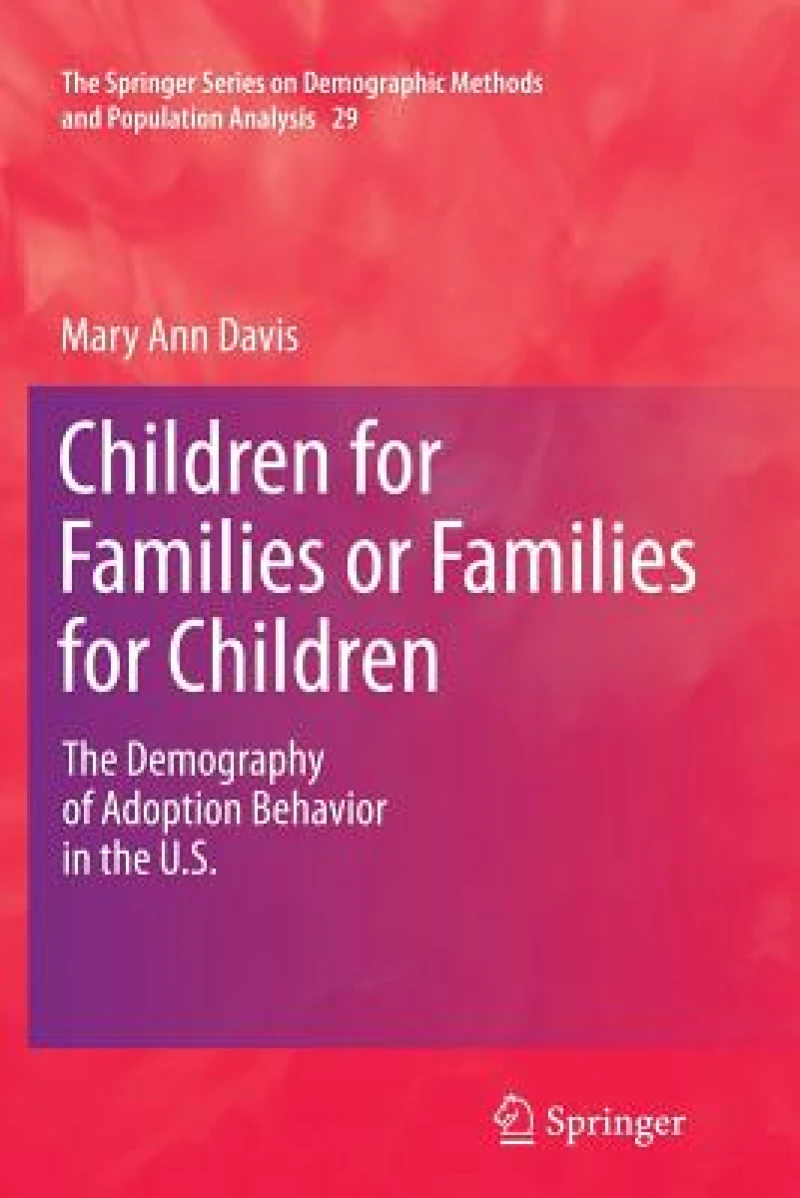
Children for Families or Families for Children : The Demography of Adoption Behavior in the U.S.
2011 ed.
Book Details
Delivery Location
Delivery fee: Select location
Do adoptions provide children for families or families for children? This book analyzes the complex interactions between adopters and adoptees using historical and current data. Who are the preferred parents and children, both domestically and internationally? How do the types of adoptions-domestic adoptions, private and public through the foster care system, and intercountry adoptions-differ? Domestic trends include a shift to open adoptions and a notable increase in "hard to place", foster care adoptions-typically older, siblings, minorities, with physical, educational, or emotional challenges. Adoptive parents are increasingly all ages (including grandparents); all types of marriages (single, married and same-sex couples); all income levels, with subsidized adoptions for children who would otherwise remain in foster or institutional care. Intercountry adoptions have followed waves, pushed by wars and political or economic crises in the sending country, and pulled by the increasing demand from the U. S. Currently there is a decrease in intercountry adoptions from Asia and Eastern Europe with a possible fifth wave from Africa with the greatest number from Ethiopia. This is a resource for family sociologists, demographers, social workers, advocates for children and adoptive parents, as well as those who are interested in the continuing research in adoptions.
Get Children for Families or Families for Children by at the best price and quality guaranteed only at Werezi Africa's largest book ecommerce store. The book was published by Springer and it has pages.

