
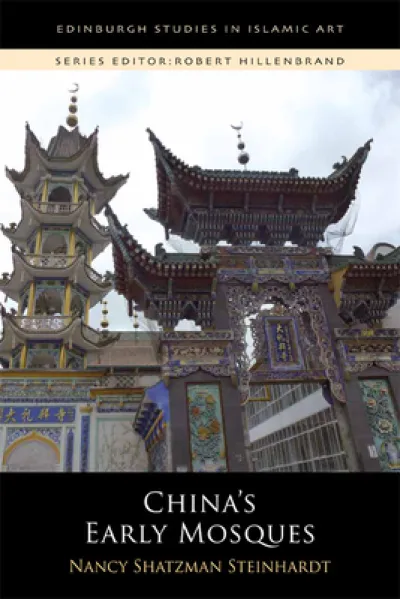
China''s Early Mosques
Book Details
Format
Paperback / Softback
Book Series
Edinburgh Studies in Islamic Art
ISBN-10
1474437214
ISBN-13
9781474437219
Publisher
Edinburgh University Press
Imprint
Edinburgh University Press
Country of Manufacture
GB
Country of Publication
GB
Publication Date
Apr 4th, 2018
Print length
368 Pages
Weight
910 grams
Dimensions
17.50 x 27.30 x 2.70 cms
Product Classification:
Architecture: religious buildingsReligious buildingsHistory of architecture
Ksh 7,900.00
Werezi Extended Catalogue
0 in stock
Delivery Location
Delivery fee: Select location
Secure
Quality
Fast
Focusing on 70 of China’s earliest mosques and a few tombs, this book explores the convergence of Muslim prayer space and the Chinese architectural tradition.
Received an honorable mention at the 2016 British-Kuwait Friendship Society Book Prize
What happens when a monotheistic, foreign religion needs a space in which to worship in China, a civilisation with a building tradition that has been largely unchanged for several millennia? The story of this extraordinary convergence begins in the 7th century and continues under the Chinese rule of Song and Ming, and the non-Chinese rule of the Mongols and Manchus, each with a different political and religious agenda. The author shows that mosques, and ultimately Islam, have survived in China because the Chinese architectural system, though often unchanging, is adaptable: it can accommodate the religious requirements of Buddhism, Daoism, Confucianism, and Islam.
About the series: Edited by Robert Hillenbrand, books in the Edinburgh Studies in Islamic Art series offer readers easy access to the most up-to-date research across the whole range of Islamic art, representing various parts of the Islamic world, media and approaches. Books in the series are beautifully illustrated academic monographs of intellectual distinction that mark a significant advance in the field.
What happens when a monotheistic, foreign religion needs a space in which to worship in China, a civilisation with a building tradition that has been largely unchanged for several millennia? The story of this extraordinary convergence begins in the 7th century and continues under the Chinese rule of Song and Ming, and the non-Chinese rule of the Mongols and Manchus, each with a different political and religious agenda. The author shows that mosques, and ultimately Islam, have survived in China because the Chinese architectural system, though often unchanging, is adaptable: it can accommodate the religious requirements of Buddhism, Daoism, Confucianism, and Islam.
About the series: Edited by Robert Hillenbrand, books in the Edinburgh Studies in Islamic Art series offer readers easy access to the most up-to-date research across the whole range of Islamic art, representing various parts of the Islamic world, media and approaches. Books in the series are beautifully illustrated academic monographs of intellectual distinction that mark a significant advance in the field.
Get China''s Early Mosques by at the best price and quality guaranteed only at Werezi Africa's largest book ecommerce store. The book was published by Edinburgh University Press and it has pages.

