
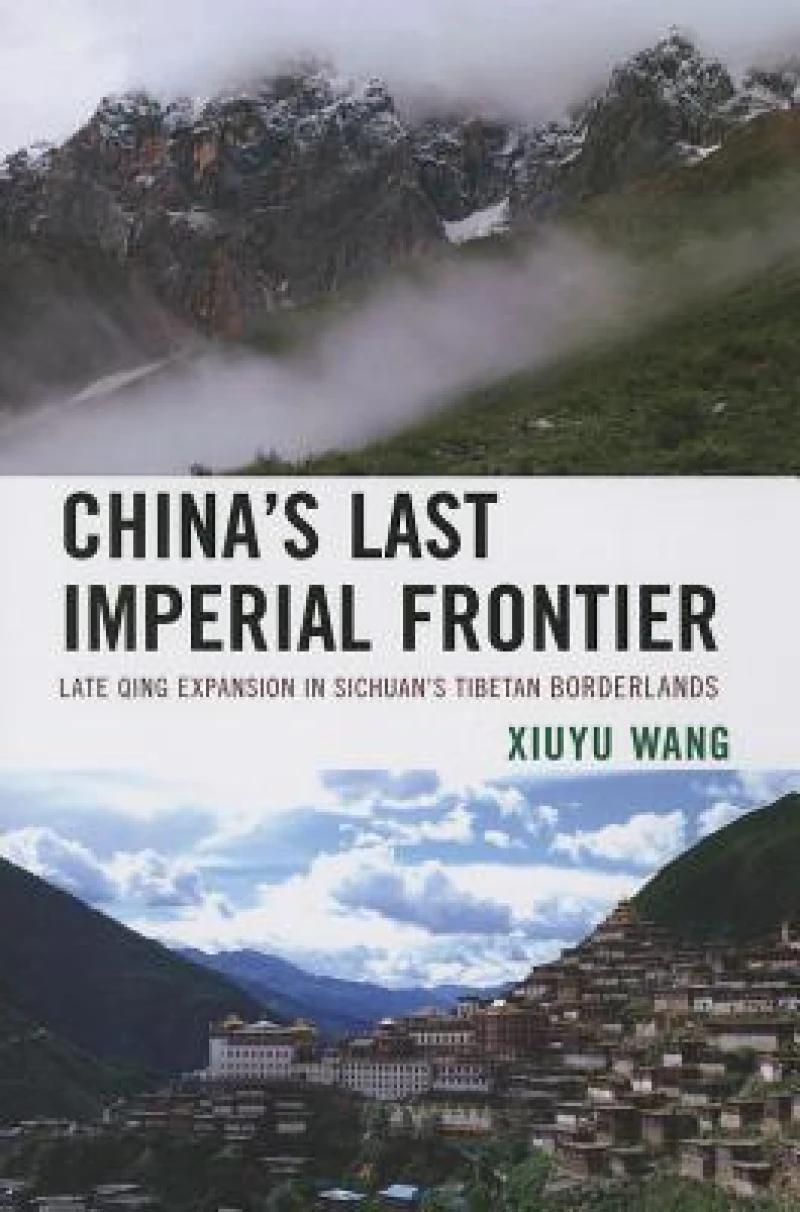
China's Last Imperial Frontier : Late Qing Expansion in Sichuan's Tibetan Borderlands
by
Xiuyu Wang
Book Details
Format
Paperback / Softback
ISBN-10
0739184598
ISBN-13
9780739184592
Publisher
Bloomsbury Publishing Plc
Imprint
Lexington Books
Country of Manufacture
GB
Country of Publication
GB
Publication Date
May 3rd, 2013
Print length
308 Pages
Weight
446 grams
Dimensions
22.60 x 15.20 x 2.50 cms
Product Classification:
Asian historyModern history to 20th century: c 1700 to c 1900International relations
Ksh 10,900.00
Manufactured on Demand
0 in stock
Delivery Location
Delivery fee: Select location
Secure
Quality
Fast
China's Last Imperial Frontier explores imperial China's frontier expansion in the Tibetan borderlands during the last decades of the Qing. The empire mounted a series of military attacks against indigenous chieftaincies and Buddhist monasteries in the east Tibetan region seeking to replace native authorities with state bureaucrats by redrawing the politically diverse frontier into a system of Chinese-style counties. Historically, at all the strategic frontier locations, the state had been for the most part outstripped by local institutions in political, military, and ideological strengths. With perceived threats from the Anglo-Russian “Great Game” accentuating Qing vulnerability in Tibet, the Sichuan government took advantage of the frontier crisis by encroaching upon local and Lhasa domains in Kham. Even though the Kham campaign was portrayed in Qing official discourse as a part of the nationwide reforms of “New Policies” (xinzheng) and administrative regularization (gaitu guiliu), its progress on the ground was influenced by the dynamics of interregional relations, including Sichuan’s competition with central Tibet, power struggles among Qing frontier officials, and varied Khampa responses to the new regime. The growing regionalism intensified the resistance of local forces to imperial authority. Despite the uneven results of the late Qing campaign, it had come to serve as an important source of sovereignty claims and policy inspirations for the subsequent governments.
China''s Last Imperial Frontier explores imperial China''s frontier expansion in the Tibetan borderlands during the last decades of the Qing. The empire mounted a series of military attacks against indigenous chieftaincies and Buddhist monasteries in the east Tibetan region seeking to replace native authorities with state bureaucrats by redrawing the politically diverse frontier into a system of Chinese-style counties. Historically, at all the strategic frontier locations, the state had been for the most part outstripped by local institutions in political, military, and ideological strengths. With perceived threats from the Anglo-Russian “Great Game” accentuating Qing vulnerability in Tibet, the Sichuan government took advantage of the frontier crisis by encroaching upon local and Lhasa domains in Kham. Even though the Kham campaign was portrayed in Qing official discourse as a part of the nationwide reforms of “New Policies” (xinzheng) and administrative regularization (gaitu guiliu), its progress on the ground was influenced by the dynamics of interregional relations, including Sichuan’s competition with central Tibet, power struggles among Qing frontier officials, and varied Khampa responses to the new regime. The growing regionalism intensified the resistance of local forces to imperial authority. Despite the uneven results of the late Qing campaign, it had come to serve as an important source of sovereignty claims and policy inspirations for the subsequent governments.
Get China's Last Imperial Frontier by at the best price and quality guaranteed only at Werezi Africa's largest book ecommerce store. The book was published by Bloomsbury Publishing Plc and it has pages.

