
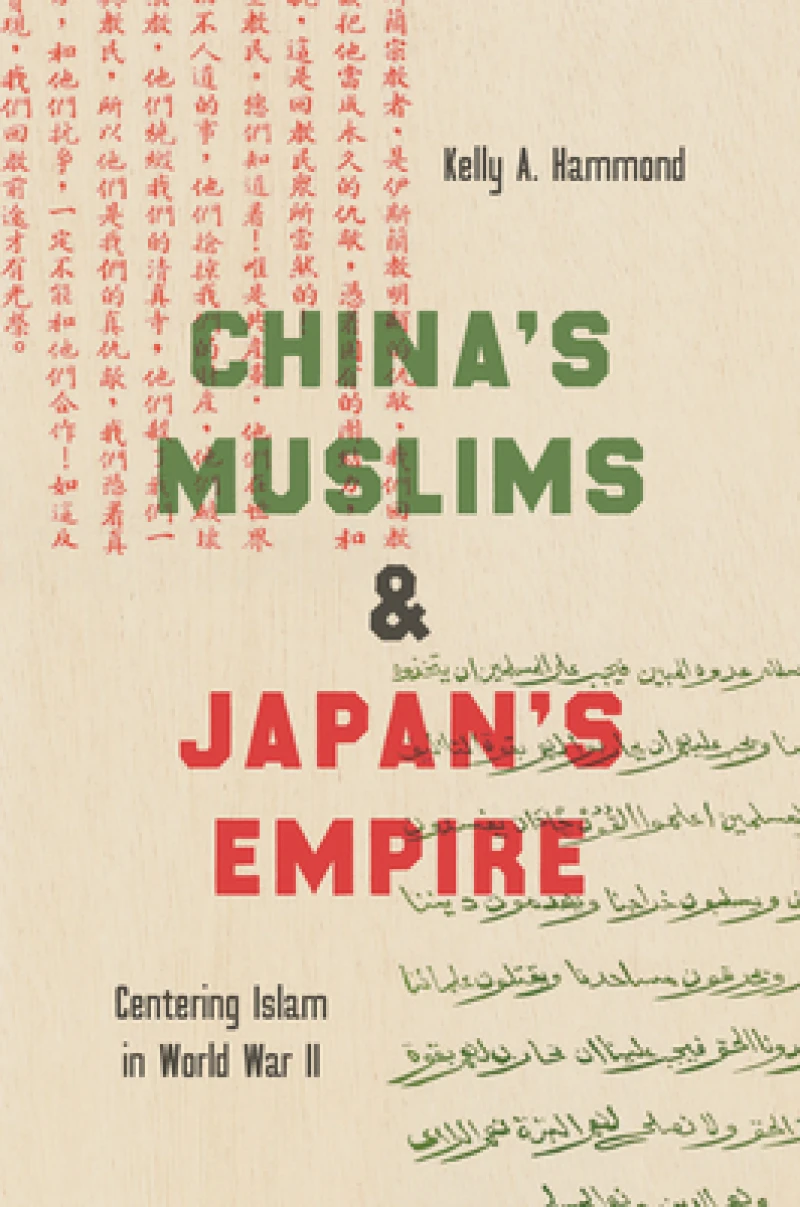
China's Muslims and Japan's Empire : Centering Islam in World War II
Book Details
Format
Hardback or Cased Book
Book Series
Islamic Civilization and Muslim Networks
ISBN-10
1469659646
ISBN-13
9781469659640
Publisher
The University of North Carolina Press
Imprint
The University of North Carolina Press
Country of Manufacture
GB
Country of Publication
GB
Publication Date
Nov 30th, 2020
Print length
314 Pages
Weight
618 grams
Dimensions
23.30 x 15.50 x 2.20 cms
Product Classification:
Asian history20th century history: c 1900 to c 2000Military historySecond World WarIslam
Ksh 14,200.00
Werezi Extended Catalogue
0 in stock
Delivery Location
Delivery fee: Select location
Secure
Quality
Fast
In this transnational history of World War II, Kelly Hammond places Sino-Muslims at the centre of imperial Japan's challenges to Chinese nation-building efforts. Hammond shows how imperial Japanese aimed to defeat the Chinese Nationalists in winning the hearts and minds of Sino-Muslims, a vital minority population.
In this transnational history of World War II, Kelly A. Hammond places Sino-Muslims at the center of imperial Japans challenges to Chinese nation-building efforts. Revealing the little-known story of Japans interest in Islam during its occupation of North China, Hammond shows how imperial Japanese aimed to defeat the Chinese Nationalists in winning the hearts and minds of Sino-Muslims, a vital minority population. Offering programs that presented themselves as protectors of Islam, the Japanese aimed to provide Muslims with a viable alternativeand, at the same time, to create new Muslim consumer markets that would, the Japanese hoped, act to subvert the existing global capitalist world order and destabilize the Soviets.
This history can be told only by reinstating agency to Muslims in China who became active participants in the brokering and political jockeying between the Chinese Nationalists and the Japanese Empire. Hammond argues that the competition for their loyalty was central to the creation of the ethnoreligious identity of Muslims living on the Chinese mainland. Their wartime experience ultimately helped shape the formation of Sino-Muslims religious identities within global Islamic networks, as well as their incorporation into the Chinese state, where the conditions of that incorporation remain unstable and contested to this day.
This history can be told only by reinstating agency to Muslims in China who became active participants in the brokering and political jockeying between the Chinese Nationalists and the Japanese Empire. Hammond argues that the competition for their loyalty was central to the creation of the ethnoreligious identity of Muslims living on the Chinese mainland. Their wartime experience ultimately helped shape the formation of Sino-Muslims religious identities within global Islamic networks, as well as their incorporation into the Chinese state, where the conditions of that incorporation remain unstable and contested to this day.
Get China's Muslims and Japan's Empire by at the best price and quality guaranteed only at Werezi Africa's largest book ecommerce store. The book was published by The University of North Carolina Press and it has pages.

