
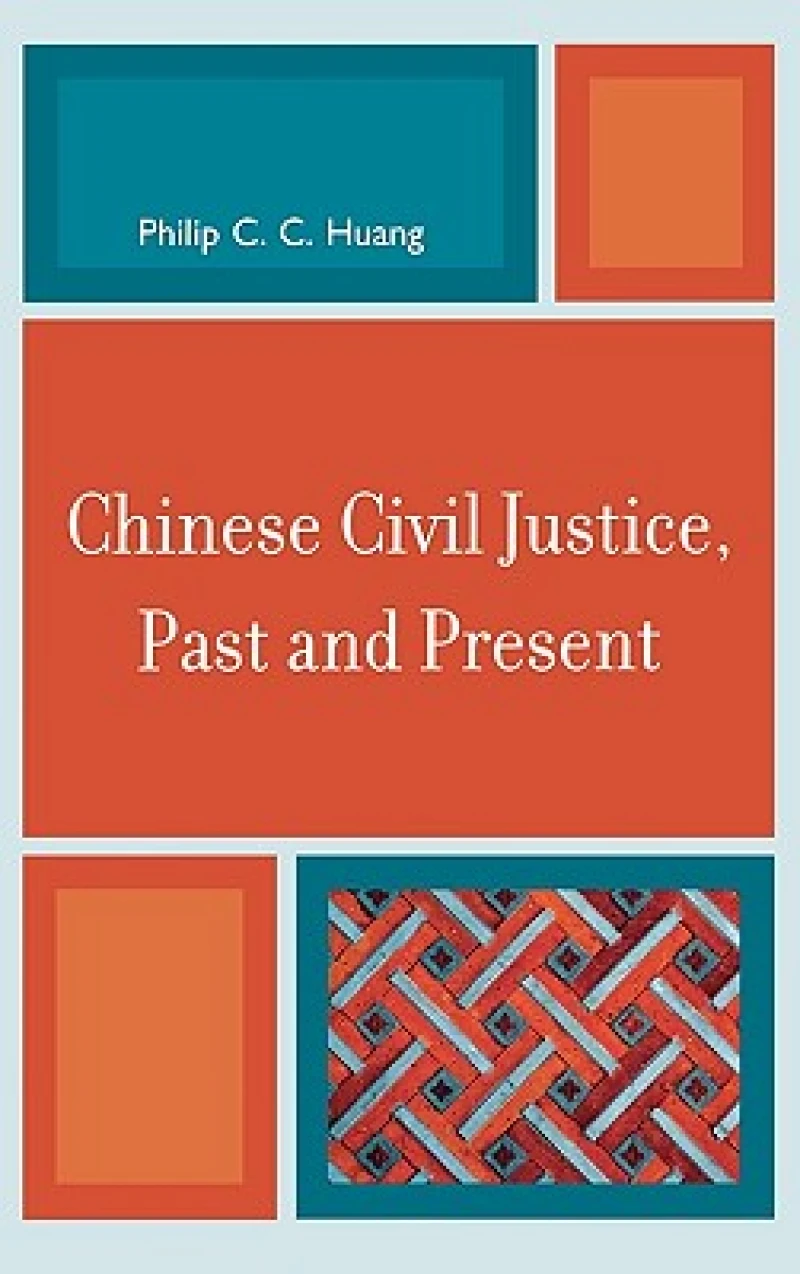
Chinese Civil Justice, Past and Present
Book Details
Format
Hardback or Cased Book
Book Series
Asia/Pacific/Perspectives
ISBN-10
0742567699
ISBN-13
9780742567696
Publisher
Bloomsbury Publishing Plc
Imprint
Rowman & Littlefield Publishers
Country of Manufacture
GB
Country of Publication
GB
Publication Date
Dec 16th, 2009
Print length
316 Pages
Weight
581 grams
Dimensions
23.80 x 16.70 x 2.80 cms
Product Classification:
Asian historyConstitutional & administrative law
Ksh 17,600.00
Manufactured on Demand
Delivery in 29 days
Delivery Location
Delivery fee: Select location
Delivery in 29 days
Secure
Quality
Fast
The culmination of twenty years of research, this essential book completes distinguished historian Philip C. C. Huang's pathbreaking trilogy on Chinese law and society from late imperial times to the present. Huang shows how, at the level of ideology and theory, traditional Chinese law has been rejected time and again in the past century by China's own lawmakers, first in the late Qing and the republic, then in the revolutionary and Maoist periods of the People's Republic, and finally again in the current reform era. Considering legal theory alone, modern Chinese law can only be Western law, and past Chinese law—traditional or Maoist—can have no role under the leadership's current preoccupations with modernization and marketization. But what has actually happened historically at the level of judicial practice and the daily lives of common people? In exploring this central question, Huang draws on a rich array of court records and field interviews to illustrate the surprising strength of traditional Chinese civil justice. Albeit much altered, its legacy can be traced in informal and semiformal community justice (e.g., societal and cadres mediation), as well as in multiple spheres of court-administered formal civil justice, including property rights, inheritance and old-age maintenance, and debt obligations. He also identifies the influence of Maoist justice, especially its divorce and civil court mediation practices. Finally, despite the reform era's massive importation of Western laws, legal reasoning employed in judicial practice has shown remarkable continuity, with major implications for China's future legal system.
The culmination of twenty years of research, this essential book completes distinguished historian Philip C. C. Huang''s pathbreaking trilogy on Chinese law and society from late imperial times to the present. Huang shows how, at the level of ideology and theory, traditional Chinese law has been rejected time and again in the past century by China''s own lawmakers, first in the late Qing and the republic, then in the revolutionary and Maoist periods of the People''s Republic, and finally again in the current reform era. Considering legal theory alone, modern Chinese law can only be Western law, and past Chinese law—traditional or Maoist—can have no role under the leadership''s current preoccupations with modernization and marketization. But what has actually happened historically at the level of judicial practice and the daily lives of common people? In exploring this central question, Huang draws on a rich array of court records and field interviews to illustrate the surprising strength of traditional Chinese civil justice. Albeit much altered, its legacy can be traced in informal and semiformal community justice (e.g., societal and cadres mediation), as well as in multiple spheres of court-administered formal civil justice, including property rights, inheritance and old-age maintenance, and debt obligations. He also identifies the influence of Maoist justice, especially its divorce and civil court mediation practices. Finally, despite the reform era''s massive importation of Western laws, legal reasoning employed in judicial practice has shown remarkable continuity, with major implications for China''s future legal system.
Get Chinese Civil Justice, Past and Present by at the best price and quality guaranteed only at Werezi Africa's largest book ecommerce store. The book was published by Bloomsbury Publishing Plc and it has pages.

