
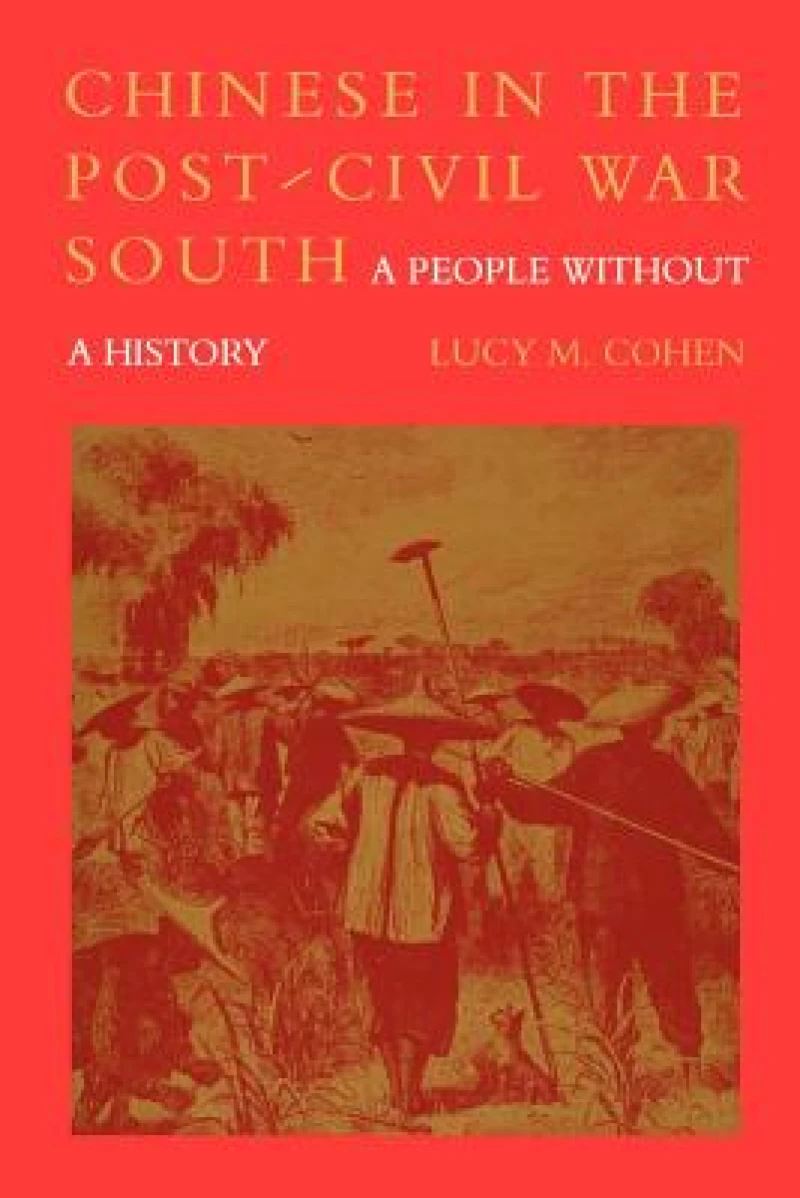
Chinese in the Post-Civil War South : A People Without a History
Book Details
Format
Paperback / Softback
ISBN-10
0807124575
ISBN-13
9780807124574
Publisher
Louisiana State University Press
Imprint
Louisiana State University Press
Country of Manufacture
US
Country of Publication
GB
Publication Date
Mar 1st, 1999
Print length
277 Pages
Weight
354 grams
Dimensions
23.40 x 15.60 x 1.50 cms
Ksh 4,700.00
Werezi Extended Catalogue
0 in stock
Delivery Location
Delivery fee: Select location
Secure
Quality
Fast
Based on research in documents and family correspondence as well as interviews with descendants of immigrants, this study by Lucy Cohen is the first history of the Chinese in the Reconstruction South - their rejection of the role that planter society had envisioned for them and their adaptation into a less rigid segment of rural southern society.
In much of the United States, immigrants from China banded together in self-enclosed communities, ""Chinatowns,"" in which they retained their language, culture, and social organization. In the South, however, the Chinese began to merge into the surrounding communities within a single generation's time, quickly disappearing from historical accounts and becoming, as they themselves phrased it, a ""mixed nation.""
Lucy M. Cohen's Chinese in the Post-Civil War South traces the experience of the Chinese who came to the South during Reconstruction. Many of them were recruited by planters eager to fill the labor vacuum created by emancipation with ""coolie"" labor. The Planters' aims were obstructed in part by the federal government's determination not to allow the South the opportunity to create a new form of slavery. Some Chinese did, however, enter into labor contracts with planters- agreements that the planters often altered without consultation or negotiation with the workers. With the Chinese intent upon the inviolability of their contracts, the arrangements with the planters soon broke down.
At the end of their employment on the plantations, some of the immigrants returned to China or departed for other areas of the United States. Still others, however, chose to remain near where they had been employed. Living in cultural isolation rather than in the China towns in major cities, the immigrants soon no longer used their original language to communicate within the home; they adopted new surnames, so that even among brothers and sisters variations of names existed; they formed no associations or guilds specific to their heritage; and they intermarried, so that a few generations later their physical features were no longer readily observable in their descendants.
Based on extensive research in documents and family correspondence as well as interviews with descendants of the immigrants, this study by Lucy Cohen is the first history of the Chinese in the Reconstruction South- their rejection of the role that planter society had envisioned for them and their quick adaptation into a less rigid segment of rural southern society.
Lucy M. Cohen's Chinese in the Post-Civil War South traces the experience of the Chinese who came to the South during Reconstruction. Many of them were recruited by planters eager to fill the labor vacuum created by emancipation with ""coolie"" labor. The Planters' aims were obstructed in part by the federal government's determination not to allow the South the opportunity to create a new form of slavery. Some Chinese did, however, enter into labor contracts with planters- agreements that the planters often altered without consultation or negotiation with the workers. With the Chinese intent upon the inviolability of their contracts, the arrangements with the planters soon broke down.
At the end of their employment on the plantations, some of the immigrants returned to China or departed for other areas of the United States. Still others, however, chose to remain near where they had been employed. Living in cultural isolation rather than in the China towns in major cities, the immigrants soon no longer used their original language to communicate within the home; they adopted new surnames, so that even among brothers and sisters variations of names existed; they formed no associations or guilds specific to their heritage; and they intermarried, so that a few generations later their physical features were no longer readily observable in their descendants.
Based on extensive research in documents and family correspondence as well as interviews with descendants of the immigrants, this study by Lucy Cohen is the first history of the Chinese in the Reconstruction South- their rejection of the role that planter society had envisioned for them and their quick adaptation into a less rigid segment of rural southern society.
Get Chinese in the Post-Civil War South by at the best price and quality guaranteed only at Werezi Africa's largest book ecommerce store. The book was published by Louisiana State University Press and it has pages.

