
Cart 0
Chiral Photochemical Scissors Targeting Proteins
Click to zoom

Share this book

Chiral Photochemical Scissors Targeting Proteins

Book Details

Format Hardback or Cased Book
ISBN-10 9813237619
ISBN-13 9789813237612
Publisher World Scientific Publishing Co Pte Ltd
Imprint World Scientific Publishing Co Pte Ltd
Country of Manufacture GB
Country of Publication GB
Publication Date Dec 14th, 2018
Print length 448 Pages
Weight 858 grams
Dimensions 16.00 x 23.60 x 2.70 cms
Product Classification: Proteins
Ksh 27,000.00
Werezi Extended Catalogue Delivery in 28 days

Delivery Location

Delivery fee: Select location

Delivery in 28 days

Secure
Quality
Fast
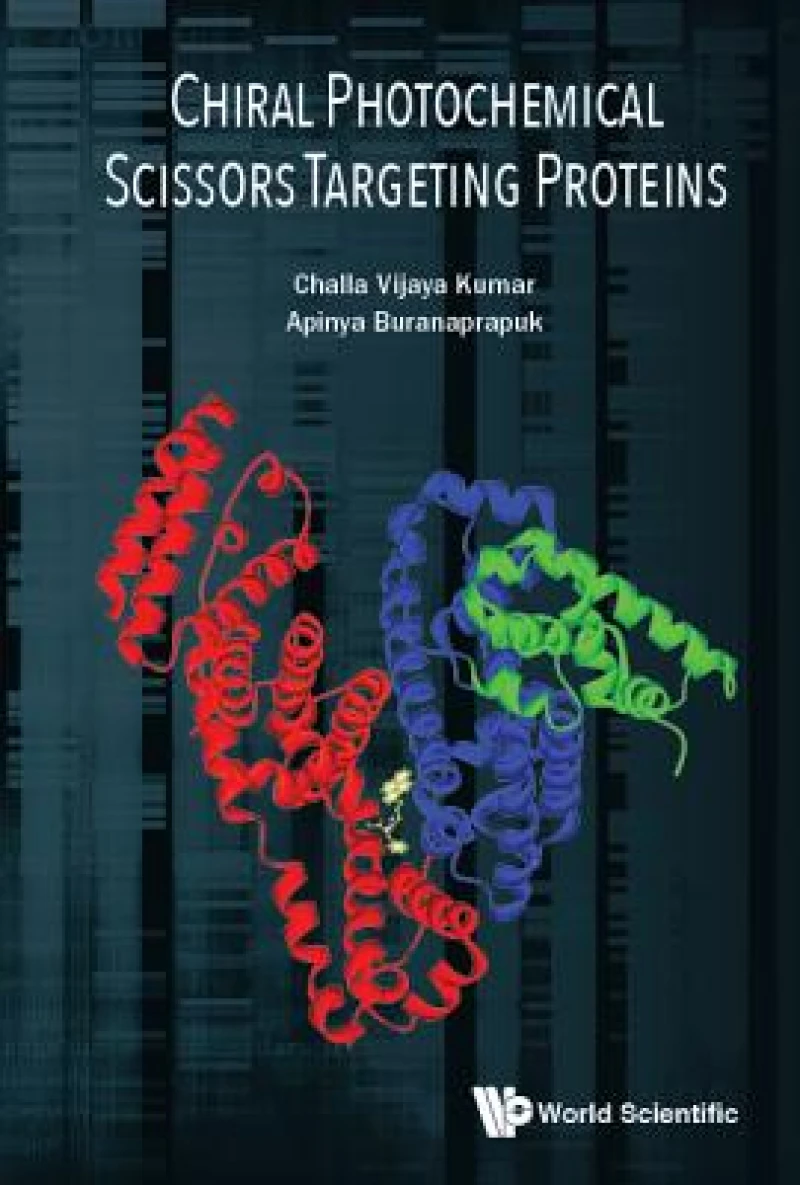
The remarkable ability to target one or even a couple of sites on a large protein with a small molecule, under photochemical control, is a considerable challenge and this challenge has been addressed in some depth in this book. Systematic modification of the structure of the photoreagent provided valuable information on the binding site recognition as well as the mechanism of the photocleavage reaction. Some factors that impact the photocleavage reaction include the exact location of the probe binding site on the protein, conformations of the bound probe at the binding site, protein size, functional groups present on the probe that interact with the protein surroundings either in a favorable or unfavorable manner, overall charge on the photoreagent, and photophysical as well as photochemical properties of the probe. The protein photocleavage studies, in all case, were preceded by detailed binding studies by a variety of spectroscopic methods. Methods as simple as absorption and fluorescence spectroscopies or more sophisticated circular dichroism spectroscopy were used. Conclusions that are most consistent with the binding data indicated a single binding site on most proteins, irrespective of the probe or the protein, with only one exception noted so far. Photoactivation of the bound probe resulted in protein cleavage at a single site, in many instances. The specificity for the reaction has been investigated in detail and molecular modeling studies provided a firm ground to rationalize the observed cleavage sites. The reagents provide unique tools for sequencing large proteins by converting them into smaller fragments by non-biochemical transformations. Understanding of the rules for the above methodology are also investigated which provided rational methods for the design of small molecules that could bind at particular sites on large proteins, and this is a major breakthrough for a variety of fields including drug design, protein targeting, mass spectrometry, proteomics and other cutting-edge research areas.

The remarkable ability to target one or even a couple of sites on a large protein with a small molecule, under photochemical control, is a considerable challenge and this challenge has been addressed in some depth in this book. Systematic modification of the structure of the photoreagent provided valuable information on the binding site recognition as well as the mechanism of the photocleavage reaction. Some factors that impact the photocleavage reaction include the exact location of the probe binding site on the protein, conformations of the bound probe at the binding site, protein size, functional groups present on the probe that interact with the protein surroundings either in a favorable or unfavorable manner, overall charge on the photoreagent, and photophysical as well as photochemical properties of the probe. The protein photocleavage studies, in all case, were preceded by detailed binding studies by a variety of spectroscopic methods. Methods as simple as absorption and fluorescence spectroscopies or more sophisticated circular dichroism spectroscopy were used. Conclusions that are most consistent with the binding data indicated a single binding site on most proteins, irrespective of the probe or the protein, with only one exception noted so far. Photoactivation of the bound probe resulted in protein cleavage at a single site, in many instances. The specificity for the reaction has been investigated in detail and molecular modeling studies provided a firm ground to rationalize the observed cleavage sites. The reagents provide unique tools for sequencing large proteins by converting them into smaller fragments by non-biochemical transformations. Understanding of the rules for the above methodology are also investigated which provided rational methods for the design of small molecules that could bind at particular sites on large proteins, and this is a major breakthrough for a variety of fields including drug design, protein targeting, mass spectrometry, proteomics and other cutting-edge research areas.


Get Chiral Photochemical Scissors Targeting Proteins by at the best price and quality guaranteed only at Werezi Africa's largest book ecommerce store. The book was published by World Scientific Publishing Co Pte Ltd and it has pages.


Mind, Body, & Spirit

Price

Ksh 27,000.00

Shopping Cart

Africa largest book store

Sub Total:
Ebooks

Digital Library
Coming Soon

Our digital collection is currently being curated to ensure the best possible reading experience on Werezi. We'll be launching our Ebooks platform shortly.