
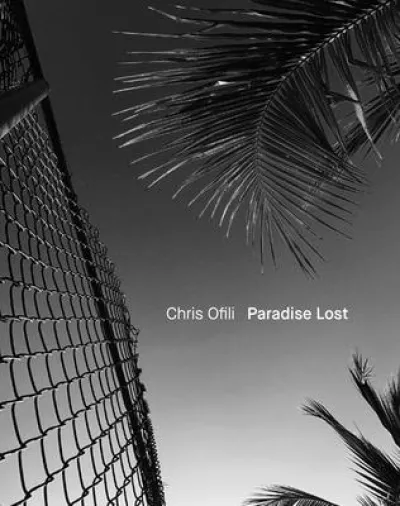
Chris Ofili: Paradise Lost
Book Details
Format
Paperback / Softback
ISBN-10
1941701825
ISBN-13
9781941701829
Publisher
David Zwirner
Imprint
David Zwirner
Country of Manufacture
US
Country of Publication
GB
Publication Date
Sep 6th, 2018
Print length
96 Pages
Weight
272 grams
Dimensions
19.20 x 17.50 x 1.10 cms
Product Classification:
Individual artists, art monographs
Ksh 4,500.00
Werezi Extended Catalogue
0 in stock
Delivery Location
Delivery fee: Select location
Secure
Quality
Fast
In 2017, Chris Ofili photographed chain-link fences throughout the island of Trinidad in order to explore notions of beauty, community, liberation, and constraint. This series of arresting images—“pocket photography,” as described by the artist—is the first body of photography ever published by Ofili. Through these entrancing black-and-white photographs, the artist engages with the diverse sources that inspired his critically acclaimed Paradise Lost exhibition at David Zwirner, New York in the fall of 2017.
Since moving to Trinidad in 2005, Ofili has continued to engage with the surrounding environment and culture, which has found its way into many of his colorful paintings. In these deceivingly simple black-and-white photographs, he captures a wide cross section of Trinidad as he highlights the encounter between natural and man-made settings, and the different aesthetic possibilities each brings out in the other. In focusing on a ubiquitous and seemingly unremarkable piece of equipment, Ofili is able to comment on our interactions with space and each other, using a near-universal subject as the fence slices the sky, melds into a tree, frames a basketball game, or reveals an opening.
In a new essay by the critically acclaimed author of Island People: The Caribbean and the World (2016), Joshua Jelly-Schapiro charts the history of chain-link fences; focusing on a selection of Ofili’s photographs, he then begins to explore what this imagery tells us about Trinidad in particular and the Caribbean as a whole. These two essays—one visual, the other literary—open onto a whole new set of interpretive possibilities for this groundbreaking artist.
Since moving to Trinidad in 2005, Ofili has continued to engage with the surrounding environment and culture, which has found its way into many of his colorful paintings. In these deceivingly simple black-and-white photographs, he captures a wide cross section of Trinidad as he highlights the encounter between natural and man-made settings, and the different aesthetic possibilities each brings out in the other. In focusing on a ubiquitous and seemingly unremarkable piece of equipment, Ofili is able to comment on our interactions with space and each other, using a near-universal subject as the fence slices the sky, melds into a tree, frames a basketball game, or reveals an opening.
In a new essay by the critically acclaimed author of Island People: The Caribbean and the World (2016), Joshua Jelly-Schapiro charts the history of chain-link fences; focusing on a selection of Ofili’s photographs, he then begins to explore what this imagery tells us about Trinidad in particular and the Caribbean as a whole. These two essays—one visual, the other literary—open onto a whole new set of interpretive possibilities for this groundbreaking artist.
Get Chris Ofili: Paradise Lost by at the best price and quality guaranteed only at Werezi Africa's largest book ecommerce store. The book was published by David Zwirner and it has pages.

