
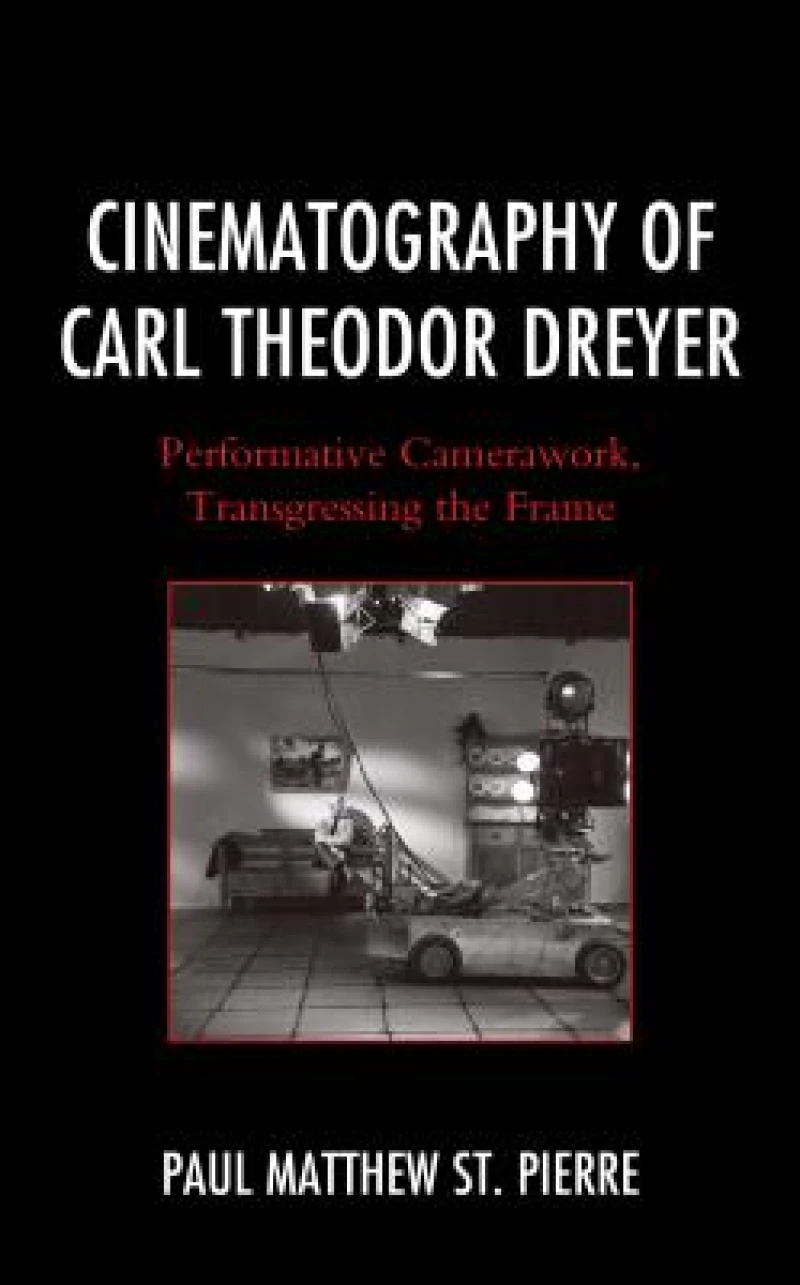
Cinematography of Carl Theodor Dreyer : Performative Camerawork, Transgressing the Frame
Book Details
Format
Hardback or Cased Book
ISBN-10
1683931009
ISBN-13
9781683931003
Publisher
Fairleigh Dickinson University Press
Imprint
Fairleigh Dickinson University Press
Country of Manufacture
GB
Country of Publication
GB
Publication Date
Nov 19th, 2018
Print length
310 Pages
Weight
616 grams
Dimensions
15.90 x 23.50 x 2.80 cms
Product Classification:
Electronic, holographic & video artFilm theory & criticism
Ksh 23,250.00
Manufactured on Demand
0 in stock
Delivery Location
Delivery fee: Select location
Secure
Quality
Fast
Carl Theodor Dreyer was a visionary director whose films were based less on his screenplays than on his preconceptions, his complete formal, aesthetic cinematic projections of the films he deputized actors, cinematographers, and crew to produce. Cinematography of Carl Theodor Dreyer examines the life and work of a brilliant director and visionary.
Legendary Danish filmmaker Carl Theodor Dreyer (3 February 1889-20 March 1968) was born in Copenhagen to a single mother, Josefine Bernhardine Nilsson, a Swede. His Danish father, Jens Christian Torp, a married farmer, employed Nilsson as a housekeeper. After spending his first two years in orphanages, Dreyer was adopted by Carl Theodor Dreyer, a typographer, and his wife, Inger Marie Dreyer. He was given his adoptive father’s name. At age 16, he renounced his adoptive parents and worked his way into the film industry as a journalist, title card writer, screenwriter, and director. Throughout his career he concealed his birth name and the details of his upbringing and his adult private life, which included a period in which he explored his homosexual orientation and endured a nervous breakdown. Despite his relatively small output of fourteen feature films and seven documentary short films, 1919-64, he is considered one of the greatest filmmakers in history because of the diversity of his subjects, themes, techniques, and styles, and the originality of the bold visual grammar he mastered. In Cinematography of Carl Theodor Dreyer: Performative Camerawork, Transgressing the Frame, I argue: 1) that Dreyer, an anonymous orphan, an unsourced subject, manufactured his individuality through filmmaking, self-identifying by shrouding himself in the skin of film, and 2) that, as a screenwriter-director who blocked entire feature films in his imagination in advance—sets, lighting, photography, shot breakdowns, editing—and imposed his vision on camera operators, lighting directors, actors, and crews in production, he saw filmmaking essentially as camerawork and he directed in the style of a performative cinematographer.
Get Cinematography of Carl Theodor Dreyer by at the best price and quality guaranteed only at Werezi Africa's largest book ecommerce store. The book was published by Fairleigh Dickinson University Press and it has pages.

