

Circularity Concepts in Forest-Based Industries
Book Details
Format
Paperback / softback
Book Series
Geneva timber and forest study paper
ISBN-10
9211172888
ISBN-13
9789211172881
Publisher
United Nations
Imprint
United Nations
Country of Manufacture
US
Country of Publication
GB
Publication Date
May 23rd, 2022
Print length
69 Pages
Product Classification:
International relations
KSh 4,300.00
Currently unavailable
0 in stock
Delivery Location
Delivery fee: Select location
Secure
Quality
Fast
Analyses the existing and possible limitations to circular approaches in forest-based industries, namely the woodworking industry, the furniture industry, the paper and pulp industry as well as industry using cellulose-based fibres and cellulose-based plastics.
The world''s prevalent economic model, based on a ''take-make-use-dispose'' approach, cannot maintain and raise human standards of living without causing environmental degradation and incurring economic risks. Decoupling economic activity from the increasing demand for natural resources could be done through circular, bio-based economy approaches leading to a regenerative growth model, allowing humankind to reduce its environmental footprint on the planet. The forest sector, situated in both the biological and technical cycles of a circular economy, is well suited to embrace a circular, bio-based economic model. However, challenges in the overall circularity of forest-based value chains persist as a result of the sector''s traditional means of operation. To ensure the sustainability of the forest-based value chains, continuous consideration and coordination of circularity at all stages of the value chains are needed. This study analyses the existing and possible limitations to circular approaches in forest-based industries, namely the woodworking industry, the furniture industry, the paper and pulp industry as well as industry using cellulose-based fibres and cellulose-based plastics. The analysis provides evidence that not all circular approaches are sustainable under all circumstances. In some cases, the focus on circularity may cause environmental externalities, in other cases, it may not guarantee economic viability. While the transition to a circular, bio-based economy can be facilitated by a legislator, the process will need to develop organically, based on the location of industries, proximity to available (waste) resources and consumer preferences.
Get Circularity Concepts in Forest-Based Industries by Food and Agriculture Organisation, United Nations: Economic Commission for Europe at the best price and quality guaranteed only at Werezi Africa's largest book ecommerce store. The book was published by United Nations and it has 69 pages.
Customers Who Bought This Also Bought

Black Wave
KSh 2,700.00

Siege
KSh 2,000.00

Extractive Capitalism
KSh 2,150.00
Strategy
KSh 4,350.00

Fourth Industrial Revolution
KSh 2,700.00

On China
KSh 3,400.00

Dead Aid
KSh 3,400.00
The Bottom Billion
KSh 2,500.00

Leadership
KSh 2,700.00

How to Win a Trade War
KSh 3,050.00

Understanding Global Conflict and Cooperation: An Introduction to Theory and History
KSh 14,000.00

Nuclear Age
KSh 5,400.00
More by Food and Agriculture Organisation, United Nations: Economic Commission for Europe

Progress on Transboundary Water Cooperation Under the Water Convention
KSh 6,500.00

Practical Guide for the Development of Agreements or Other Arrangements for Transboundary Water Cooperation
KSh 5,050.00

Guidelines for Assessing the Quality of Administrative Sources for Use in Censuses
KSh 5,050.00
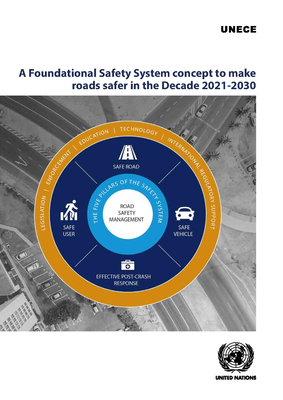
A Foundational Safety System Concept to Make Roads Safer in the Decade 2021-2030
KSh 4,300.00

CEVNI European Code for Inland Waterways
KSh 9,350.00

Energy Transition and the Post-COVID-19 Socioeconomic Recovery: Role of Women and Impact on Them
KSh 5,050.00

Reporting on Forests and Sustainable Forest Management in the Caucasus and Central Asia
KSh 3,650.00

Halfway to 2030
KSh 3,650.00

Updated Strategies for Monitoring and Assessment of Transboundary Rivers, Lakes and Groundwaters
KSh 3,600.00

Statistics on Children: Spotlight on Children Exposed to Violence, in Alternative Care, and with Disabilities
KSh 5,050.00

European Agreement on Main International Railway Lines (AGC)
KSh 3,600.00

Solutions and Investments in the Water-Food-Energy-Ecosystems Nexus
KSh 5,050.00
