
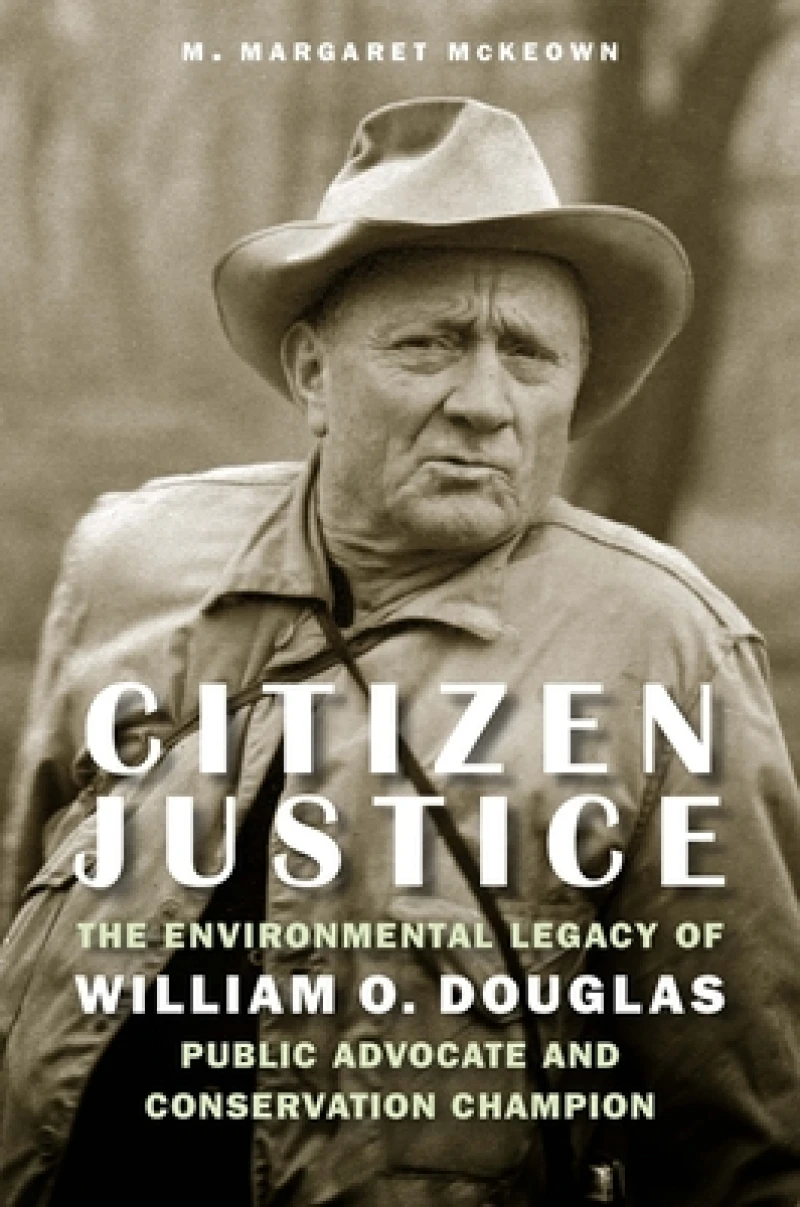
Citizen Justice : The Environmental Legacy of William O. Douglas—Public Advocate and Conservation Champion
Book Details
Format
Hardback or Cased Book
ISBN-10
1640123008
ISBN-13
9781640123007
Publisher
Potomac Books Inc
Imprint
Potomac Books Inc
Country of Manufacture
GB
Country of Publication
GB
Publication Date
Sep 1st, 2022
Print length
288 Pages
Ksh 4,300.00
Publisher Out of Stock
0 in stock
Delivery Location
Delivery fee: Select location
Secure
Quality
Fast
Citizen Justice highlights William O. Douglas’s dual role in fulfilling his constitutional duty as U.S. Supreme Court Justice while advancing his personal passion to serve the public as a citizen advocate for the environment.
Shortlisted for the 2024 Wildlife Society''s Publication Awards
First Honorable Mention for the 2023 Rachel Carson Environment Book Award
U.S. Supreme Court Justice William O. Douglas was a giant in the legal world, even if he is often remembered for his four wives, as a potential vice-presidential nominee, as a target of impeachment proceedings, and for his tenure as the longest-serving justice from 1939 to 1975. His most enduring legacy, however, is perhaps his advocacy for the environment.
Douglas was the spiritual heir to early twentieth-century conservation pioneers such as Teddy Roosevelt and John Muir. His personal spiritual mantra embraced nature as a place of solitude, sanctuary, and refuge. Caught in the giant expansion of America’s urban and transportation infrastructure after World War II, Douglas became a powerful leader in forging the ambitious goals of today’s environmental movement. And, in doing so, Douglas became a true citizen justice.
In a way unthinkable today, Douglas ran a one-man lobby shop from his chambers at the U.S. Supreme Court, bringing him admiration from allies in conservation groups but raising ethical issues with his colleagues. He became a national figure through his books, articles, and speeches warning against environmental dangers. Douglas organized protest hikes to leverage his position as a national icon, he lobbied politicians and policymakers privately about everything from logging to highway construction and pollution, and he protested at the Supreme Court through his voluminous and passionate dissents.
Douglas made a lasting contribution to both the physical environment and environmental law-with trees still standing, dams unbuilt, and beaches protected as a result of his work. His merged roles as citizen advocate and justice also put him squarely in the center of ethical dilemmas that he never fully resolved. Citizen Justice elucidates the why and how of these tensions and their contemporary lessons against the backdrop of Douglas’s unparalleled commitment to the environment.
First Honorable Mention for the 2023 Rachel Carson Environment Book Award
U.S. Supreme Court Justice William O. Douglas was a giant in the legal world, even if he is often remembered for his four wives, as a potential vice-presidential nominee, as a target of impeachment proceedings, and for his tenure as the longest-serving justice from 1939 to 1975. His most enduring legacy, however, is perhaps his advocacy for the environment.
Douglas was the spiritual heir to early twentieth-century conservation pioneers such as Teddy Roosevelt and John Muir. His personal spiritual mantra embraced nature as a place of solitude, sanctuary, and refuge. Caught in the giant expansion of America’s urban and transportation infrastructure after World War II, Douglas became a powerful leader in forging the ambitious goals of today’s environmental movement. And, in doing so, Douglas became a true citizen justice.
In a way unthinkable today, Douglas ran a one-man lobby shop from his chambers at the U.S. Supreme Court, bringing him admiration from allies in conservation groups but raising ethical issues with his colleagues. He became a national figure through his books, articles, and speeches warning against environmental dangers. Douglas organized protest hikes to leverage his position as a national icon, he lobbied politicians and policymakers privately about everything from logging to highway construction and pollution, and he protested at the Supreme Court through his voluminous and passionate dissents.
Douglas made a lasting contribution to both the physical environment and environmental law-with trees still standing, dams unbuilt, and beaches protected as a result of his work. His merged roles as citizen advocate and justice also put him squarely in the center of ethical dilemmas that he never fully resolved. Citizen Justice elucidates the why and how of these tensions and their contemporary lessons against the backdrop of Douglas’s unparalleled commitment to the environment.
Get Citizen Justice by at the best price and quality guaranteed only at Werezi Africa's largest book ecommerce store. The book was published by Potomac Books Inc and it has pages.

