
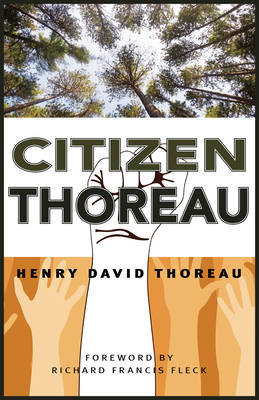
Citizen Thoreau : Walden, Civil Disobedience, Life Without Principle, Slavery in Massachusetts, A Plea for Captain John Brown
Book Details
Format
Paperback / softback
ISBN-10
1941821200
ISBN-13
9781941821206
Publisher
West Margin Press
Imprint
Alaska Northwest Books
Country of Manufacture
GB
Country of Publication
GB
Publication Date
Oct 30th, 2014
Print length
456 Pages
KSh 3,050.00
Currently unavailable
0 in stock
Delivery Location
Delivery fee: Select location
Secure
Quality
Fast
This set of timeless essays from the quintessential American shares his valuable philosophies on nature, solitude, slavery, religion, politics, fulfilling work, civil responsibilities, and more.WALDEN, Thoreau''s beloved and well-known reflection upon simple living in natural surroundings, looks at how the outside world can benefit from renouncing a materialistic way of life."If the machine of government is of such a nature that it requires you to be the agent of injustice to another, then, I say, break the law." -Thoreau"If a plant cannot live according to its nature, it dies; and so a man." -ThoreauHis other essays deal with the social problems of his time:CIVIL DISOBEDIENCE applies principles of individualism to civil life, culminating in a call for a life that answers to a power outside of and unaffected by the state.LIFE WITHOUT PRINCIPLE offers his program for a righteous livelihood through ten "commandments."SLAVERY IN MASSACHUSETTS is based on a speech he gave at an antislavery rally after the re-enslavement of fugitive slave Anthony Burns and relates that freedom could not exist while slavery remained.PLEA FOR CAPTAIN JAMES BROWN portrays his kinship to Brown''s abolitionist efforts and anger toward the injustice Brown received."Thoreau was a great writer, philosopher, poet, and withal a most practical man, that is, he taught nothing he was not prepared to practise in himself. . . . He went to gaol for the sake of his principles and suffering humanity. His essay has, therefore, been sanctified by suffering. Moreover, it is written for all time. Its incisive logic is unanswerable." -Mohandas Gandhi". . . when, in the mid-1950s, the United States Information Service included as a standard book in all their libraries around the world a textbook . . . which reprinted Thoreau''s ''Civil Disobedience,'' the late Senator Joseph McCarthy succeeded in having that book removed from the shelves-specifically because of the Thoreau essay." -Walter Harding, in The Variorum Civil Disobedience"I became convinced that noncooperation with evil is as much a moral obligation as is cooperation with good. No other person has been more eloquent and passionate in getting this idea across than Henry David Thoreau. As a result of his writings and personal witness, we are the heirs of a legacy of creative protest." -Martin Luther King, Jr., Autobiography
Get Citizen Thoreau by Henry David Thoreau at the best price and quality guaranteed only at Werezi Africa's largest book ecommerce store. The book was published by West Margin Press and it has 456 pages.
Customers Who Bought This Also Bought

Crusade for Justice – The Autobiography of Ida B. Wells, Second Edition
KSh 4,050.00

Scramble for Africa
KSh 3,400.00

Its Our Turn to Eat
KSh 2,350.00
Frederick Douglass
KSh 3,350.00

Anarchy
KSh 2,700.00

Second Treatise of Government – Norton Library
KSh 1,600.00

What Matters in Jane Austen?
KSh 2,700.00

The Life Of The Mind
KSh 3,950.00

Napoleon The Great
KSh 3,600.00

Culture and Imperialism
KSh 2,700.00
Master Slave Husband Wife
KSh 2,000.00

Letters on England
KSh 2,350.00
More by Henry David Thoreau

Walden – 150th Anniversary Edition
KSh 1,850.00
Walden and Civil Disobedience
KSh 1,000.00

Walden and Civil Disobedience
KSh 3,600.00

Walden American Classics Edition
KSh 3,600.00

The Correspondence of Henry D. Thoreau
KSh 26,300.00

Walden - Classics
KSh 1,200.00
Civil Disobedience
KSh 3,250.00

Wild Apples
KSh 1,800.00

Walden
KSh 5,850.00

Walking
KSh 900.00
Canoeing in the Wilderness
KSh 1,600.00

Walden
KSh 1,600.00
