
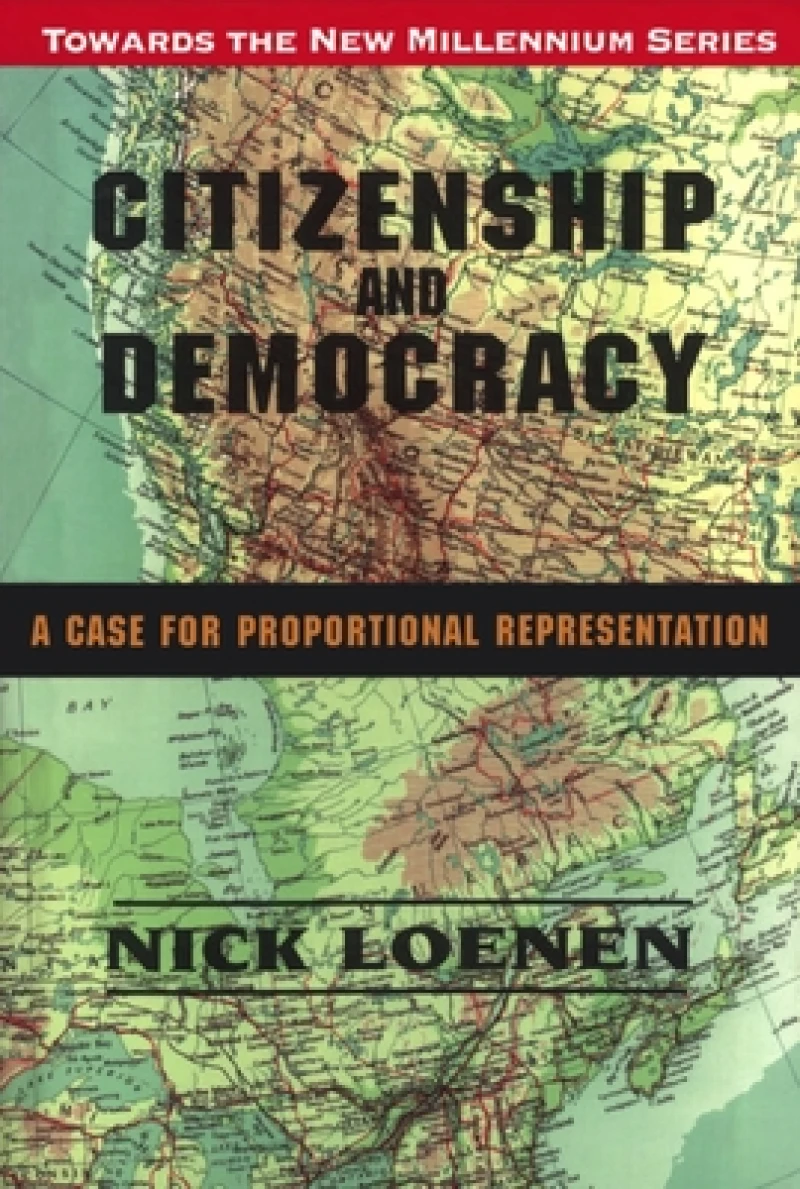
Citizenship and Democracy : A Case for Proportional Representation
Book Details
Delivery Location
Delivery fee: Select location
Former MLA Nick Loenen examines what proportional representation can do for Canadian politics.
This book is part of the Towards the New Millennium Series, featuring the works of thoughtful Canadians who are profoundly interested in the future of Canada and the world.
Most democracies do not use Canadas "first past the post" voting system. To give a party more seats than its share of the popular vote warrants is deemed undemocratic by most. Such democracies use proportional representation to ensure a partys seat-share does not exceed its vote-share.
Former MLA, Nick Loenen, examines what proportional representation can do for Canadian politics. He finds that a change to proportional representation holds the potential to involve citizens more meaningfully and give political parties a more significant policy development role. It would also move power from the prime ministers office to Parliament, and from the premiers to provincial legislatures, shifting the focus in politics from leaders, style and images, to parties, principles and platforms.
Instead of the adversarial politics of confrontation, which aim to exclude and eliminate political opponents, proportional representation holds promise for a consensual, cooperative style of governing that includes a broad spectrum of political diversity.
The book also counters many popular misconceptions about proportional representation. It traces Canadas most intractable political problems such as national unity, high taxation, government over-spending, excessive party discipline, the concentration of power in our leaders, and our peculiar archaic voting system. The end product is the most detailed analysis of the effects of proportional representation on Canadian politics ever published.
This book is part of the Towards the New Millennium Series, featuring the works of thoughtful Canadians who are profoundly interested in the future of Canada and the world.
Most democracies do not use Canada''s "first past the post" voting system. To give a party more seats than its share of the popular vote warrants is deemed undemocratic by most. Such democracies use proportional representation to ensure a party''s seat-share does not exceed its vote-share.
Former MLA, Nick Loenen, examines what proportional representation can do for Canadian politics. He finds that a change to proportional representation holds the potential to involve citizens more meaningfully and give political parties a more significant policy development role. It would also move power from the prime minister''s office to Parliament, and from the premiers to provincial legislatures, shifting the focus in politics from leaders, style and images, to parties, principles and platforms.
Instead of the adversarial politics of confrontation, which aim to exclude and eliminate political opponents, proportional representation holds promise for a consensual, cooperative style of governing that includes a broad spectrum of political diversity.
The book also counters many popular misconceptions about proportional representation. It traces Canada''s most intractable political problems such as national unity, high taxation, government over-spending, excessive party discipline, the concentration of power in our leaders, and our peculiar archaic voting system. The end product is the most detailed analysis of the effects of proportional representation on Canadian politics ever published.
Get Citizenship and Democracy by at the best price and quality guaranteed only at Werezi Africa's largest book ecommerce store. The book was published by Dundurn Group Ltd and it has pages.

