
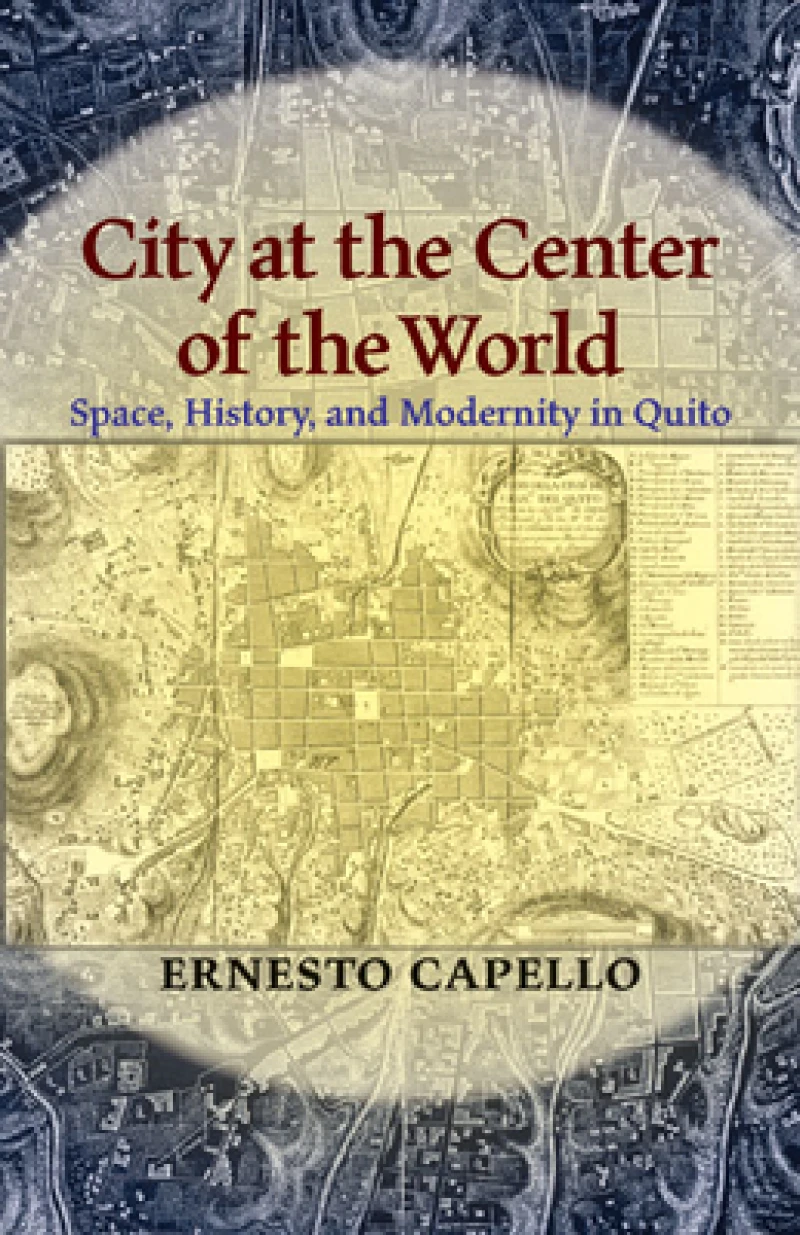
City at the Center of the World : Space, History, and Modernity in Quito
Book Details
Format
Paperback / Softback
Book Series
Pitt Latin American Series
ISBN-10
0822961660
ISBN-13
9780822961666
Publisher
University of Pittsburgh Press
Imprint
University of Pittsburgh Press
Country of Manufacture
US
Country of Publication
GB
Publication Date
Nov 4th, 2011
Print length
312 Pages
Product Classification:
HistoriographyHistory of the AmericasHistoriographyHistory of the Americas
Ksh 8,800.00
Temporarily out of stock, due soon
0 in stock
Delivery Location
Delivery fee: Select location
Secure
Quality
Fast
By the early twentieth century, elites envisioned the city as the heart of a modern, advanced society—poised at the physical and metaphysical centers of the world. In this original cultural history, Ernesto Capello analyzes the formation of memory, myth, and modernity through the eyes of QuitoÆs diverse populations.
In the seventeenth century, local Jesuits and Franciscans imagined Quito as the \u201cnew Rome.\u201d It was the site of miracles and home of saintly inhabitants, the origin of crusades into the surrounding wilderness, and the purveyor of civilization to the entire region. By the early twentieth century, elites envisioned the city as the heart of a modern, advanced society—poised at the physical and metaphysical centers of the world. In this original cultural history, Ernesto Capello analyzes the formation of memory, myth, and modernity through the eyes of QuitoÆs diverse populations. By employing Mikhail BakhtinÆs concept of chronotopes, Capello views the configuration of time and space in narratives that defined QuitoÆs identity and its place in the world. He explores the proliferation of these imaginings in architecture, museums, monuments, tourism, art, urban planning, literature, religion, indigenous rights, and politics. To Capello, these tropes began to crystallize at the end of the nineteenth century, serving as a tool for distinct groups who laid claim to history for economic or political gain during the upheavals of modernism. As Capello reveals, QuitoÆs society and its stories mutually constituted each other. In the process of both destroying and renewing elements of the past, each chronotope fed and perpetuated itself. Modern Quito thus emerged at the crux of Hispanism and Liberalism, as an independent global society struggling to keep the memory of its colonial and indigenous roots alive.
Get City at the Center of the World by at the best price and quality guaranteed only at Werezi Africa's largest book ecommerce store. The book was published by University of Pittsburgh Press and it has pages.

