
Book Details
Format
Paperback / Softback
Book Series
Sloan Technology Series
ISBN-10
0195162552
ISBN-13
9780195162554
Edition
Revised
Publisher
Oxford University Press Inc
Imprint
Oxford University Press Inc
Country of Manufacture
GB
Country of Publication
GB
Publication Date
Apr 29th, 2004
Print length
368 Pages
Weight
560 grams
Dimensions
23.20 x 15.70 x 1.90 cms
Product Classification:
Philosophy of scienceHistory of sciencePopular scienceOptical physics
Ksh 6,800.00
Manufactured on Demand
0 in stock
Delivery Location
Delivery fee: Select location
Secure
Quality
Fast
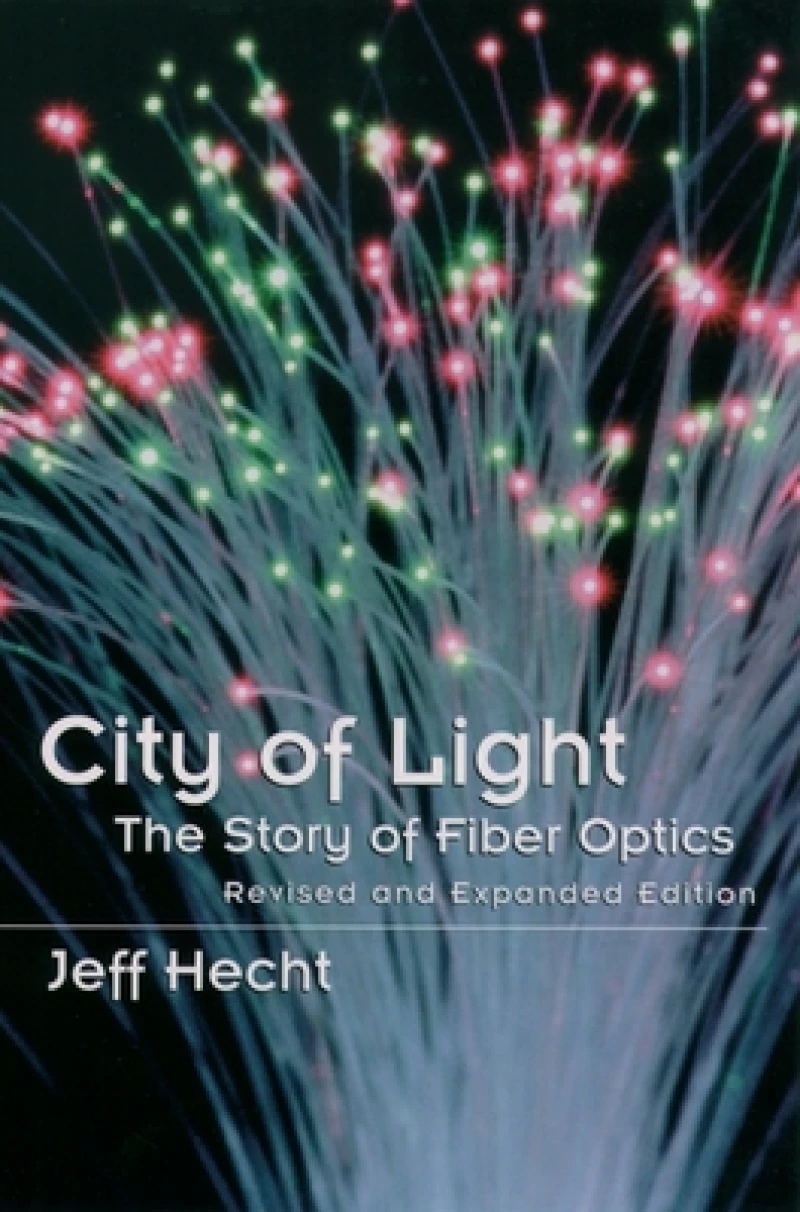
Tells the story of fiber optics, tracing its transformation from 19th-century parlor trick into the foundation of our global communications network. This book is an account of both the people and the ideas behind this revolutionary technology.
City of Light tells the story of fiber optics, tracing its transformation from 19th-century parlor trick into the foundation of our global communications network. Written for a broad audience by a journalist who has covered the field for twenty years, the book is a lively account of both the people and the ideas behind this revolutionary technology. The basic concept underlying fiber optics was first explored in the 1840s when researchers used jets of water to guide light in laboratory demonstrations. The idea caught the public eye decades later when it was used to create stunning illuminated fountains at many of the great Victorian exhibitions. The modern version of fiber optics--using flexible glass fibers to transmit light--was discovered independently five times through the first half of the century, and one of its first key applications was the endoscope, which for the first time allowed physicians to look inside the body without surgery. Endoscopes became practical in 1956 when a college undergraduate discovered how to make solid glass fibers with a glass cladding. With the invention of the laser, researchers grew interested in optical communications. While Bell Labs and others tried to send laser beams through the atmosphere or hollow light pipes, a small group at Standard Telecommunication Laboratories looked at guiding light by transparent fibers. Led by Charles K. Kao, they proposed the idea of fiber-optic communications and demonstrated that contrary to what many researchers thought glass could be made clear enough to transmit light over great distances. Following these ideas, Corning Glass Works developed the first low-loss glass fibers in 1970. From this point fiber-optic communications developed rapidly. The first experimental phone links were tested on live telephone traffic in 1977 and within half a dozen years long-distance companies were laying fiber cables for their national backbone systems. In 1988, the first transatlantic fiber-optic cable connected Europe with North America, and now fiber optics are the key element in global communications. The story continues today as fiber optics spread through the communication grid that connects homes and offices, creating huge information pipelines and replacing copper wires. The book concludes with a look at some of the exciting potential developments of this technology.
Get City of Light by at the best price and quality guaranteed only at Werezi Africa's largest book ecommerce store. The book was published by Oxford University Press Inc and it has pages.

