
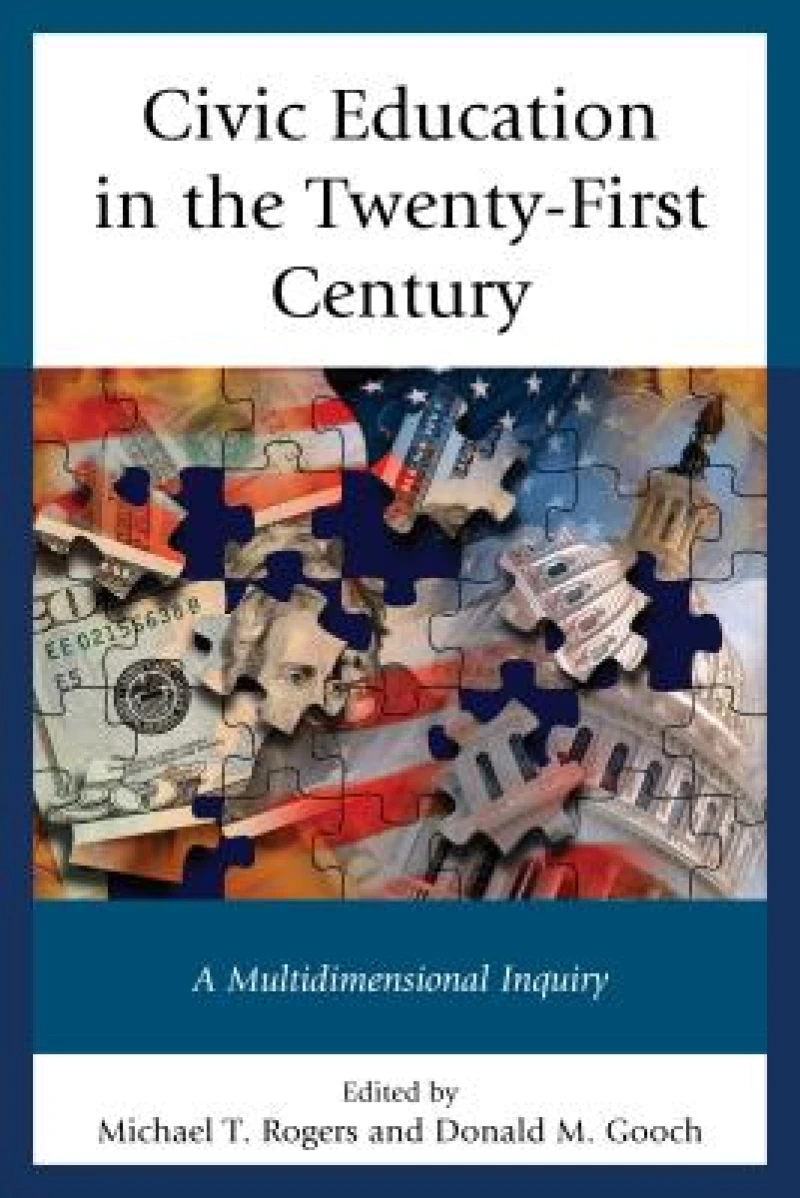
Civic Education in the Twenty-First Century : A Multidimensional Inquiry
Book Details
Format
Hardback or Cased Book
ISBN-10
073919349X
ISBN-13
9780739193495
Publisher
Bloomsbury Publishing Plc
Imprint
Lexington Books
Country of Manufacture
GB
Country of Publication
GB
Publication Date
Sep 18th, 2015
Print length
528 Pages
Weight
921 grams
Dimensions
23.40 x 16.30 x 4.30 cms
Product Classification:
Political science & theoryPolitical structures: democracyCentral government
Ksh 27,400.00
Manufactured on Demand
0 in stock
Delivery Location
Delivery fee: Select location
Secure
Quality
Fast
Imagine an America where politicians, governmental institutions, schools, new technologies, and interest groups work together to promote informed, engaged citizens. Civic Education in the Twenty-First Century brings together scholars from various disciplines to show how such a United States is possible today. Inspired by Alexis de Tocqueville’s analysis of American democracy in the early 1800s, this edited volume represents a multidimensional evaluation of civic education in its new and varied forms. While some lament a civics crisis in America today, Civic Education in the Twenty-First Century raises hope that we can have an informed and active citizenry. We find the activities of a number of politicians, government institutions, schools and interest groups as promising developments in the struggle to educate and engage Americans in their democracy. New technologies and new innovations in civic education have laid the foundation for a revitalized American civic ecology. With Civic Education in the Twenty-First Century, we call for the United States to make these practices less isolated and more common throughout the county.The volume is broken into three major sections. First there are four chapters exploring the history and philosophical debates about civic education, particularly with respect to its role in America’s educational institutions. Then, the second section provides seven groundbreaking inquiries into how politicians and political institutions can promote civic education and engagement through their routine operations. As some examples, this section explores how politicians through campaigns and judiciaries through community programs enhance civic knowledge and encourage civic engagement. This section also explores how new technologies like the Internet and social media are increasingly used by government institutions and other entities to encourage a more politically informed and engaged citizenry. Finally, the third section contains six chapters that explore programs and practices in higher education that are enhancing civic education, engagement and our knowledge of them. From the virtual civics campus of Fort Hayes State to citizens’ academies throughout the country, this section shows the possibilities for schools today to once again be civics actors and promoters.
Imagine an America where politicians, governmental institutions, schools, new technologies, and interest groups work together to promote informed, engaged citizens. Civic Education in the Twenty-First Century brings together scholars from various disciplines to show how such a United States is possible today. Inspired by Alexis de Tocqueville’s analysis of American democracy in the early 1800s, this edited volume represents a multidimensional evaluation of civic education in its new and varied forms. While some lament a civics crisis in America today, Civic Education in the Twenty-First Century raises hope that we can have an informed and active citizenry. We find the activities of a number of politicians, government institutions, schools and interest groups as promising developments in the struggle to educate and engage Americans in their democracy. New technologies and new innovations in civic education have laid the foundation for a revitalized American civic ecology. With Civic Education in the Twenty-First Century, we call for the United States to make these practices less isolated and more common throughout the county. The volume is broken into three major sections. First there are four chapters exploring the history and philosophical debates about civic education, particularly with respect to its role in America’s educational institutions. Then, the second section provides seven groundbreaking inquiries into how politicians and political institutions can promote civic education and engagement through their routine operations. As some examples, this section explores how politicians through campaigns and judiciaries through community programs enhance civic knowledge and encourage civic engagement. This section also explores how new technologies like the Internet and social media are increasingly used by government institutions and other entities to encourage a more politically informed and engaged citizenry. Finally, the third section contains six chapters that explore programs and practices in higher education that are enhancing civic education, engagement and our knowledge of them. From the virtual civics campus of Fort Hayes State to citizens’ academies throughout the country, this section shows the possibilities for schools today to once again be civics actors and promoters.
Get Civic Education in the Twenty-First Century by at the best price and quality guaranteed only at Werezi Africa's largest book ecommerce store. The book was published by Bloomsbury Publishing Plc and it has pages.

