

Claims to Traceable Proceeds : Law, Equity, and the Control of Assets
by
Aruna Nair
Book Details
Format
Hardback
ISBN-10
0198813406
ISBN-13
9780198813408
Publisher
Oxford University Press
Imprint
Oxford University Press
Country of Manufacture
GB
Country of Publication
GB
Publication Date
Mar 8th, 2018
Print length
246 Pages
Weight
538 grams
Dimensions
24.10 x 16.40 x 2.30 cms
Product Classification:
Restitution
KSh 22,600.00
Currently unavailable
0 in stock
Delivery Location
Delivery fee: Select location
Secure
Quality
Fast
In this new book Aruna Nair sets out her arguments for a re-evaluation of the law of tracing. In this model the rules of tracing do not merely resolve factual uncertainties but also define the scope of a defendant's substantive legal responsibility to a claimant.
In this new book, Aruna Nair sets out her arguments for a re-evaluation of the law of tracing. A new model of the law of tracing is proposed and the book demonstrates how current problems can be solved using this new model.The rules of tracing are not shown not to be pure rules of evidence, aimed at resolving factual uncertainties; rather, they are explained as substantive rules of law, delineating the scope of a defendant''s legal responsibility to a claimant. The book draws out the practical implications of this theoretical model, showing how a focus on defendant autonomy and claimant vulnerability can both explain the current state of English law and provide a critical perspective on potential future developments. The first part of the book considers the nature of tracing, providing an overview of the analytical and doctrinal questions raised by the current law, re-framing the dominant ''value'' account of tracing, and proposing a new model which can solve problems in the current law. The second part of the book focusses on circumstances in which the tracing remedy is available to a claimant, demonstrating the practical application of such claims to specific problems.
Get Claims to Traceable Proceeds by Aruna Nair at the best price and quality guaranteed only at Werezi Africa's largest book ecommerce store. The book was published by Oxford University Press and it has 246 pages.
Customers Who Bought This Also Bought
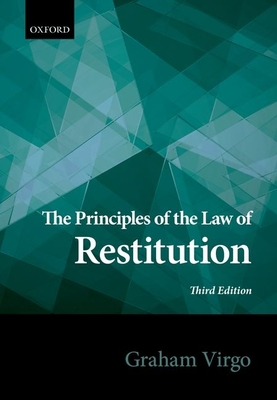
The Principles of the Law of Restitution
KSh 15,150.00

Parthenon Marbles Dispute
KSh 3,800.00

The Struggle for Redress
KSh 18,000.00

The Struggle for Redress
KSh 18,000.00

Concepts of Unjust Enrichment
KSh 18,000.00

The Change of Position Defence
KSh 26,950.00

Law at the Cutting Edge
KSh 20,600.00

Goff & Jones On Unjust Enrichment
KSh 94,300.00

Parthenon Marbles Dispute
KSh 12,600.00

Restitution for a Failure of Condition
KSh 16,750.00

Unjust Enrichment and Countervailing Obligations
KSh 8,300.00

Wrongful Enrichment
KSh 17,450.00