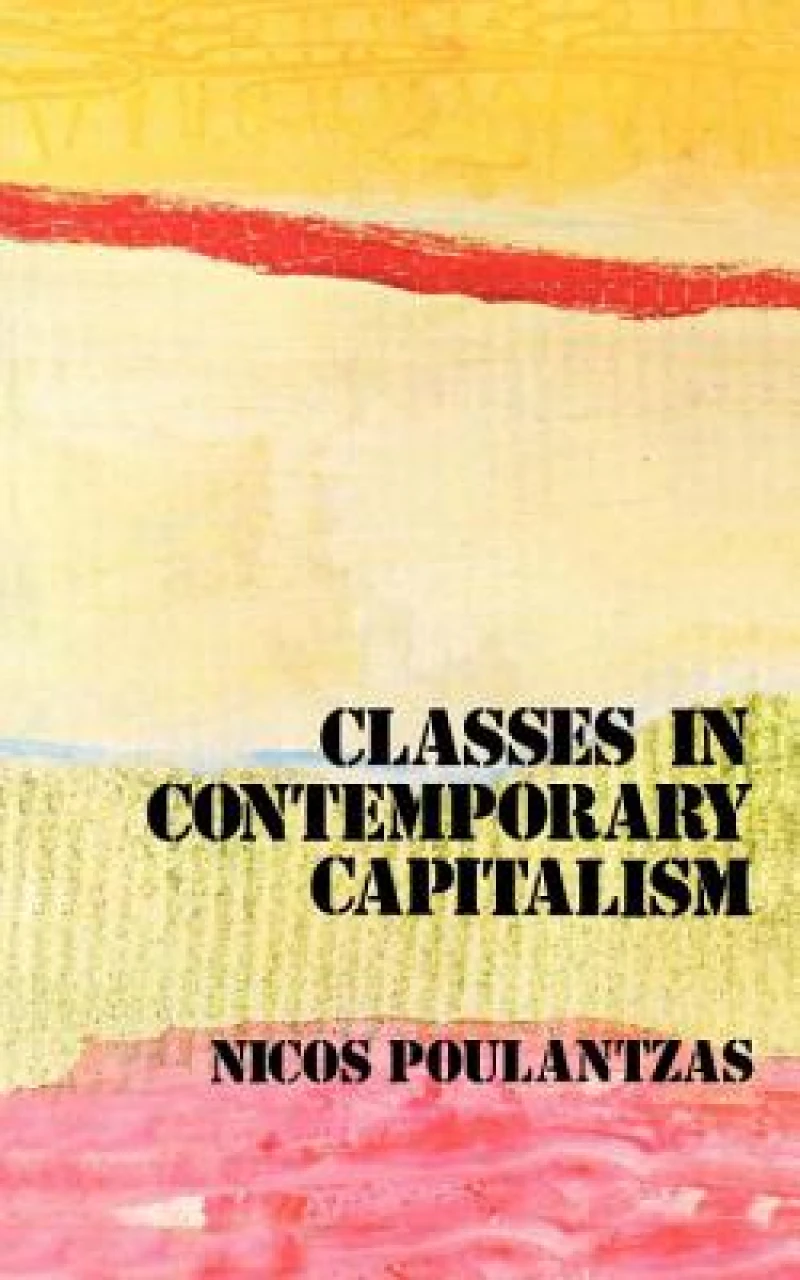
Classes in Contemporary Capitalism
Book Details
Format
Paperback / Softback
ISBN-10
0860917029
ISBN-13
9780860917021
Publisher
Verso Books
Imprint
Verso Books
Country of Manufacture
GB
Country of Publication
GB
Publication Date
Jan 1st, 1978
Print length
348 Pages
Weight
380 grams
Dimensions
20.30 x 12.60 x 2.50 cms
Ksh 4,400.00
Manufactured on Demand
0 in stock
Delivery Location
Delivery fee: Select location
Secure
Quality
Fast
Nicos Poulantzas’s third major work is a pioneering survey of some of the most fundamental, yet least studied, aspects of the class structure of advanced capitalist societies today. The book starts with a general theoretical essay that for the first time seriously explores the distinction between the “agents” and “positions” of capitalist relations of production, and seeks to avoid the typical errors of either functionalism or historicism. It also provides a polemical reconsideration of the problem of the “nation state” as a political unit today, and its relationship to the internationalization of capital.
Finally, and most originally, Poulantzas develops a long and powerful analysis of the much-abused concept of the “petty-bourgeoisie.” In this, he scrupulously distinguishes between the “traditional” categories of petty-bourgeoisie—shopkeepers, artisans, small peasants—and the “new” categories of clerical workers, supervisors, and salaried personnel in modern industry and commerce. At the same time he demonstrates the reasons why a unitary conceptualization of their class position is possible. The difficult question of the definition of “productive” and “unproductive” labor within Marx’s own account of the capitalist mode of production is subjected to a novel and radical reinterpretation. The political oscillations peculiar to each form of petty-bourgeoisie and especially their characteristic reactions to the industrial proletariat, are cogently assessed.
Poulantzas ends his work with a reminder that the actions and options of the petty-bourgeoisie are critical to any successful struggle by the working class, which must secure the alliance of important sections of the petty-bourgeoisie if the fateful experience of Chile is not to recur elsewhere tomorrow. Combining empirical and theoretical materials throughout, Classes in Contemporary Capitalism represents a notable achievement in the development of Marxist social science and political thought.
Finally, and most originally, Poulantzas develops a long and powerful analysis of the much-abused concept of the “petty-bourgeoisie.” In this, he scrupulously distinguishes between the “traditional” categories of petty-bourgeoisie—shopkeepers, artisans, small peasants—and the “new” categories of clerical workers, supervisors, and salaried personnel in modern industry and commerce. At the same time he demonstrates the reasons why a unitary conceptualization of their class position is possible. The difficult question of the definition of “productive” and “unproductive” labor within Marx’s own account of the capitalist mode of production is subjected to a novel and radical reinterpretation. The political oscillations peculiar to each form of petty-bourgeoisie and especially their characteristic reactions to the industrial proletariat, are cogently assessed.
Poulantzas ends his work with a reminder that the actions and options of the petty-bourgeoisie are critical to any successful struggle by the working class, which must secure the alliance of important sections of the petty-bourgeoisie if the fateful experience of Chile is not to recur elsewhere tomorrow. Combining empirical and theoretical materials throughout, Classes in Contemporary Capitalism represents a notable achievement in the development of Marxist social science and political thought.
Get Classes in Contemporary Capitalism by at the best price and quality guaranteed only at Werezi Africa's largest book ecommerce store. The book was published by Verso Books and it has pages.