Clientelism
Book Details
Format
Hardback
Book Series
Elements in Austrian Economics
ISBN-10
1009707671
ISBN-13
9781009707671
Publisher
Cambridge University Press
Imprint
Cambridge University Press
Country of Manufacture
GB
Country of Publication
GB
Publication Date
Dec 18th, 2025
Print length
94 Pages
Weight
282 grams
Dimensions
23.60 x 16.10 x 1.20 cms
KSh 10,100.00
Currently unavailable
0 in stock
Delivery Location
Delivery fee: Select location
Secure
Quality
Fast
This Element examines clientelism and analyzes its systemic impact on democratic institutions and markets. Clientelism arises as reciprocal exchanges of resources and benefits between actors. Clientelism is thus a rational and embedded feature of politics. This title is also available as Open Access on Cambridge Core.
This Element examines clientelism and its impact on democratic institutions and markets, emphasizing that, alongside electoral competition, politics hosts two additional arenas: one where political actors seek campaign resources and active supporters, and another where socioeconomic actors pursue access to state-distributed resources. Clientelism emerges from reciprocal exchanges between these actors. Political parties use clientelism to incentivize collective action and organize campaigns. Playing this 'clientelist game', no party can reduce clientelistic practices without risking electoral defeat or internal fragmentation. Clientelism weakens the provision of public goods and skews policymaking to benefit clients over general welfare. Eventually, it generates an economic 'tragedy of the commons', as state resources are overexploited and the economy suffers, while formal institutions often fail to constrain it. Even in advanced democracies like the United States, political competition is not only electoral, targeting voters, but structurally clientelist. This title is also available as Open Access on Cambridge Core.
Get Clientelism by Aris Trantidis at the best price and quality guaranteed only at Werezi Africa's largest book ecommerce store. The book was published by Cambridge University Press and it has 94 pages.
Customers Who Bought This Also Bought

One Day, Everyone Will Have Always Been Against This
KSh 3,050.00

Abundance
KSh 2,150.00

How Civil Wars Start
KSh 2,000.00

What Happened to Liberal Democracy?
KSh 3,050.00

Abundance
KSh 3,050.00

Winners Take All
KSh 2,350.00

One Day, Everyone Will Have Always Been Against This
KSh 2,000.00
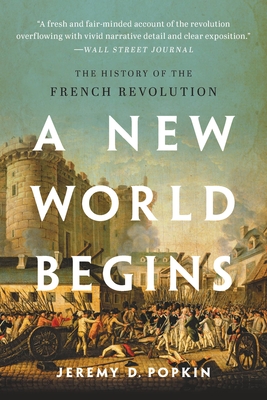
A New World Begins
KSh 3,950.00

Confidence Man
KSh 2,350.00

Erasing History
KSh 3,050.00
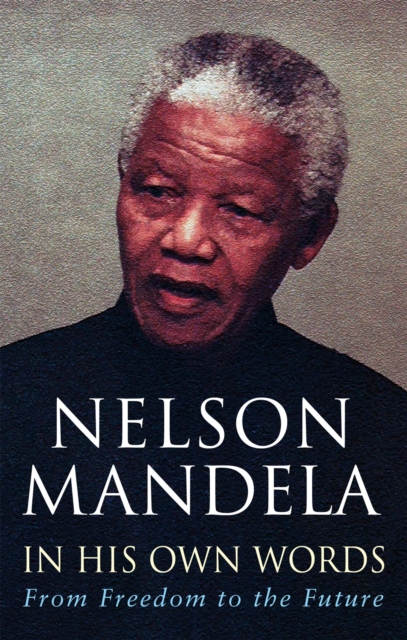
In His Own Words
KSh 2,700.00
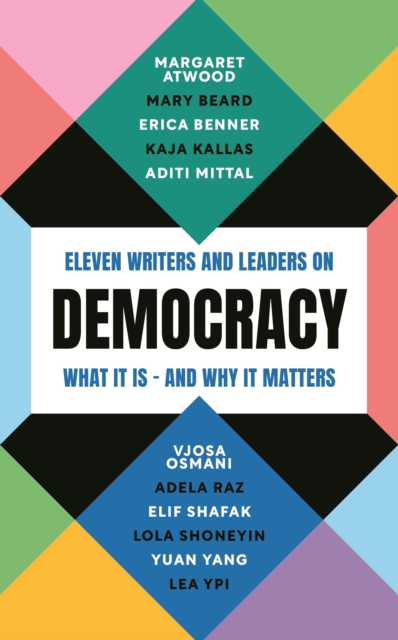
Democracy
KSh 1,450.00