
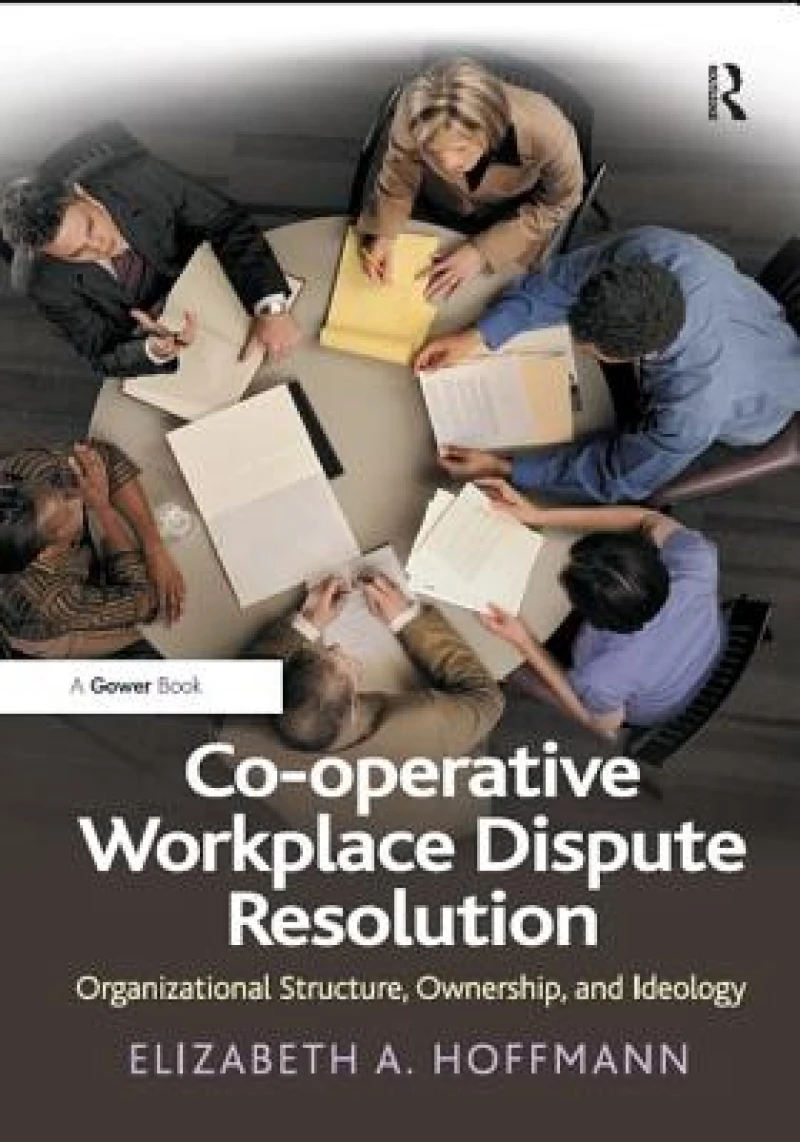
Co-operative Workplace Dispute Resolution : Organizational Structure, Ownership, and Ideology
Book Details
Format
Hardback or Cased Book
ISBN-10
1409429245
ISBN-13
9781409429241
Publisher
Taylor & Francis Ltd
Imprint
Routledge
Country of Manufacture
GB
Country of Publication
GB
Publication Date
Jul 30th, 2012
Print length
216 Pages
Weight
624 grams
Dimensions
18.10 x 24.40 x 1.90 cms
Ksh 28,800.00
Werezi Extended Catalogue
0 in stock
Delivery Location
Delivery fee: Select location
Secure
Quality
Fast
Considers the question of how workplace disputes are raised in the absence of formal hierarchy. This book focuses on dispute resolution strategies at matched pairs of worker co-operatives and conventional businesses in three very different industries: coal mining, taxicab driving, and wholefood distribution.
Understanding the complex dynamics involved in workplace disputes helps improve the way organizations deal with unwelcome but inevitable occurrences. These issues have been researched from different perspectives, but previously such research has failed to ask how flattened organizational form might impact ways of resolving disputes, focusing instead on what occurs in conventional, hierarchical organizations only. In Co-operative Workplace Dispute Resolution, Elizabeth Hoffmann considers the question of how workplace disputes are raised in the absence of formal hierarchy. In contrast to conventionally organized businesses, co-operatives attempt to evenly distribute power and ownership and encourage worker control through egalitarian ideologies, flattened management structures and greater information sharing. Like conventional businesses, though, they still pursue goals relating to profit and efficiency. Dr Hoffmann argues that lessening hierarchy and sharing power, as occurs in co-operatives, provides insight into how greater worker involvement and ownership might operate in a less extreme and more modest form in conventional mainstream business. This book focuses on dispute resolution strategies at matched pairs of worker co-operatives and conventional businesses in three very different industries: coal mining, taxicab driving, and wholefood distribution. The author’s central finding is that the worker co-operative members have access to more dispute resolution strategies than their conventionally employed counterparts. This leads to the conclusion that benefits might be achieved by conventional businesses that wish to embrace specific attributes usually associated with co-operatives, including management-employee cooperation, shared ownership, or greater workplace equality.
Get Co-operative Workplace Dispute Resolution by at the best price and quality guaranteed only at Werezi Africa's largest book ecommerce store. The book was published by Taylor & Francis Ltd and it has pages.

