
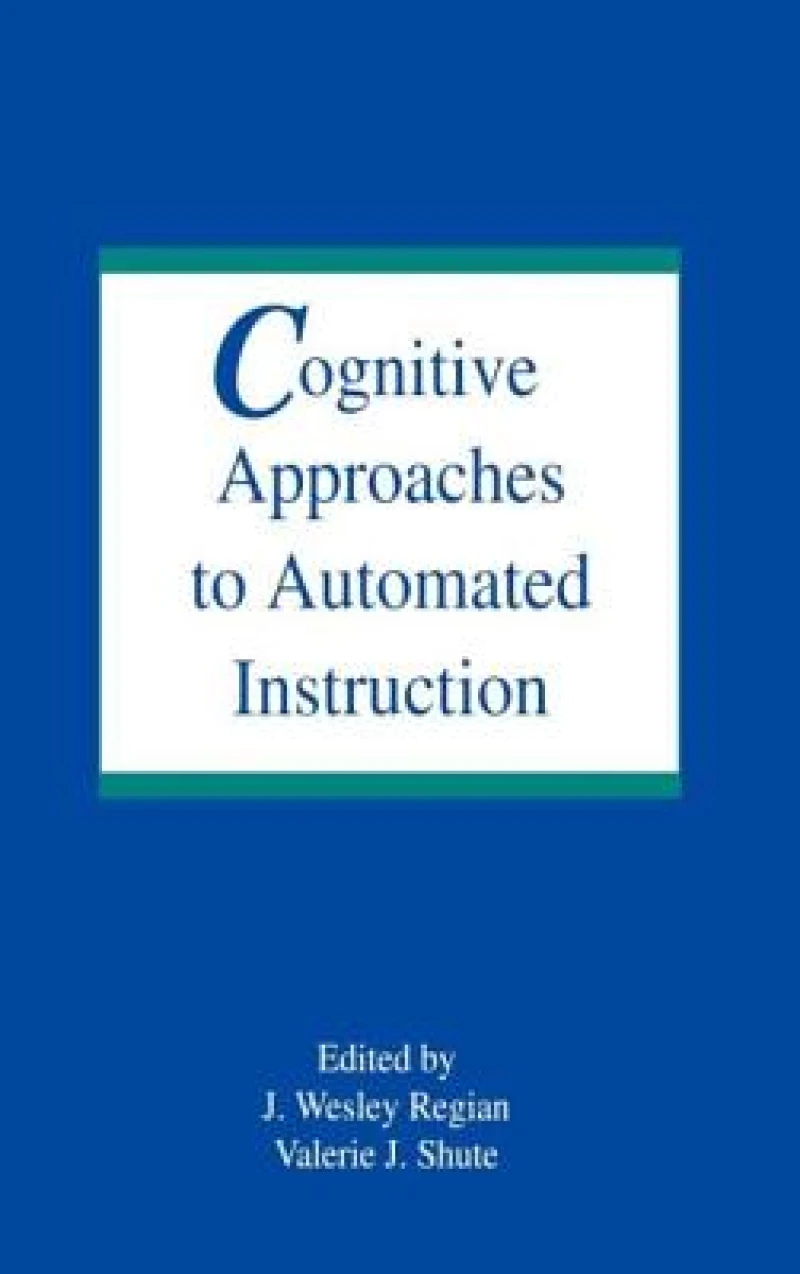
Cognitive Approaches To Automated Instruction
Book Details
Format
Hardback or Cased Book
ISBN-10
0805809929
ISBN-13
9780805809923
Publisher
Taylor & Francis Inc
Imprint
Routledge
Country of Manufacture
GB
Country of Publication
GB
Publication Date
Oct 1st, 1992
Print length
264 Pages
Weight
590 grams
Product Classification:
LearningEducational equipment & technology, computer-aided learning (CAL)
Ksh 27,900.00
Werezi Extended Catalogue
0 in stock
Delivery Location
Delivery fee: Select location
Secure
Quality
Fast
Useful to researchers as well as practitioners looking for guidance on designing automated instruction systems, this book provides a snapshot of the state-of-the-art in this research area. In so doing, it focuses on the two critical problems: first, diagnosis of the student's current level of understanding or performance; and second, selection of the appropriate intervention that will transition the student toward expert performance. Containing a comprehensive set of principled approaches to automated instruction, diagnosis, and remediation, it is the first volume on the topic to provide specific, detailed guidance on how to develop these systems. Leading researchers and practitioners represented in this book address the following questions in each chapter: * What is your approach to cognitive diagnosis for automated instruction? * What is the theoretical basis of your approach? * What data support the utility of the approach? * What is the range of applicability of your approach? * What knowledge engineering or task analysis methods are required to support your approach? Referring to automated instruction as instruction that is delivered on any microprocessor-based system, the contributors to -- and editors of -- this book believe that is it possible for automated instructional systems to be more effective than they currently are. Specifically, they argue that by using artificial intelligence programming techniques, it is possible for automated instructional systems to emulate the desirable properties of human tutors in one-on-one instruction.
Useful to researchers as well as practitioners looking for guidance on designing automated instruction systems, this book provides a snapshot of the state-of-the-art in this research area. In so doing, it focuses on the two critical problems: first, diagnosis of the student''s current level of understanding or performance; and second, selection of the appropriate intervention that will transition the student toward expert performance. Containing a comprehensive set of principled approaches to automated instruction, diagnosis, and remediation, it is the first volume on the topic to provide specific, detailed guidance on how to develop these systems.
Leading researchers and practitioners represented in this book address the following questions in each chapter:
* What is your approach to cognitive diagnosis for automated instruction?
* What is the theoretical basis of your approach?
* What data support the utility of the approach?
* What is the range of applicability of your approach?
* What knowledge engineering or task analysis methods are required to support your approach?
Referring to automated instruction as instruction that is delivered on any microprocessor-based system, the contributors to -- and editors of -- this book believe that is it possible for automated instructional systems to be more effective than they currently are. Specifically, they argue that by using artificial intelligence programming techniques, it is possible for automated instructional systems to emulate the desirable properties of human tutors in one-on-one instruction.
Leading researchers and practitioners represented in this book address the following questions in each chapter:
* What is your approach to cognitive diagnosis for automated instruction?
* What is the theoretical basis of your approach?
* What data support the utility of the approach?
* What is the range of applicability of your approach?
* What knowledge engineering or task analysis methods are required to support your approach?
Referring to automated instruction as instruction that is delivered on any microprocessor-based system, the contributors to -- and editors of -- this book believe that is it possible for automated instructional systems to be more effective than they currently are. Specifically, they argue that by using artificial intelligence programming techniques, it is possible for automated instructional systems to emulate the desirable properties of human tutors in one-on-one instruction.
Get Cognitive Approaches To Automated Instruction by at the best price and quality guaranteed only at Werezi Africa's largest book ecommerce store. The book was published by Taylor & Francis Inc and it has pages.

