
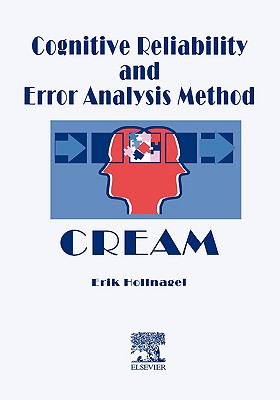
Cognitive Reliability and Error Analysis Method (CREAM)
by
E. Hollnagel
Book Details
Format
Hardback
ISBN-10
0080428487
ISBN-13
9780080428482
Publisher
Elsevier Science & Technology
Imprint
Elsevier Science Ltd
Country of Manufacture
US
Country of Publication
GB
Publication Date
Jan 23rd, 1998
Print length
302 Pages
Weight
660 grams
Dimensions
17.60 x 25.40 x 2.30 cms
Product Classification:
Reliability engineeringHuman-computer interactionHuman–computer interaction
KSh 24,850.00
Currently unavailable
0 in stock
Delivery Location
Delivery fee: Select location
Secure
Quality
Fast
Presents integrated approaches to accident analysis and risk assessment. This work helps system designers and risk analysts to: identify tasks that require human cognition and therefore depend on cognitive reliability; provide an appraisal of the consequences of human performance on system safety which can be used in PSA; and more.
The growing dependence of working environments on complex technology has created many challenges and lead to a large number of accidents. Although the quality of organization and management within the work environment plays an important role in these accidents, the significance of individual human action (as a direct cause and as a mitigating factor) is undeniable. This has created a need for new, integrated approaches to accident analysis and risk assessment. This book detailing the use of CREAM is, therefore, both timely and useful. It presents an error taxonomy which integrates individual, technological and organizational factors based on cognitive engineering principles. In addition to the necessary theoretical foundation, it provides a step-by-step description of how the taxonomy can be applied to analyse as well as predict performance using a context-dependent cognitive model. CREAM can be used as a second-generation human reliability analysis (HRA) approach in probabilistic safety assessment (PSA), as a stand-alone method for accident analysis and as part of a larger design method for interactive systems. In particular, the use of CREAM will enable system designers and risk analysts to: • identify tasks that require human cognition and therefore depend on cognitive reliability• determine the conditions where cognitive reliability and ensuing risk may be reduced• provide an appraisal of the consequences of human performance on system safety which can be used in PSA.
Get Cognitive Reliability and Error Analysis Method (CREAM) by E. Hollnagel at the best price and quality guaranteed only at Werezi Africa's largest book ecommerce store. The book was published by Elsevier Science & Technology and it has 302 pages.
Customers Who Bought This Also Bought
Optimal Reliability Design
KSh 9,800.00
Transient Characteristics, Modelling and Stability Analysis of Microgrid
KSh 16,200.00
Reliability Modeling and Analysis of Smart Power Systems
KSh 16,200.00
ATEX—Explosive Atmospheres
KSh 23,400.00
Diagnostics and Reliability of Pipeline Systems
KSh 23,400.00

Reliability Data Collection and Analysis
KSh 12,950.00

Bayesian Methods in Reliability
KSh 18,000.00
Reliability-Centered Maintenance
KSh 10,250.00

A Kaizen Approach to Food Safety
KSh 16,200.00

Nuclear Power Plants
KSh 32,400.00
Rotating Machinery, Structural Health Monitoring, Shock and Vibration, Volume 5
KSh 45,000.00
Coefficient Diagram Method for Control System Design
KSh 19,800.00
More in This Genre
Optimal Reliability Design
KSh 9,800.00
Transient Characteristics, Modelling and Stability Analysis of Microgrid
KSh 16,200.00
Reliability Modeling and Analysis of Smart Power Systems
KSh 16,200.00
ATEX—Explosive Atmospheres
KSh 23,400.00
Diagnostics and Reliability of Pipeline Systems
KSh 23,400.00
Reliability Data Collection and Analysis
KSh 12,950.00
