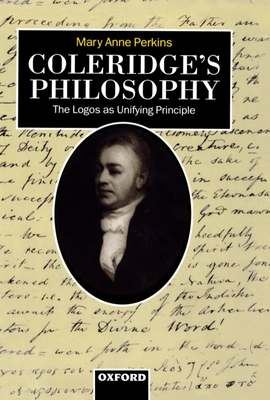
Coleridge's Philosophy : The Logos as Unifying Principle
Book Details
Format
Hardback
ISBN-10
0198240759
ISBN-13
9780198240754
Publisher
Oxford University Press
Imprint
Oxford University Press
Country of Manufacture
GB
Country of Publication
GB
Publication Date
Jul 21st, 1994
Print length
328 Pages
Weight
498 grams
Dimensions
14.60 x 22.40 x 2.40 cms
KSh 25,400.00
Temporarily out of stock, due soon
0 in stock
Delivery Location
Delivery fee: Select location
Secure
Quality
Fast
Shows that Coleridge was much more than an opium-addicted, nature-loving Romantic poet. He contributed insights in the fields of religion, science, linguistic analysis, psychology, and political and social criticism. The author explores his attempt "to reduce all knowledges into harmony".
Coleridge''s status as a philosopher has often been questioned. `I am a poor poet in England,'' he admitted, `but in America, I am a great philosopher.'' J. S. Mill''s assertion that `the time is yet far distant when, in the estimation of Coleridge, and of his influence upon the intellect of our time, anything like unanimity can be looked for'' seems to have been justified.Mary Anne Perkins re-examines Coleridge''s claim to have developed a `logosophic'' system which attempted `to reduce all knowledges into harmony''. She pays particular attention to his later writings, some of which are still unpublished. She suggests that the accusations of plagiarism and of muddled, abstruse metaphysics which have been levelled at him may be challenged by a thorough reading of his work in which his unifying principle is revealed. She explores the various meanings for the term `Logos'', a recurrent theme in every area of Coleridge''s thought - philosophy, religion, natural science, history, political and social criticism, literary theory, and psychology.Coleridge was responding to the concerns of his own time, a revolutionary age in which increasing intellectual and moral fragmentation and confusion seemed to him to threaten both individuals and society. Drawing on the whole of Western intellectual history, he offered a ground for philosophy which was relational rather than mechanistic. He is one of those few thinkers whose work appears to become more interesting, his perceptions more acute, as the historical gulf widens. This book is a contribution to the reassessment that he deserves.
Get Coleridge's Philosophy by Mary Anne Perkins at the best price and quality guaranteed only at Werezi Africa's largest book ecommerce store. The book was published by Oxford University Press and it has 328 pages.
Customers Who Bought This Also Bought
The Picture of Dorian Gray
KSh 1,250.00
Pride and Prejudice
KSh 1,150.00

Moby-Dick
KSh 1,750.00
Emma
KSh 1,350.00

The Karamazov Brothers
KSh 2,100.00
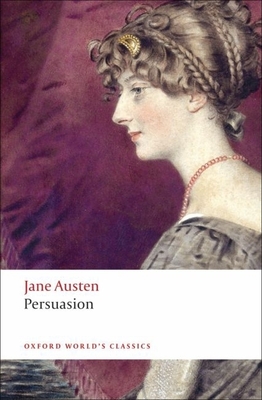
Persuasion
KSh 1,100.00

Bleak House
KSh 2,150.00
What Matters in Jane Austen?
KSh 2,700.00
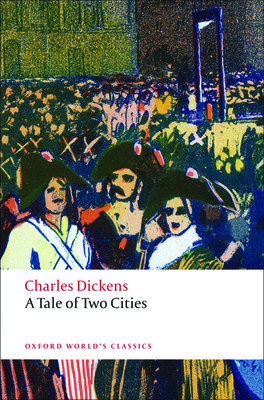
A Tale of Two Cities
KSh 1,200.00
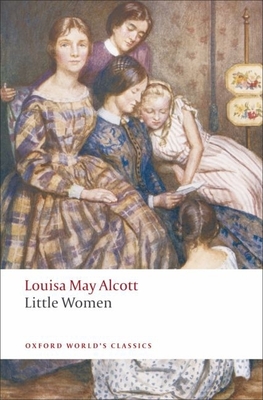
Little Women
KSh 1,550.00
David Copperfield
KSh 2,100.00
Mansfield Park
KSh 1,250.00