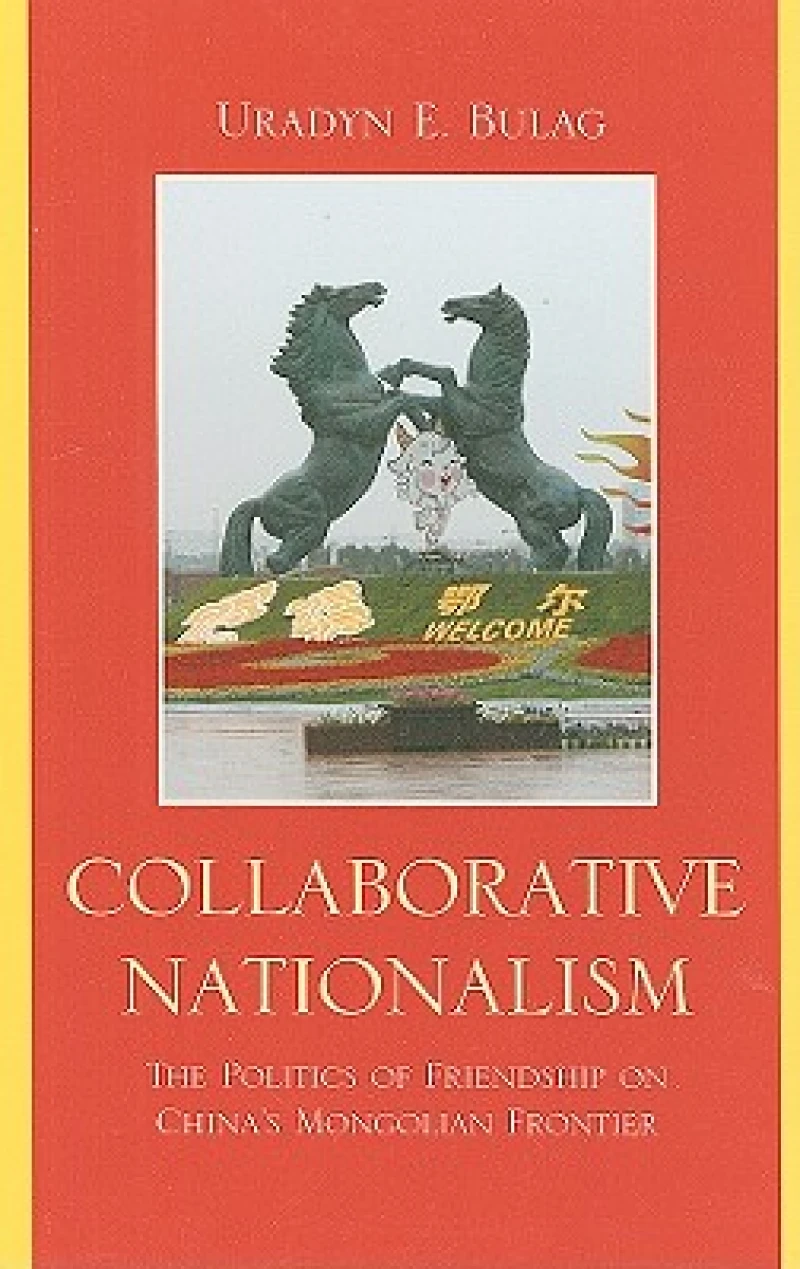
Collaborative Nationalism : The Politics of Friendship on China's Mongolian Frontier
Book Details
Format
Hardback or Cased Book
Book Series
Asia/Pacific/Perspectives
ISBN-10
1442204311
ISBN-13
9781442204317
Publisher
Bloomsbury Publishing Plc
Imprint
Rowman & Littlefield Publishers
Country of Manufacture
GB
Country of Publication
GB
Publication Date
Jul 16th, 2010
Print length
302 Pages
Weight
602 grams
Dimensions
20.20 x 23.80 x 2.00 cms
Product Classification:
Regional studiesPolitics & governmentInternational relations
Ksh 23,200.00
Manufactured on Demand
Delivery in 29 days
Delivery Location
Delivery fee: Select location
Delivery in 29 days
Secure
Quality
Fast
Cosmopolitanism and friendship have become key themes for understanding ethnicity and nationalism. In this deeply original study of the Mongols, leading scholar Uradyn E. Bulag draws on these themes to develop a new concept he terms "collaborative nationalism." He uses this concept to explore the paradoxical dilemma of minorities in China as they fight not against being excluded but against being embraced too tightly in the bonds of "friendship." Going beyond traditional binary relationships, he offers a unique triangular perspective that illuminates the complexity of regional interaction. Thus, Collaborative Nationalism traces the regional and global significance of the Mongols in the fierce competition among China, Japan, Mongolia, and Russia to appropriate the Mongol heritage to buttress their own national identities. The book considers a rich array of case studies that range from Chinggis Khan to reincarnate lamas, from cadres to minority revolutionary history, and from building the Mongolian working class to interethnic adoption. So-called friendship and collaboration permeate all of these arenas, but Bulag digs below the surface to focus on the animosity and conflicts they both generate and mask. Weighing the options the Mongols face, he argues that the ethnopolitical is not so much about identity as it is about the capacity of an ethnic group to decide and organize its own vision of itself, both within its community and in relation to other groups. Nationalism, he contends, is collaborative at the same time that it is predicated on the pursuit of sovereignty.
Get Collaborative Nationalism by at the best price and quality guaranteed only at Werezi Africa's largest book ecommerce store. The book was published by Bloomsbury Publishing Plc and it has pages.