
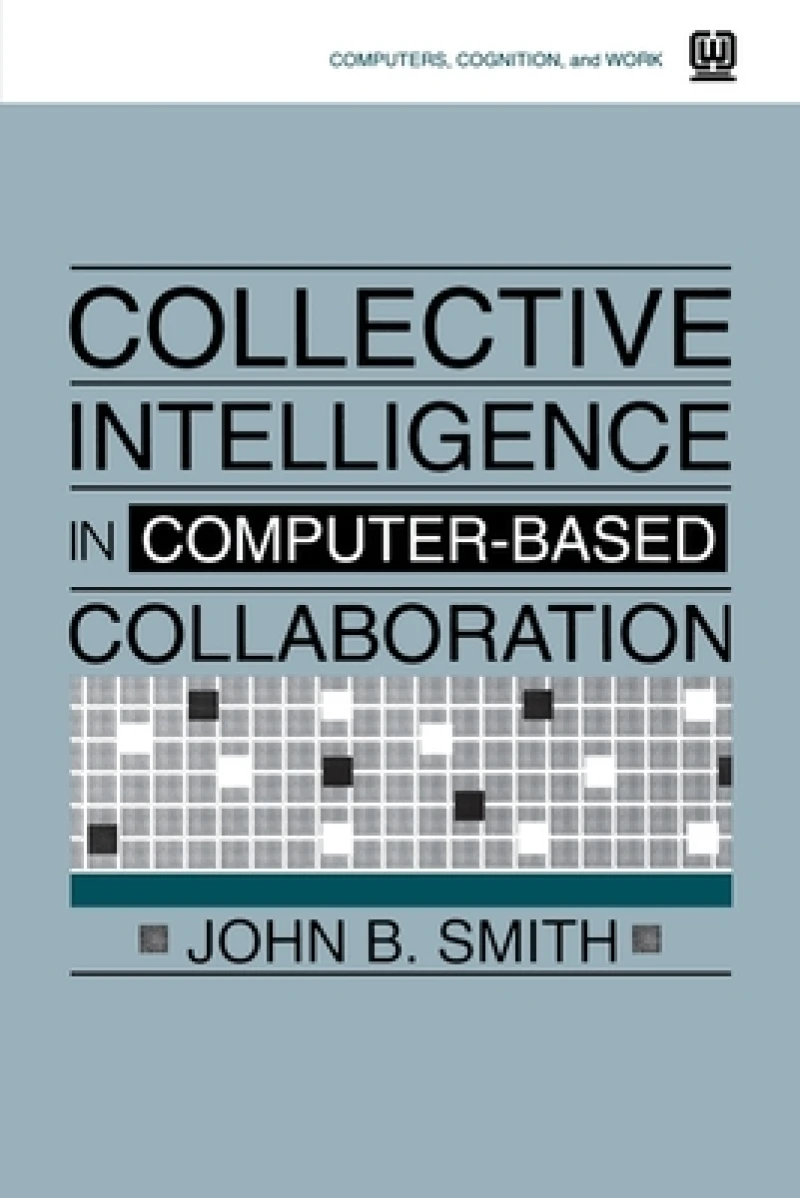
Collective Intelligence in Computer-Based Collaboration
Book Details
Format
Paperback / Softback
Book Series
Computers, Cognition, and Work Series
ISBN-10
0805813209
ISBN-13
9780805813203
Publisher
Taylor & Francis Inc
Imprint
CRC Press Inc
Country of Manufacture
GB
Country of Publication
GB
Publication Date
Aug 1st, 1994
Print length
264 Pages
Weight
431 grams
Product Classification:
Intelligence & reasoningArtificial intelligenceHuman-computer interaction
Ksh 9,000.00
Werezi Extended Catalogue
0 in stock
Delivery Location
Delivery fee: Select location
Secure
Quality
Fast
Proposing a new paradigm for Computer Supported Cooperative Work (CSCW), this ground-breaking book presents a research agenda for developing and testing that paradigm
Proposing a new paradigm for Computer Supported Cooperative Work (CSCW), this ground-breaking book presents a research agenda for developing and testing that paradigm. It constitutes the first attempt to outline a comprehensive model of collaboration that integrates the cognitive/conceptual and social dynamics of groups.
The challenge faced by all groups engaged in intellectual work is, on the one hand, to divide the task so that efforts of individual members may proceed in parallel and, on the other hand, to synthesize their separate contributions to form a coherent whole. Addressing this challenge, Smith examines the general form of a theory of computer-based collaboration that extends across different tasks and working situations. He uses the work of Newell, Simon, and Anderson as a base from which to consider a group as a form of distributed information processing system. Within groups, there are constructs analogous to human long-term and short-term memory, conceptual processes, and problem solving and knowledge-construction strategies. He discusses two metacognitive issues -- awareness and control -- as they occur in collaborative behavior. And he reviews a number of advanced computer systems that support collaboration, focusing on their impact on the thinking and behavior of groups.
Smith''s theoretical framework combines elements of Information Processing System theory -- and its detailed process models of cognitive behavior -- with the situated perspective of activity theory. The book suggests new and useful ways of conceiving problems and solutions to all those interested in the ways in which people interact with each other and with computers to achieve goals.
The challenge faced by all groups engaged in intellectual work is, on the one hand, to divide the task so that efforts of individual members may proceed in parallel and, on the other hand, to synthesize their separate contributions to form a coherent whole. Addressing this challenge, Smith examines the general form of a theory of computer-based collaboration that extends across different tasks and working situations. He uses the work of Newell, Simon, and Anderson as a base from which to consider a group as a form of distributed information processing system. Within groups, there are constructs analogous to human long-term and short-term memory, conceptual processes, and problem solving and knowledge-construction strategies. He discusses two metacognitive issues -- awareness and control -- as they occur in collaborative behavior. And he reviews a number of advanced computer systems that support collaboration, focusing on their impact on the thinking and behavior of groups.
Smith''s theoretical framework combines elements of Information Processing System theory -- and its detailed process models of cognitive behavior -- with the situated perspective of activity theory. The book suggests new and useful ways of conceiving problems and solutions to all those interested in the ways in which people interact with each other and with computers to achieve goals.
Get Collective Intelligence in Computer-Based Collaboration by at the best price and quality guaranteed only at Werezi Africa's largest book ecommerce store. The book was published by Taylor & Francis Inc and it has pages.

