
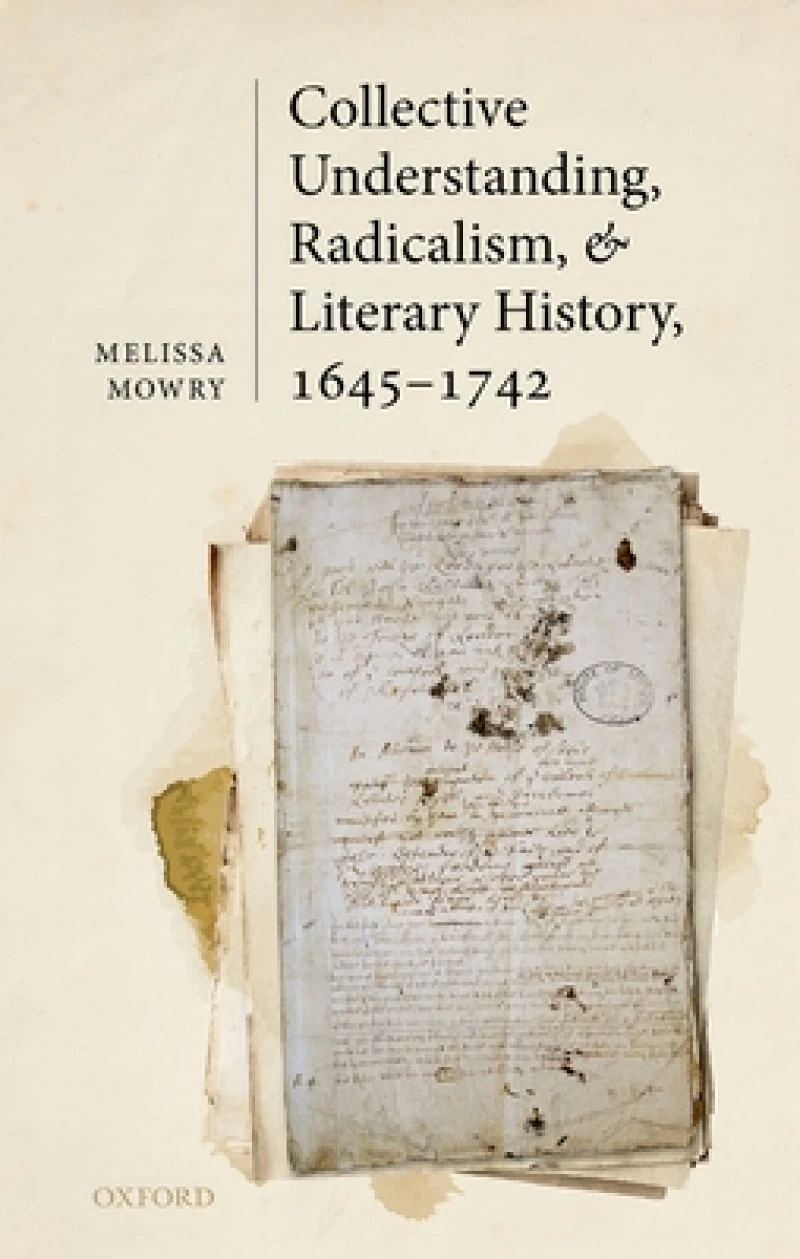
Collective Understanding, Radicalism, and Literary History, 1645-1742
Book Details
Format
Hardback or Cased Book
ISBN-10
0192844385
ISBN-13
9780192844385
Publisher
Oxford University Press
Imprint
Oxford University Press
Country of Manufacture
GB
Country of Publication
GB
Publication Date
Oct 21st, 2021
Print length
262 Pages
Weight
446 grams
Dimensions
14.60 x 22.50 x 2.20 cms
Product Classification:
16th century, c 1500 to c 159917th century, c 1600 to c 169918th century, c 1700 to c 179919th century, c 1800 to c 1899Literary studies: generalLiterary studies: fiction, novelists & prose writersLiterary studies: fiction, novelists and prose writersHistoryArchaeologyPolitical science & theoryPolitical science and theoryHistoryArchaeology
Ksh 17,800.00
Manufactured on Demand
0 in stock
Delivery Location
Delivery fee: Select location
Secure
Quality
Fast
Explores the ways in which the non-elite literary culture of the late seventeenth to mid eighteenth centuries worked to produce knowledge through collaborative means, in opposition to this period's more widely recognized focus on the authority of individuality.
Political, literary, and cultural historians of the early modern Anglophone world have long characterized the crucial century between 1642 and 1742 as the period when absolutist theories of sovereignty yielded their dominance to shared models of governance and a burgeoning doctrine of unalienable, individual rights. Yet even the most cursory glance at the cultural record, reveals that individualism was largely a footnote to a conflict over the production of political and cultural authority that erupted around the middle of the seventeenth century between sovereignty and collectivity. Collective Understanding, Radicalism, and Literary History reaches back to the English civil wars (1642-46, 1648) when a distinctive and anti-authoritarian hermeneutic emerged from the dissident community known as the Levellers. Active between 1645 and 1653, the Levellers argued that a more just political order required that knowledge, previously structured by the epistemology of singularity upon which sovereignty had built its authority, be reorganized around the interpretive principles and practices of affiliation and collectivity. Collective Understanding contends that late Stuart and eighteenth-century literature played a central role in marginalizing the non-elite methods of interpretation and knowledge production that had emerged in the 1640s. While pamphlets and other readily available texts ridiculed members of the commonalty, it was the longer narrative arcs of drama and fiction that were uniquely able to foreground the collaborative methods civil war dissidents and the Levellers in particular had used to advance their opposition to sovereignty''s epistemological paradigm. Writers such as William Davenant, Aphra Behn, Edward Sexby, Algernon Sidney, and Daniel Defoe repeatedly exposed these dissident methods as a profound and potentially catastrophic challenge to the political privileges of the ancien régime as well as its ancestral monopoly on the production of new knowledge.
Get Collective Understanding, Radicalism, and Literary History, 1645-1742 by at the best price and quality guaranteed only at Werezi Africa's largest book ecommerce store. The book was published by Oxford University Press and it has pages.

