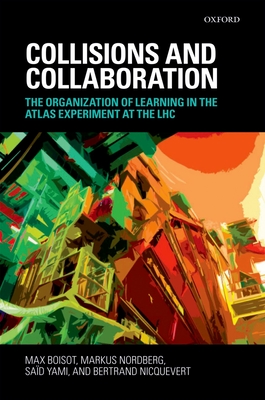
Collisions and Collaboration : The Organization of Learning in the ATLAS Experiment at the LHC
Book Details
Format
Hardback
ISBN-10
0199567921
ISBN-13
9780199567928
Publisher
Oxford University Press
Imprint
Oxford University Press
Country of Manufacture
GB
Country of Publication
GB
Publication Date
Jul 28th, 2011
Print length
336 Pages
Weight
666 grams
Dimensions
24.10 x 15.70 x 2.40 cms
KSh 9,750.00
Currently unavailable
0 in stock
Delivery Location
Delivery fee: Select location
Secure
Quality
Fast
The Large Hadron Collider at CERN is the world's largest scientific experiment involving 3,000 scientists from 38 countries. Here a team of organization theorists collaborate with leading figures at CERN to understand how this project has been organized and what lessons can be learnt for the management of major projects and 'big science'.
After twenty-five years of preparation, the Large Hadron Collider at CERN, Geneva, is finally running its intensive scientific experiments into high-energy particle physics. These experiments, which have so captured the public''s imagination, take the world of physics to a new energy level, the terascale, at which elementary particles are accelerated to one millionth of a percent of the speed of light and made to smash into each other with a combined energy of around fourteen trillion electron-volts. What new world opens up at the terascale? No one really knows, but the confident expectation is that radically new phenomena will come into view. The kind of ''big science'' being pursued at CERN, however, is becoming ever more uncertain and costly. Do the anticipated benefits justify the efforts and the costs? This book aims to give a broad organizational and strategic understanding of the nature of ''big science'' by analyzing one of the major experiments that uses the Large Hadron Collider, the ATLAS Collaboration. It examines such issues as: the flow of ''interlaced'' knowledge between specialist teams; the intra- and inter-organizational dynamics of ''big science''; the new knowledge capital being created for the workings of the experiment by individual researchers, suppliers, and e-science and ICTs; the leadership implications of a collaboration of nearly three thousand members; and the benefits for the wider societal setting. This book aims to examine how, in the face of high levels of uncertainty and risk, ambitious scientific aims can be achieved by complex organizational networks characterized by cultural diversity, informality, and trust - and where ''big science'' can head next.
Get Collisions and Collaboration by Bertrand Nicquevert, Markus Nordberg at the best price and quality guaranteed only at Werezi Africa's largest book ecommerce store. The book was published by Oxford University Press and it has 336 pages.
Customers Who Bought This Also Bought

The Thinking Machine
KSh 2,350.00

Economics: The Economist Guide
KSh 2,150.00
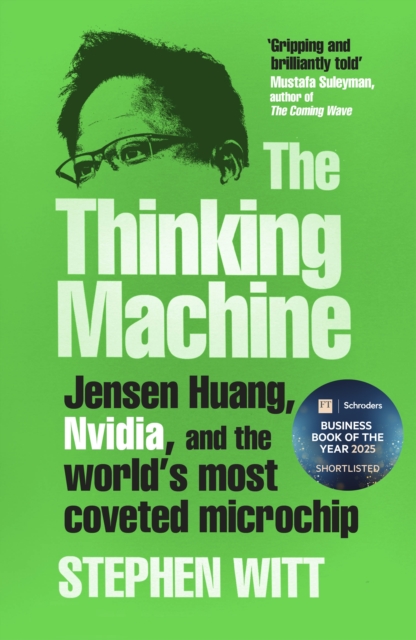
The Thinking Machine
KSh 4,500.00

Technology-Enhanced Entrepreneurship Education and Strategic Collaborations
KSh 30,950.00

Critical Realism and Morphogenetic Leadership
KSh 30,950.00

Reverse Thinking
KSh 2,800.00

The Political Economy of Surveillance Capitalism
KSh 12,250.00

Artificial Intelligence for Knowledge Management
KSh 16,200.00
Secrets of Analytical Leaders
KSh 9,200.00
Knowledge and Systems Science
KSh 9,900.00

Information Governance for Healthcare Professionals
KSh 15,100.00
Behavioral Competencies for Innovation
KSh 9,000.00