
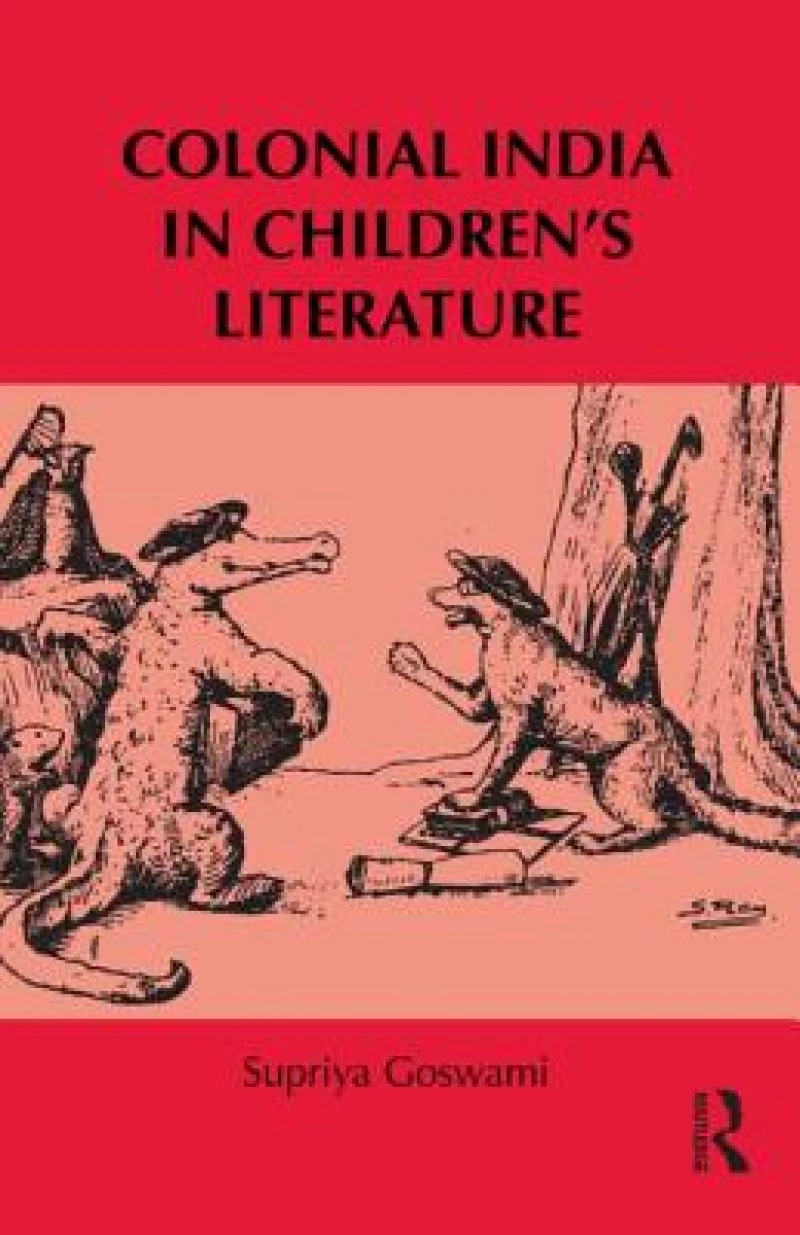
Colonial India in Children's Literature
Book Details
Delivery Location
Delivery fee: Select location
Colonial India in Childrens Literature is the first book-length study to explore the intersections of childrens literature and defining historical moments in colonial India. Engaging with important theoretical and critical literature that deals with colonialism, hegemony, and marginalization in children''s literature, Goswami proposes that British, Anglo-Indian, and Bengali childrens literature respond to five key historical events: the missionary debates preceding the Charter Act of 1813, the defeat of Tipu Sultan, the Mutiny of 1857, the birth of Indian nationalism, and the Swadeshi movement resulting from the Partition of Bengal in 1905. Through a study of works by Mary Sherwood (1775-1851), Barbara Hofland (1770-1844), Sara Jeanette Duncan (1861-1922), Rudyard Kipling (1865-1936), Upendrakishore Ray (1863-1915), and Sukumar Ray (1887-1923), Goswami examines how childrens literature negotiates and represents these momentous historical forces that unsettled Britains imperial ambitions in India.
Colonial India in Childrens Literature is the first book-length study to explore the intersections of childrens literature and defining historical moments in colonial India. Engaging with important theoretical and critical literature that deals with colonialism, hegemony, and marginalization in children''s literature, Goswami proposes that British, Anglo-Indian, and Bengali childrens literature respond to five key historical events: the missionary debates preceding the Charter Act of 1813, the defeat of Tipu Sultan, the Mutiny of 1857, the birth of Indian nationalism, and the Swadeshi movement resulting from the Partition of Bengal in 1905. Through a study of works by Mary Sherwood (1775-1851), Barbara Hofland (1770-1844), Sara Jeanette Duncan (1861-1922), Rudyard Kipling (1865-1936), Upendrakishore Ray (1863-1915), and Sukumar Ray (1887-1923), Goswami examines how childrens literature negotiates and represents these momentous historical forces that unsettled Britains imperial ambitions in India.
Goswami argues that nineteenth-century British and Anglo-Indian childrens texts reflect two distinct moods in Britains colonial enterprise in India. Sherwood and Hofland (writing before 1857) use the tropes of conversion and captivity as a means of awakening children to the dangers of India, whereas Duncan and Kipling shift the emphasis to martial prowess, adaptability, and empirical knowledge as defining qualities in British and Anglo-Indian children. Furthermore, Goswamis analysis of early nineteenth-century childrens texts written by women authors redresses the preoccupation with male authors and boys adventure stories that have largely informed discussions of juvenility in the context of colonial India.
This groundbreaking book also seeks to open up the canon by examining early twentieth-century Bengali childrens texts that not only draw literary inspiration from nineteenth-century British childrens literature, but whose themes are equally shaped by empire.
Get Colonial India in Children's Literature by at the best price and quality guaranteed only at Werezi Africa's largest book ecommerce store. The book was published by Taylor & Francis Ltd and it has pages.

