
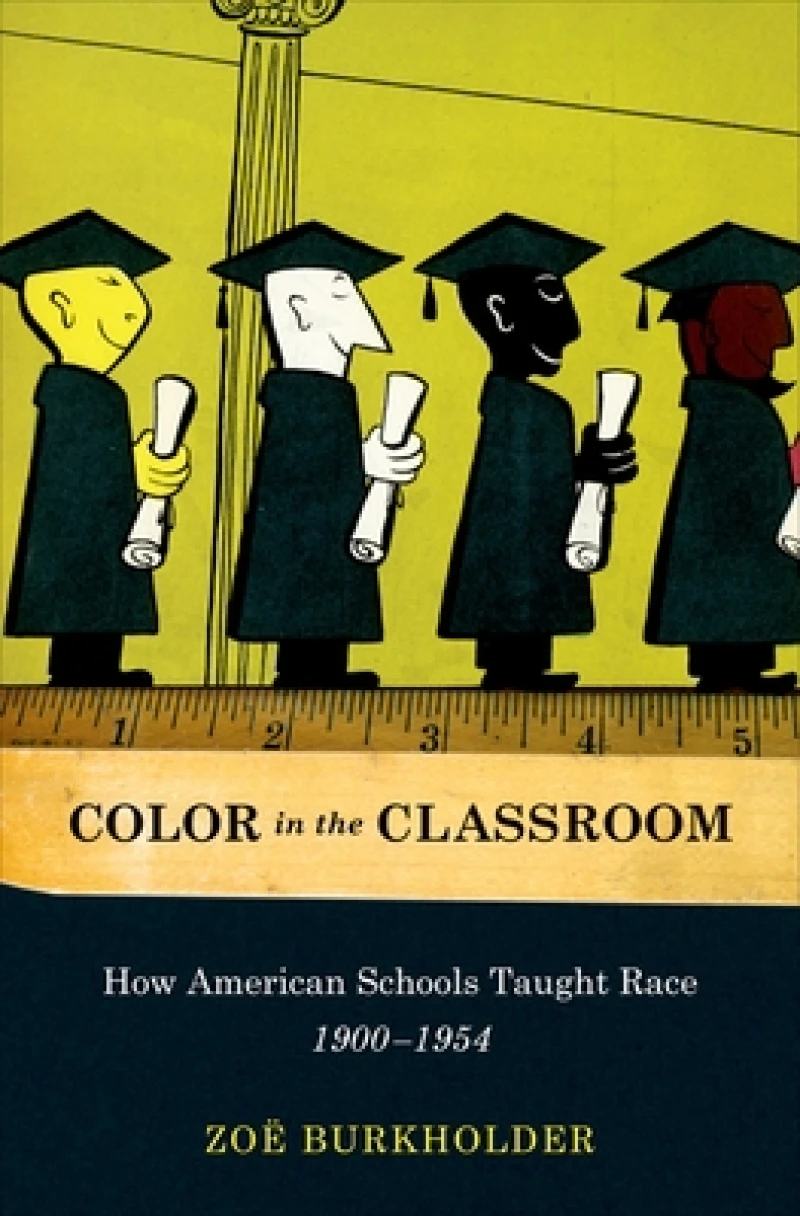
Color in the Classroom : How American Schools Taught Race, 1900-1954
Book Details
Format
Hardback or Cased Book
ISBN-10
0199751722
ISBN-13
9780199751723
Publisher
Oxford University Press Inc
Imprint
Oxford University Press Inc
Country of Manufacture
US
Country of Publication
GB
Publication Date
Oct 13th, 2011
Print length
264 Pages
Weight
542 grams
Dimensions
16.30 x 23.60 x 2.50 cms
Ksh 10,400.00
Manufactured on Demand
0 in stock
Delivery Location
Delivery fee: Select location
Secure
Quality
Fast
Color in the Classroom is the first historical analysis of how schools and teachers powerfully influenced the social construction of race in America in the half century before the Brown decision.
Color in the Classroom is the first historical analysis of how schools and teachers have powerfully influenced the social construction of race in America. Between the turn of the twentieth century and the historic Brown v. Board of Education decision in 1954, the way that American schools taught about "race" changed dramatically. This transformation was engineered by the nation''s most prominent activists, including Franz Boas, Ruth Benedict, and Margaret Mead during World War II. Inspired by scientific racism in Nazi Germany, anthropologists decided that the best way to fight racial prejudice was to teach what they saw as the "truth" about race in the one institution that had the power to do the most good--American schools. Anthropologists created lesson plans, lectures, courses, and pamphlets designed to revise what they called "the ''race'' concept" in American education. They believed that if teachers presented race in scientific and egalitarian terms, that American citizens would become less racist. Although nearly forgotten today, this educational reform movement represents an important component of early civil rights activism that emerged alongside the domestic and global tensions of World War II. Drawing on hundreds of first-hand accounts written by teachers nationwide, Zoe Burkholder traces the influence of this anthropological activism on the way that teachers understood, spoke, and taught about race on an everyday basis for more than fifty years. She explains how and why teachers readily translated certain aspects of anthropological theory, such as the division of race into three main categories, while they struggled to make sense of more complex models of cultural diversity and structural inequality. As they translated anthropological theories about race into practice, teachers crafted an educational discourse on race that differed significantly from the definition of race produced by scientists at mid-century. This compelling book will be of special interest to historians of race, civil rights, and education, as well as to anthropologists and educators interested in the role of schools as racializing institutions in America.
Get Color in the Classroom by at the best price and quality guaranteed only at Werezi Africa's largest book ecommerce store. The book was published by Oxford University Press Inc and it has pages.

