
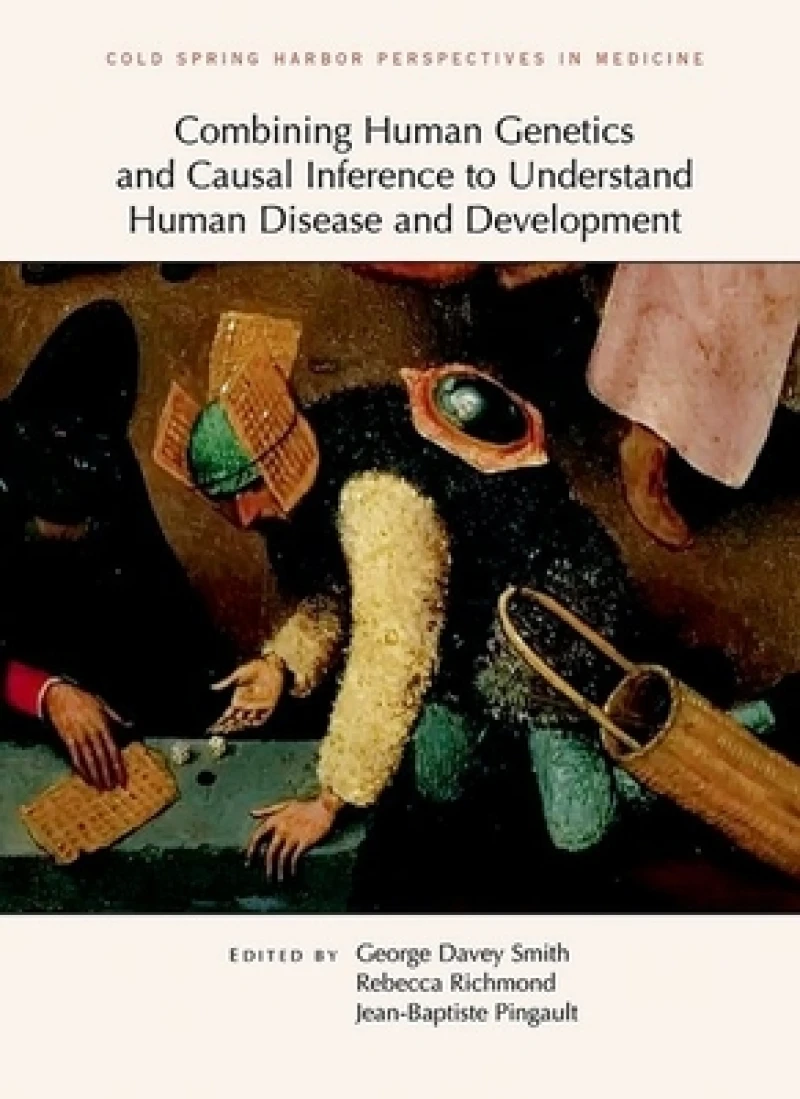
Combining Human Genetics and Causal Inference to Understand Human Disease and Development
Book Details
Format
Hardback or Cased Book
Book Series
Perspectives Cshl
ISBN-10
1621823814
ISBN-13
9781621823810
Publisher
Cold Spring Harbor Laboratory Press,U.S.
Imprint
Cold Spring Harbor Laboratory Press,U.S.
Country of Manufacture
GB
Country of Publication
GB
Publication Date
Jan 31st, 2022
Print length
254 Pages
Product Classification:
Epidemiology & medical statisticsMedical geneticsGenetics (non-medical)
Ksh 15,100.00
Werezi Extended Catalogue
0 in stock
Delivery Location
Delivery fee: Select location
Secure
Quality
Fast
Written and edited by experts in the field, this collection examines advances in causal inference approaches in human genetics and how they are being used to enhance our understanding of human development and disease. The contributors discuss family-based study designs for causal inference, including twin designs, adoption designs, and in vitro fertilization designs, that separate inherited factors from perinatal environmental exposures. They also review various types of Mendelian randomizationa population-based approach that is growing in utility and popularityas well as their integration with family-based designs.
In human genetics, causal inference methods leverage large omics data sets and phenotypic information to decipher various cause-and-effect relationships in human health and disease (e.g., smoking and lung cancer). The focus of such work is typically on modifiable variables (e.g., behavior or environmental exposure) that impact disease onset, progression, and outcome. A better understanding of these variables can lead to interventions and therapeutics that have a desirable impact on public health.
Written and edited by experts in the field, this collection from Cold Spring Harbor Perspectives in Medicine examines advances in causal inference approaches in human genetics and how they are being used to enhance our understanding of human development and disease. The contributors discuss family-based study designs for causal inference, including twin designs, adoption designs, and in vitro fertilization designs, that separate inherited factors from perinatal environmental exposures. They also review various types of Mendelian randomizationa population-based approach that is growing in utility and popularityas well as their integration with family-based designs.
The use of these approaches to investigate causal mechanisms in specific scenarios (e.g., maternal smoking during pregnancy and ADHD in offspring) is also covered. This volume is therefore an essential read for geneticists, epidemiologists, and all biomedical scientists and public health professionals dedicated to using genetic information to improve human health.
Written and edited by experts in the field, this collection from Cold Spring Harbor Perspectives in Medicine examines advances in causal inference approaches in human genetics and how they are being used to enhance our understanding of human development and disease. The contributors discuss family-based study designs for causal inference, including twin designs, adoption designs, and in vitro fertilization designs, that separate inherited factors from perinatal environmental exposures. They also review various types of Mendelian randomizationa population-based approach that is growing in utility and popularityas well as their integration with family-based designs.
The use of these approaches to investigate causal mechanisms in specific scenarios (e.g., maternal smoking during pregnancy and ADHD in offspring) is also covered. This volume is therefore an essential read for geneticists, epidemiologists, and all biomedical scientists and public health professionals dedicated to using genetic information to improve human health.
Get Combining Human Genetics and Causal Inference to Understand Human Disease and Development by at the best price and quality guaranteed only at Werezi Africa's largest book ecommerce store. The book was published by Cold Spring Harbor Laboratory Press,U.S. and it has pages.

