
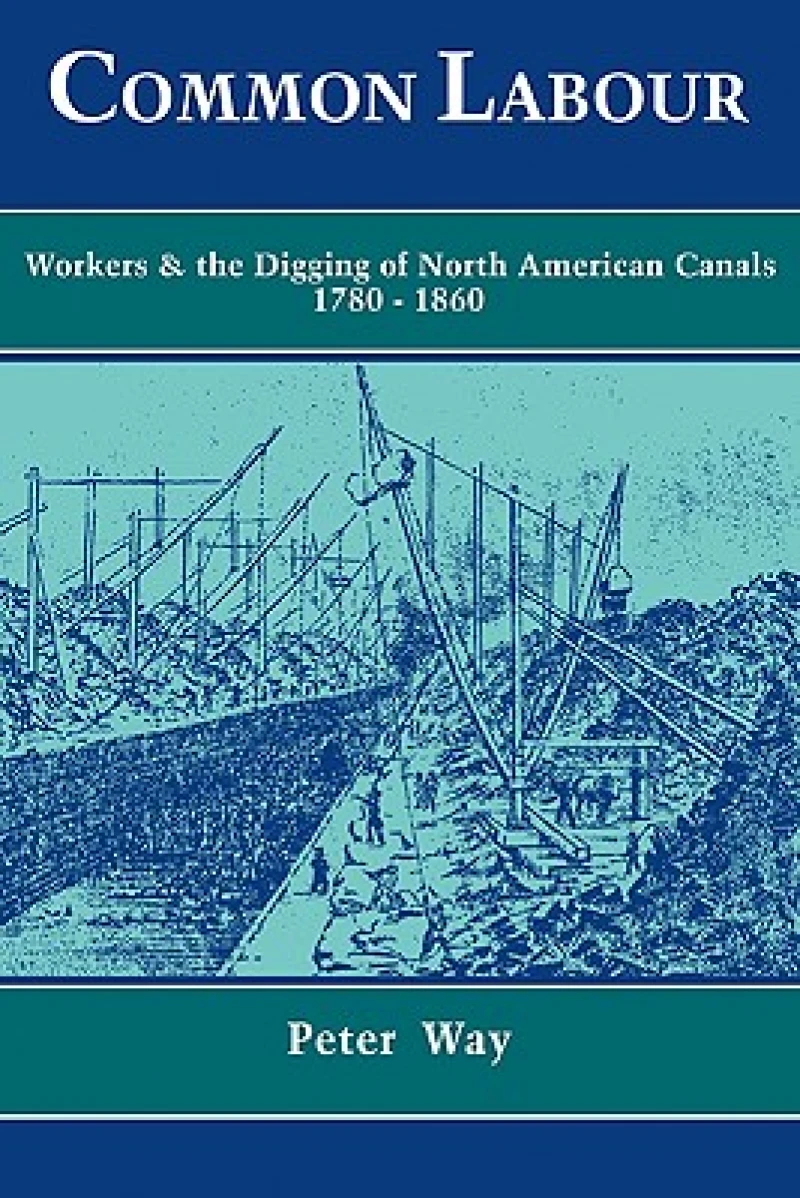
Common Labour : Workers and the Digging of North American Canals 1780–1860
by
Peter Way
Book Details
Format
Paperback / Softback
ISBN-10
0521102650
ISBN-13
9780521102650
Publisher
Cambridge University Press
Imprint
Cambridge University Press
Country of Manufacture
GB
Country of Publication
GB
Publication Date
Mar 12th, 2009
Print length
328 Pages
Weight
494 grams
Dimensions
15.10 x 22.90 x 2.90 cms
Product Classification:
North America (USA and Canada)18th century, c 1700 to c 179919th century, c 1800 to c 1899History of the AmericasModern history to 20th century: c 1700 to c 1900Social & cultural historyLabour / income economicsLabour economicsHistoryHistory of the AmericasSocial and cultural history
Ksh 6,200.00
Manufactured on Demand
0 in stock
Delivery Location
Delivery fee: Select location
Secure
Quality
Fast
The history of canal workers traces another strand of the labour story, one where the absence of skills bred powerlessness that made common labour's engagement with capital markedly unequal.
This study of canal construction workers between 1780 and 1860 challenges labour history's focus on skilled craftsmen and the model of working-class culture it generated. Canallers, part of the mass of unskilled labour thrown up by industrial capitalism, had an experience that differed in many ways from artisans. Once on the labour market, they were wholly alienated, more fully exploited, worse off economically and socially fragmented. Their struggle as members of a class pivoted on material conditions not on skill and shop-floor control. Canal construction played a significant role in the rise of industrial capitalism by opening new markets, providing an army of workers and initiating the state–capital ties so important in later years. Increasingly dominated by Irish immigrants the workforce lived in shanty towns at the work site or in nearby cities, the setting for much vice and violence. These were not the vibrant working-class communities of later labour history and the situation deteriorated in the late 1830s as labour surplus caused massive unemployment and depressed wages. The history of canal workers traces another strand of the labour story, one where the absence of skills bred powerlessness that made common labour's engagement with capital markedly unequal.
Get Common Labour by at the best price and quality guaranteed only at Werezi Africa's largest book ecommerce store. The book was published by Cambridge University Press and it has pages.

