
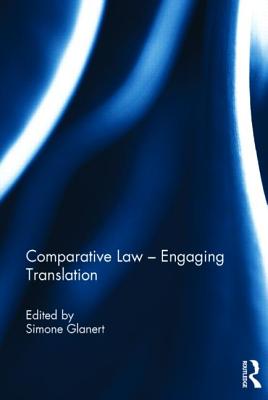
Comparative Law - Engaging Translation
Book Details
Delivery Location
Delivery fee: Select location
In an era marked by processes of economic, political and legal integration that are arguably unprecedented in their range and impact, the translation of law has assumed a significance which it would be hard to overstate. The following situations are typical. A French law school is teaching French law in the English language to foreign exchange students. Some US legal scholars are exploring the possibility of developing a generic or transnational constitutional law. German judges are referring to foreign law in a criminal case involving an honour killing committed in Germany with a view to ascertaining the relevance of religious prescriptions. European lawyers are actively working on the creation of a common private law to be translated into the 24 official languages of the European Union. Since 2004, the World Bank has been issuing reports ranking the attractiveness of different legal cultures for doing business. All these examples raise in one way or the other the matter of translation from a comparative legal perspective. However, in today’s globalised world where the need to communicate beyond borders arises constantly in different guises, many comparatists continue not to address the issue of translation. This edited collection of essays brings together leading scholars from various cultural and disciplinary backgrounds who draw on fields such as translation studies, linguistics, literary theory, history, philosophy or sociology with a view to promoting a heightened understanding of the complex translational implications pertaining to comparative law, understood both in its literal and metaphorical senses.
Get Comparative Law - Engaging Translation by Simone Glanert at the best price and quality guaranteed only at Werezi Africa's largest book ecommerce store. The book was published by Taylor & Francis Ltd and it has 224 pages.
Customers Who Bought This Also Bought

Mansi
KSh 1,800.00

Hearing the Message of Ecclesiastes
KSh 2,350.00

How to Study the Bible''s Use of the Bible
KSh 5,400.00

NKJV Study Bible, Leathersoft, Purple, Full-Color, Thumb Indexed, Comfort Print
KSh 14,750.00
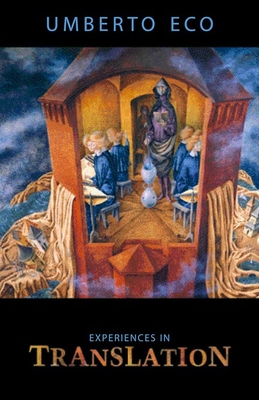
Experiences in Translation
KSh 3,600.00

The Gruffalo Latin Edition
KSh 2,700.00
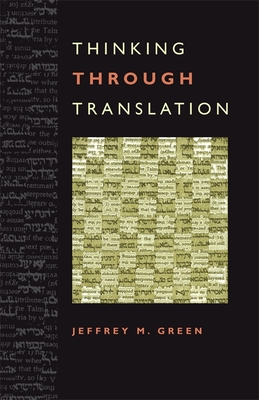
Thinking Through Translation
KSh 5,050.00

The Mirror of Death
KSh 5,400.00

Ethics of Generative AI in Translation
KSh 30,950.00

The Impossible Teachings of Jesus
KSh 3,600.00

Research Methods in Interpreting
KSh 18,000.00

Modern Game Localization
KSh 9,900.00
