
Cart 0
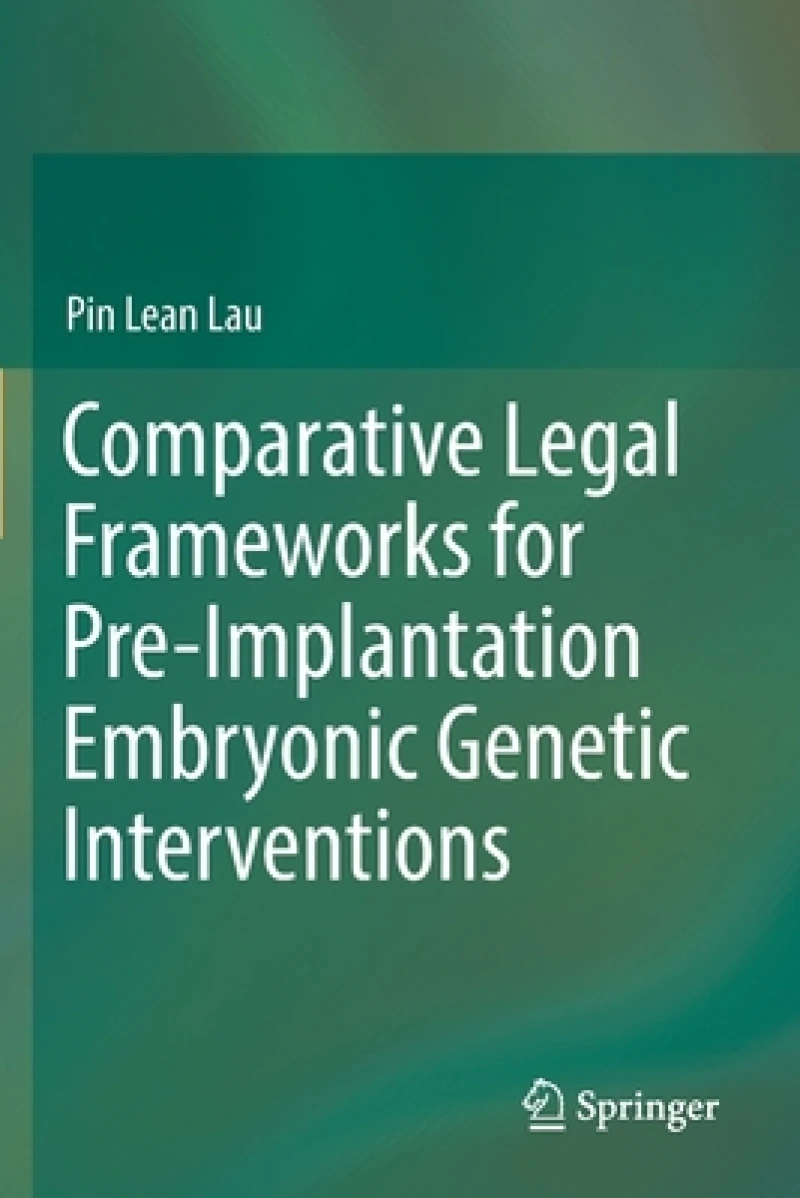
Comparative Legal Frameworks for Pre-Implantation Embryonic Genetic Interventions
Click to zoom

Share this book

Comparative Legal Frameworks for Pre-Implantation Embryonic Genetic Interventions

2019 ed.

Book Details

Format Paperback / Softback
ISBN-10 3030223108
ISBN-13 9783030223106
Edition 2019 ed.
Publisher Springer Nature Switzerland AG
Imprint Springer Nature Switzerland AG
Country of Manufacture GB
Country of Publication GB
Publication Date Aug 15th, 2020
Print length 326 Pages
Ksh 14,400.00
Werezi Extended Catalogue 0 in stock

Delivery Location

Delivery fee: Select location

Secure
Quality
Fast
This book discusses the possibilities for the use of ?international human rights law ?(and specifically, international biomedical laws related to the protection of human rights and the human genome) to provide a guiding framework for the future regulation of genetic modifications applied to human embryos and other precursor materials, when these are made with the aim of implanting a genetically altered embryo in a woman. The significance and timeliness of the work derives from the recent availability of CRISPR/?Cas9 and other gene editing tools, and from lacunae in international law regarding the legality of embryo modification with these tools and appropriate governance structures for the oversight of resulting practices. The emergence of ?improved genome editing tools like CRISPR/Cas9, holds the promise of eradicating genetic diseases in the near future. But its possible future applications with Pre-Implantation Genetic Diagnosis (PGD) raises a plethora of legal and ethical concerns about "remaking" future human beings. The work aims to address an urgent call, to embed these rising concerns about biomedical advancements into the fundamental tailoring of legal systems. Suitable regulatory approaches, coupled with careful reflection of global biomedical laws and individual constitutional systems must be explored. The Book analyzes the impact of reproductive biomedical technologies on the legal and ethical dimensions of regulatory frameworks in selected constitutional systems like the US, the UK, Australia, Malaysia and Thailand. Employing a comparative law methodology, the work reveals a dynamic intersection between legal cultures, socio-philosophical reasoning and the development of a human rights-based framework in bio-political studies. Navigating towards a truly internationalized biomedical approach to emerging technologies, it presents an understanding why a  renegotiation and reinvigoration of a contemporary and "new" universal shared values system in the ?international human rights discourse is now necessary.

This book discusses the possibilities for the use of ​international human rights law ​(and specifically, international biomedical laws related to the protection of human rights and the human genome) to provide a guiding framework for the future regulation of genetic modifications applied to human embryos and other precursor materials, when these are made with the aim of implanting a genetically altered embryo in a woman. The significance and timeliness of the work derives from the recent availability of CRISPR/​Cas9 and other gene editing tools, and from lacunae in international law regarding the legality of embryo modification with these tools and appropriate governance structures for the oversight of resulting practices.

The emergence of ​improved genome editing tools like CRISPR/Cas9, holds the promise of eradicating genetic diseases in the near future. But its possible future applications with Pre-Implantation Genetic Diagnosis (PGD) raises a plethora of legal and ethical concerns about "remaking" future human beings. The work aims to address an urgent call, to embed these rising concerns about biomedical advancements into the fundamental tailoring of legal systems. Suitable regulatory approaches, coupled with careful reflection of global biomedical laws and individual constitutional systems must be explored.

The Book analyzes the impact of reproductive biomedical technologies on the legal and ethical dimensions of regulatory frameworks in selected constitutional systems like the US, the UK, Australia, Malaysia and Thailand. Employing a comparative law methodology, the work reveals a dynamic intersection between legal cultures, socio-philosophical reasoning and the development of a human rights-based framework in bio-political studies. Navigating towards a truly internationalized biomedical approach to emerging technologies, it presents an understanding why a  renegotiation and reinvigoration of a contemporary and "new" universal shared values system in the ​international human rights discourse is now necessary.


Get Comparative Legal Frameworks for Pre-Implantation Embryonic Genetic Interventions by at the best price and quality guaranteed only at Werezi Africa's largest book ecommerce store. The book was published by Springer Nature Switzerland AG and it has pages.


Mind, Body, & Spirit

Shopping Cart

Africa largest book store

Sub Total:
Ebooks

Digital Library
Coming Soon

Our digital collection is currently being curated to ensure the best possible reading experience on Werezi. We'll be launching our Ebooks platform shortly.