

Computational Electrodynamics : A Gauge Approach with Applications in Microelectronics
Book Details
Delivery Location
Delivery fee: Select location
Computational Electrodynamics is a vast research field with a wide variety of tools. In physics the principle of gauge invariance plays a pivotal role as a guide towards a sensible formulation of the laws of nature as well as computing the properties of elementary particles using the lattice formulation of gauge theories, yet the gauge principle has played a much less pronounced role in performing computation in classical electrodynamics. In this work the author will demonstrate that starting from the gauge formulation of electrodynamics using the electromagnetic potentials leads to computational tools that can very well compete with the conventional electromagnetic field-based tools. Once accepting the formulation based on gauge fields, the computational code is very transparent due to the mimetic mapping of the electrodynamic variables on the computational grid. Although the illustrations and applications originate from microelectronic engineering, the method has a much larger range of applicability. Therefore this book is of interest to everyone having interest in computational electrodynamics. The volume is organized as follows: In part 1, a detailed introduction and overview is presented of the Maxwell equations as well as the derivation of the current and charge densities is different materials. Semiconductors are responding to electromagnetic fields in a non-linear way and the induced complications are discussed in detail. In part 2, the transition of the theory of electrodynamics, using the gauge potentials, to a formulation that can serve as the gateway to computational code is presented. In part 3, the feasibility and success of the methods of part 2 are demonstrated by a collection of microelectronic device designs. Part 4 focuses on a set of topical themes that brings the reader to the frontier of research in building the simulation tools using the gauge principle in computational electrodynamics.
Technical topics discussed in the book include:
- Electromagnetic Field Equations
- Constitutive Relations
- Discretization and Numerical Analysis
- Finite Element and Finite Volume Methods
- Design of Integrated Passive Components
Get Computational Electrodynamics by Wim Schoenmaker at the best price and quality guaranteed only at Werezi Africa's largest book ecommerce store. The book was published by River Publishers and it has 644 pages.
Customers Who Bought This Also Bought

Solved Problems in Classical Electromagnetism
KSh 3,050.00

Electromagnetic Noise and Quantum Optical Measurements
KSh 18,000.00
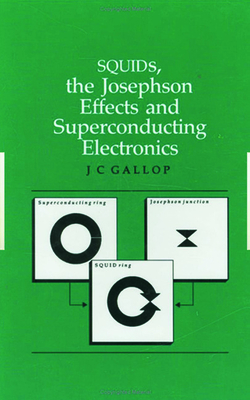
Squids, the Josephson Effects and Superconducting Electronics
KSh 46,800.00
Optical Properties of Semiconductor Nanocrystals
KSh 24,650.00

Principles and Applications of ESR Spectroscopy
KSh 8,100.00

Principles of Electrodynamics
KSh 3,050.00

Electrodynamics: An Introduction Including Quantum Effects
KSh 16,400.00

Quantum Kinetics in Transport and Optics of Semiconductors
KSh 27,000.00

Observation and Control of Magnetic Order Dynamics by Terahertz Magnetic Nearfield
KSh 25,200.00

Magnetic Monopole Noise
KSh 16,200.00
Heteroepitaxy of Semiconductors
KSh 23,400.00

Biomedical Optical Sensors
KSh 23,400.00
More by Wim Schoenmaker

More in This Genre
Solved Problems in Classical Electromagnetism
KSh 3,050.00
Electromagnetic Noise and Quantum Optical Measurements
KSh 18,000.00
Squids, the Josephson Effects and Superconducting Electronics
KSh 46,800.00
Optical Properties of Semiconductor Nanocrystals
KSh 24,650.00
Principles and Applications of ESR Spectroscopy
KSh 8,100.00
Principles of Electrodynamics
KSh 3,050.00
