
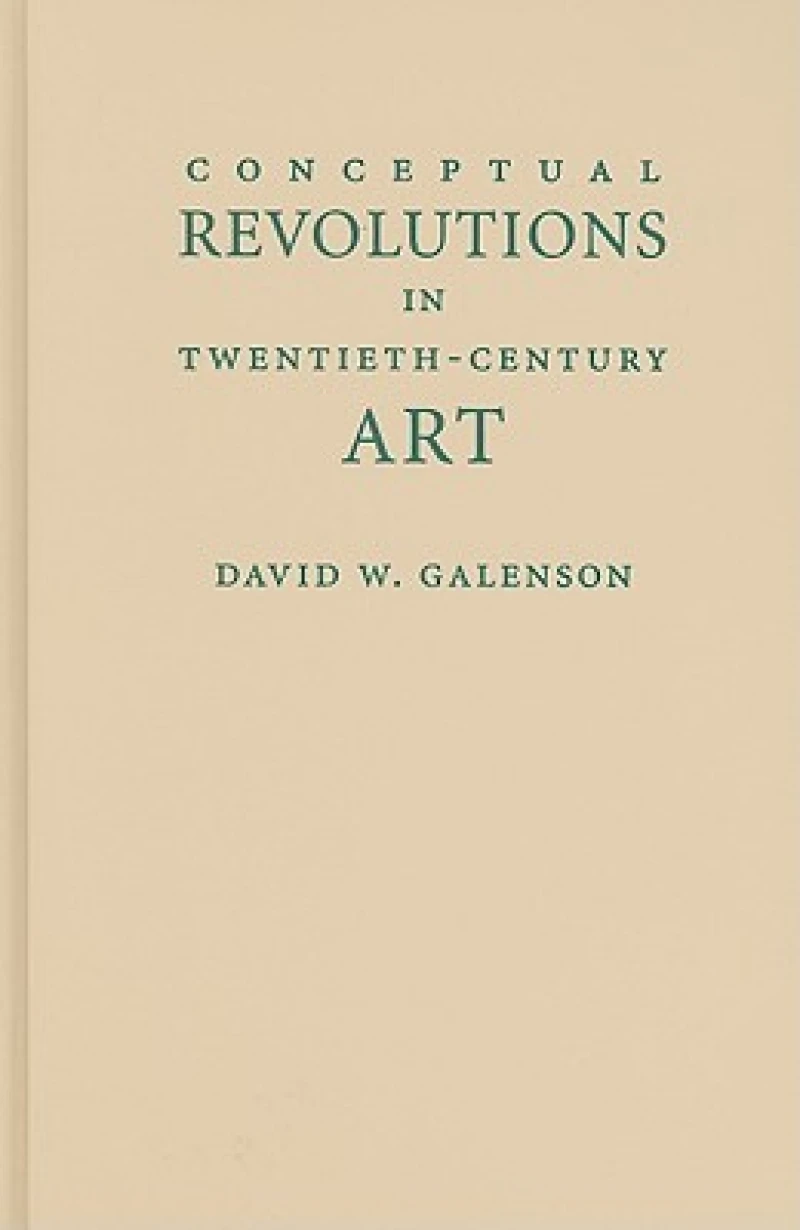
Conceptual Revolutions in Twentieth-Century Art
Book Details
Format
Hardback or Cased Book
ISBN-10
052111232X
ISBN-13
9780521112321
Publisher
Cambridge University Press
Imprint
Cambridge University Press
Country of Manufacture
GB
Country of Publication
GB
Publication Date
Sep 28th, 2009
Print length
460 Pages
Weight
75 grams
Dimensions
23.50 x 15.60 x 3.00 cms
Product Classification:
History of art & design styles: from c 1900 -History of art
Ksh 17,100.00
Manufactured on Demand
0 in stock
Delivery Location
Delivery fee: Select location
Secure
Quality
Fast
Conceptual Revolutions in Twentieth-Century Art presents the first systematic analysis of the reasons for this discontinuity. Galenson combines social scientific methods with qualitative analysis to produce a new interpretation of modern art that will give readers a far deeper appreciation of the art of the past century and of today.
From Picasso''s Cubism and Duchamp''s readymades to Warhol''s silkscreens and Smithson''s earthworks, the art of the twentieth century broke completely with earlier artistic traditions. A basic change in the market for advanced art produced a heightened demand for innovation, and young conceptual innovators – from Picasso and Duchamp to Rauschenberg and Warhol to Cindy Sherman and Damien Hirst – responded not only by creating dozens of new forms of art, but also by behaving in ways that would have been incomprehensible to their predecessors. Conceptual Revolutions in Twentieth-Century Art presents the first systematic analysis of the reasons for this discontinuity. David W. Galenson, whose earlier research has changed our understanding of creativity, combines social scientific methods with qualitative analysis to produce a fundamentally new interpretation of modern art that will give readers a far deeper appreciation of the art of the past century, and of today, than is available elsewhere.
Get Conceptual Revolutions in Twentieth-Century Art by at the best price and quality guaranteed only at Werezi Africa's largest book ecommerce store. The book was published by Cambridge University Press and it has pages.

