
Cart 0
Conceptualizing the Ubiquity of Informal Economy Work
Click to zoom

Share this book

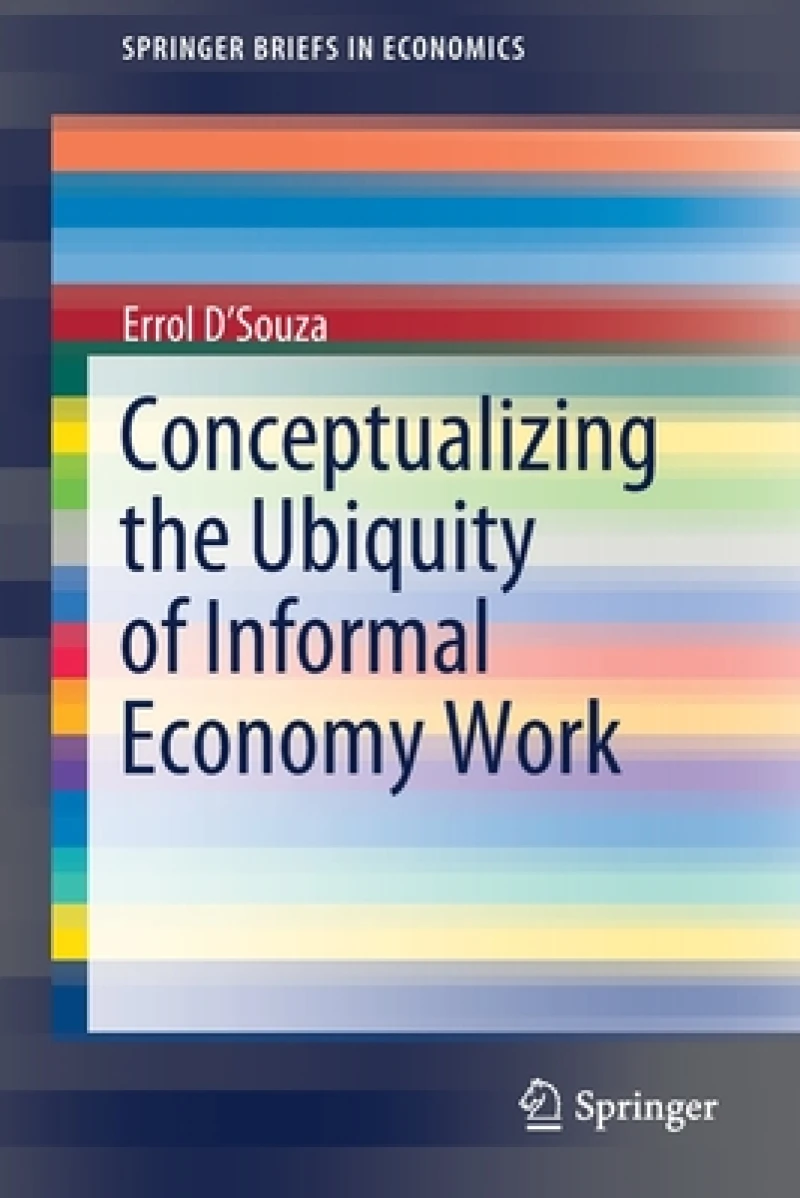
Conceptualizing the Ubiquity of Informal Economy Work

1st ed. 2020

Book Details

Format Paperback / Softback
ISBN-10 9811574278
ISBN-13 9789811574276
Edition 1st ed. 2020
Publisher Springer Verlag, Singapore
Imprint Springer Verlag, Singapore
Country of Manufacture GB
Country of Publication GB
Publication Date Aug 27th, 2020
Print length 86 Pages
Ksh 9,000.00
Werezi Extended Catalogue 0 in stock

Delivery Location

Delivery fee: Select location

Secure
Quality
Fast
A large proportion of informal employment (86 per cent) is self-employment and this category of employment has been neglected in the literature on work and development which has focused instead on wage employment that is a contract for work with another person or enterprise.

This book provides a framework to understand the disregarded aspect of emerging market growth which is informal employment. Informal employment in unregistered enterprises or of workers without employment contracts or social protection contributions constitutes 88 per cent of employment in India and is a ubiquitous feature of the economy. A large proportion of informal employment (86 per cent) is self-employment and this category of employment has been neglected in the literature on work and development which has focused instead on wage employment that is a contract for work with another person or enterprise. 

Another striking feature of such economies which the book engages with is that, as they have liberalized, informal employment in the registered enterprises or formal part of the economy has grown. The informal sector has been analyzed by recourse to two major approaches. One is a public economics framework that underlines how informal enterprises evolve as they trade-off reduced access to public services such as contract enforcement with the payment of taxes and regulatory compliances. This book extends this literature by focusing on the access to formal sector credit and its potential for financing productive enterprises as a factor that is considered when an enterprise contemplates whether to incorporate or not. 

The second leg of the literature takes a labour perspective and emphasizes mandated labour costs such as hiring and firing costs, benefits, and minimum wages as considerations when deciding on whether to engage labour on a formal or informal basis. The book broadens this literature by taking into account how the human capital of workers and the monitoring costs of ensuring that workers are adhering to the terms of negotiated contracts inform the decision with regard to informality. The book will resonate with those academics and policy makers who are engaged with the conundrums of development.


Get Conceptualizing the Ubiquity of Informal Economy Work by at the best price and quality guaranteed only at Werezi Africa's largest book ecommerce store. The book was published by Springer Verlag, Singapore and it has pages.


Mind, Body, & Spirit

Shopping Cart

Africa largest book store

Sub Total:
Ebooks

Digital Library
Coming Soon

Our digital collection is currently being curated to ensure the best possible reading experience on Werezi. We'll be launching our Ebooks platform shortly.