
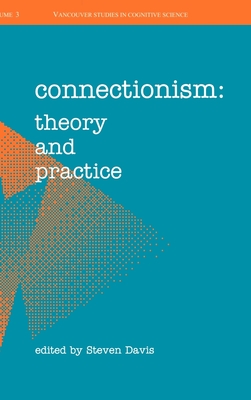
Connectionism : Theory and Practice
Book Details
Format
Hardback
Book Series
New Directions in Cognitive Science
ISBN-10
0195076656
ISBN-13
9780195076653
Publisher
Oxford University Press Inc
Imprint
Oxford University Press Inc
Country of Manufacture
GB
Country of Publication
GB
Publication Date
Jan 21st, 1993
Print length
336 Pages
Weight
562 grams
Dimensions
23.80 x 15.90 x 2.50 cms
Product Classification:
PsycholinguisticsCognition & cognitive psychology
KSh 15,400.00
Temporarily out of stock, due soon
0 in stock
Delivery Location
Delivery fee: Select location
Secure
Quality
Fast
This is the third volume in the Vancouver Studies in Cognitive Science Series. It is based on a conference that was held in 1990, which was sponsored by the Cognitive Science Program and Linguistics Department of Simon Fraser University.Over the last decade, there has emerged a paradigm of cognitive modeling that has been hailed by many researchers as a radically new and promising approach to cognitive science. This new paradigm has come to be known by a number of names, including "connectionism", "neural networks", and "parallel distributed processing", (or PDP). This method of computation attempts to model the neural processes that are thought to underlie cognitive functions in human beings. Unlike the digital computation methods used by AI researchers, connectionist models claim to approximate the kind of spontaneous, creative and somewhat unpredicatable behavior of human agents. However, over the last few years, a heated controversy has arisen over the extent to which connectionist models are able to provide successful explanations for higher cognitive processes. A central theme of this book reviews the adequacy of recent attempts to implement higher cognitive processes in connectionist networks.
This is the third volume in the Vancouver Studies in Cognitive Science Series. It is based on a conference that was held in 1990, which was sponsored by the Cognitive Science Program and Linguistics Department of Simon Fraser University. Over the last decade, there has emerged a paradigm of cognitive modeling that has been hailed by many researchers as a radically new and promising approach to cognitive science. This new paradigm has come to be known by a number of names, including "connectionism", "neural networks", and "parallel distributed processing", (or PDP). This method of computation attempts to model the neural processes that are thought to underlie cognitive functions in human beings. Unlike the digital computation methods used by AI researchers, connectionist models claim to approximate the kind of spontaneous, creative and somewhat unpredicatable behavior of human agents. However, over the last few years, a heated controversy has arisen over the extent to which connectionist models are able to provide successful explanations for higher cognitive processes. A central theme of this book reviews the adequacy of recent attempts to implement higher cognitive processes in connectionist networks.
Get Connectionism by Steven Davis at the best price and quality guaranteed only at Werezi Africa's largest book ecommerce store. The book was published by Oxford University Press Inc and it has 336 pages.
Customers Who Bought This Also Bought

The Perks of Being a Bookworm
KSh 4,500.00

Semiotics and the Philosophy of Language
KSh 3,400.00

Chinese Children''s Reading Acquisition
KSh 16,200.00

New Trends in Language Acquisition Within the Generative Perspective
KSh 21,600.00

Vocabulary Studies in First and Second Language Acquisition
KSh 18,000.00

Improving the Emotional Intelligence of Translators
KSh 10,800.00

Phonology and Language Use
KSh 18,900.00

Engaging Children in Applied Linguistics Research
KSh 17,100.00

Optimality Theory and Pragmatics
KSh 8,100.00

Meaning
KSh 1,800.00

Nonverbal Steps to the Origins of Language
KSh 7,900.00

Active Learning from Infancy to Childhood
KSh 21,600.00
More in This Genre
The Perks of Being a Bookworm
KSh 4,500.00
Semiotics and the Philosophy of Language
KSh 3,400.00
Chinese Children''s Reading Acquisition
KSh 16,200.00
New Trends in Language Acquisition Within the Generative Perspective
KSh 21,600.00
Vocabulary Studies in First and Second Language Acquisition
KSh 18,000.00
Improving the Emotional Intelligence of Translators
KSh 10,800.00
