
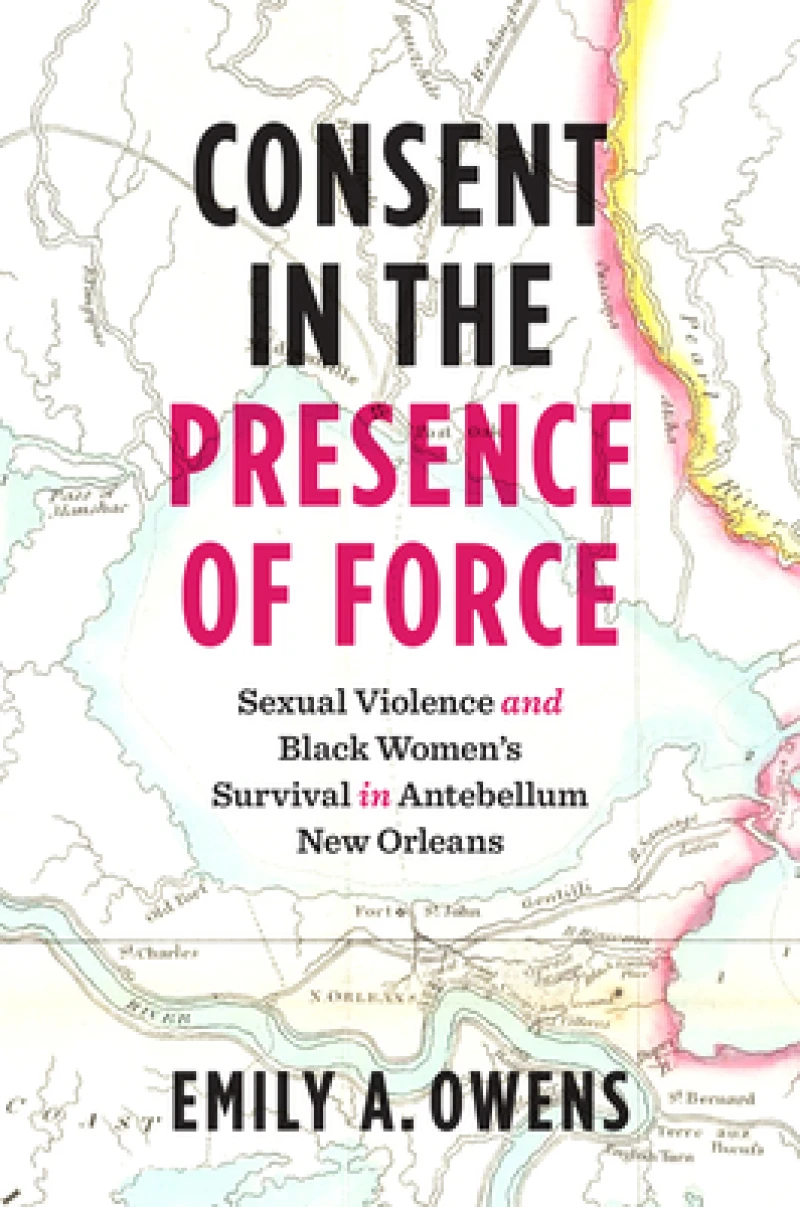
Consent in the Presence of Force : Sexual Violence and Black Women's Survival in Antebellum New Orleans
Book Details
Format
Paperback / Softback
ISBN-10
1469672138
ISBN-13
9781469672137
Publisher
The University of North Carolina Press
Imprint
The University of North Carolina Press
Country of Manufacture
GB
Country of Publication
GB
Publication Date
Jan 10th, 2023
Print length
244 Pages
Weight
446 grams
Dimensions
15.50 x 23.40 x 2.10 cms
Product Classification:
History of the AmericasSlavery & abolition of slaverySexual abuse and harassmentGender studies: women and girlsEthnic studies / EthnicitySexual abuse & harassmentGender studies: womenBlack & Asian studiesHistory of the AmericasSlavery, enslaved persons and abolition of slavery
Ksh 3,150.00
Werezi Extended Catalogue
0 in stock
Delivery Location
Delivery fee: Select location
Secure
Quality
Fast
Unsettling the idea that consent is necessarily incompatible with structural and interpersonal violence, this history shows that when sex is understood as a transaction, women are imagined as responsible for their own violation.
In histories of enslavement and in Black women's history, coercion looms large in any discussion of sex and sexuality. At a time when sexual violence against Black women was virtually unregulated—even normalized—a vast economy developed specifically to sell the sexual labor of Black women. In this vividly rendered book, Emily A. Owens wrestles with the question of why white men paid notoriously high prices to gain sexual access to the bodies of enslaved women to whom they already had legal and social access.
Owens centers the survival strategies and intellectual labor of Black women enslaved in New Orleans to unravel the culture of violence they endured, in which slaveholders obscured "the presence of force" with arrangements that included gifts and money. Owens's storytelling highlights that the classic formulation of rape law that requires "the presence of force" and "the absence of consent" to denote a crime was in fact a key legal fixture that packaged predation as pleasure and produced, rather than prevented, violence against Black women. Owens dramatically reorients our understanding of enslaved women's lives as well as of the nature of violence in the entire venture of racial slavery in the U.S. South. Unsettling the idea that consent is necessarily incompatible with structural and interpersonal violence, this history shows that when sex is understood as a transaction, women are imagined as responsible for their own violation.
Owens centers the survival strategies and intellectual labor of Black women enslaved in New Orleans to unravel the culture of violence they endured, in which slaveholders obscured "the presence of force" with arrangements that included gifts and money. Owens's storytelling highlights that the classic formulation of rape law that requires "the presence of force" and "the absence of consent" to denote a crime was in fact a key legal fixture that packaged predation as pleasure and produced, rather than prevented, violence against Black women. Owens dramatically reorients our understanding of enslaved women's lives as well as of the nature of violence in the entire venture of racial slavery in the U.S. South. Unsettling the idea that consent is necessarily incompatible with structural and interpersonal violence, this history shows that when sex is understood as a transaction, women are imagined as responsible for their own violation.
Get Consent in the Presence of Force by at the best price and quality guaranteed only at Werezi Africa's largest book ecommerce store. The book was published by The University of North Carolina Press and it has pages.

