
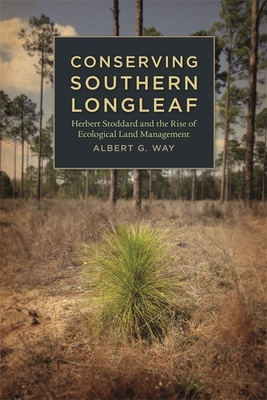
Conserving Southern Longleaf : Herbert Stoddard and the Rise of Ecological Land Management
Book Details
Format
Hardback
Book Series
Environmental History and the American South
ISBN-10
0820334669
ISBN-13
9780820334660
Publisher
University of Georgia Press
Imprint
University of Georgia Press
Country of Manufacture
US
Country of Publication
GB
Publication Date
Nov 1st, 2011
Print length
320 Pages
Weight
658 grams
Dimensions
22.90 x 15.20 x 2.20 cms
Product Classification:
Forests and woodlandForests, rainforestsEnvironmental management
KSh 16,000.00
Currently unavailable
0 in stock
Delivery Location
Delivery fee: Select location
Secure
Quality
Fast
The Red Hills region of south Georgia and north Florida contains one of the most biologically diverse ecosystems in North America—a valuable center for research into and understanding of wildlife biology, fire ecology, and the environmental appreciation of a region once dubbed simply the “pine barrens.”
The Red Hills region of south Georgia and north Florida contains one of the most biologically diverse ecosystems in North America, with longleaf pine trees that are up to four hundred years old and an understory of unparalleled plant life. At first glance, the longleaf woodlands at plantations like Greenwood, outside Thomasville, Georgia, seem undisturbed by market economics and human activity, but Albert G. Way contends that this environment was socially produced and that its story adds nuance to the broader narrative of American conservation. The Red Hills woodlands were thought of primarily as a healthful refuge for northern industrialists in the early twentieth century. When notable wildlife biologist Herbert Stoddard arrived in 1924, he began to recognize the area’s ecological value. Stoddard was with the federal government, but he drew on local knowledge to craft his land management practices, to the point where a distinctly southern, agrarian form of ecological conservation emerged. This set of practices was in many respects progressive, particularly in its approach to fire management and species diversity, and much of it remains in effect today. Using Stoddard as a window into this unique conservation landscape, Conserving Southern Longleaf positions the Red Hills as a valuable center for research into and understanding of wildlife biology, fire ecology, and the environmental appreciation of a region once dubbed simply the “pine barrens.”
Get Conserving Southern Longleaf by Professor Albert G. Way at the best price and quality guaranteed only at Werezi Africa's largest book ecommerce store. The book was published by University of Georgia Press and it has 320 pages.
Customers Who Bought This Also Bought
North Woods
KSh 2,000.00

North Woods
KSh 2,700.00
Conserving Southern Longleaf
KSh 6,050.00
Roadless Rules
KSh 4,700.00
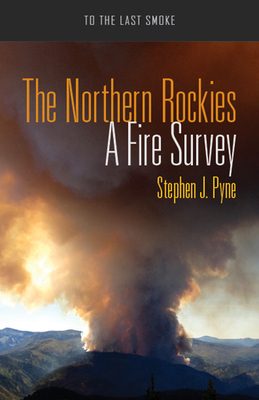
The Northern Rockies
KSh 2,500.00
(Mis)trusting Development
KSh 19,800.00
Mapping Forest Landscape Patterns
KSh 27,000.00
Simulation Modeling of Forest Landscape Disturbances
KSh 16,200.00
The Drama of Conservation
KSh 23,400.00

Trees and Forests of the World
KSh 15,850.00

Woodlands of the Mind
KSh 6,300.00

The Edible City: Why Food Trees Matter
KSh 3,450.00
