
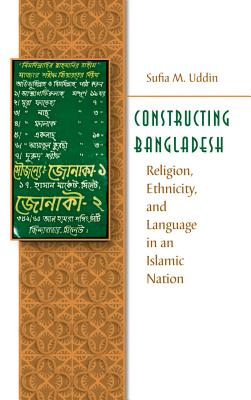
Constructing Bangladesh : Religion, Ethnicity, and Language in an Islamic Nation
New
Book Details
Format
Paperback / softback
Book Series
Islamic Civilization and Muslim Networks
ISBN-10
1469615193
ISBN-13
9781469615196
Edition
New
Publisher
The University of North Carolina Press
Imprint
The University of North Carolina Press
Country of Manufacture
US
Country of Publication
GB
Publication Date
Mar 1st, 2014
Print length
248 Pages
Weight
374 grams
Dimensions
23.50 x 15.70 x 1.60 cms
KSh 5,750.00
Currently unavailable
0 in stock
Delivery Location
Delivery fee: Select location
Secure
Quality
Fast
Highlighting the dynamic, pluralistic nature of Islamic civilization, Sufia M. Uddin examines the complex history of Islamic state formation in Bangladesh, formerly the eastern part of the Indian province of Bengal. Uddin focuses on significant moments in the region''s history from medieval to modern times, examining the interplay of language, popular and scholarly religious literature, and the colonial experience as they contributed to the creation of a unique Bengali-Islamic identity.
During the precolonial era, Bengali, the dominant regional language, infused the richly diverse traditions of the region, including Hinduism, Buddhism, and, eventually, the Islamic religion and literature brought by Urdu-speaking Muslim conquerors from North India. Islam was not simply imported into the region by the ruling elite, Uddin explains, but was incorporated into local tradition over hundreds of years of interactions between Bengalis and non-Bengali Muslims. Constantly contested and negotiated, the Bengali vision of Islamic orthodoxy and community was reflected in both language and politics, which ultimately produced a specifically Bengali-Muslim culture. Uddin argues that this process in Bangladesh is representative of what happens elsewhere in the Muslim world and is therefore an instructive example of the complex and fluid relations between local heritage and the greater Islamic global community, or umma.
During the precolonial era, Bengali, the dominant regional language, infused the richly diverse traditions of the region, including Hinduism, Buddhism, and, eventually, the Islamic religion and literature brought by Urdu-speaking Muslim conquerors from North India. Islam was not simply imported into the region by the ruling elite, Uddin explains, but was incorporated into local tradition over hundreds of years of interactions between Bengalis and non-Bengali Muslims. Constantly contested and negotiated, the Bengali vision of Islamic orthodoxy and community was reflected in both language and politics, which ultimately produced a specifically Bengali-Muslim culture. Uddin argues that this process in Bangladesh is representative of what happens elsewhere in the Muslim world and is therefore an instructive example of the complex and fluid relations between local heritage and the greater Islamic global community, or umma.
Get Constructing Bangladesh by Sufia M. Uddin at the best price and quality guaranteed only at Werezi Africa's largest book ecommerce store. The book was published by The University of North Carolina Press and it has 248 pages.
Customers Who Bought This Also Bought

From Third World to First
KSh 3,200.00

Breakneck
KSh 4,500.00

India After Gandhi
KSh 4,850.00

Anarchy
KSh 2,700.00

On China
KSh 3,400.00
Apostles of Development
KSh 5,600.00
Shattered Lands
KSh 2,000.00

Indira Gandhi and the Years that Transformed India
KSh 5,050.00
India: A Wounded Civilization
KSh 2,000.00
Shattered Lands
KSh 3,200.00

Games without Rules
KSh 2,900.00

Ghost Nation
KSh 3,950.00
