
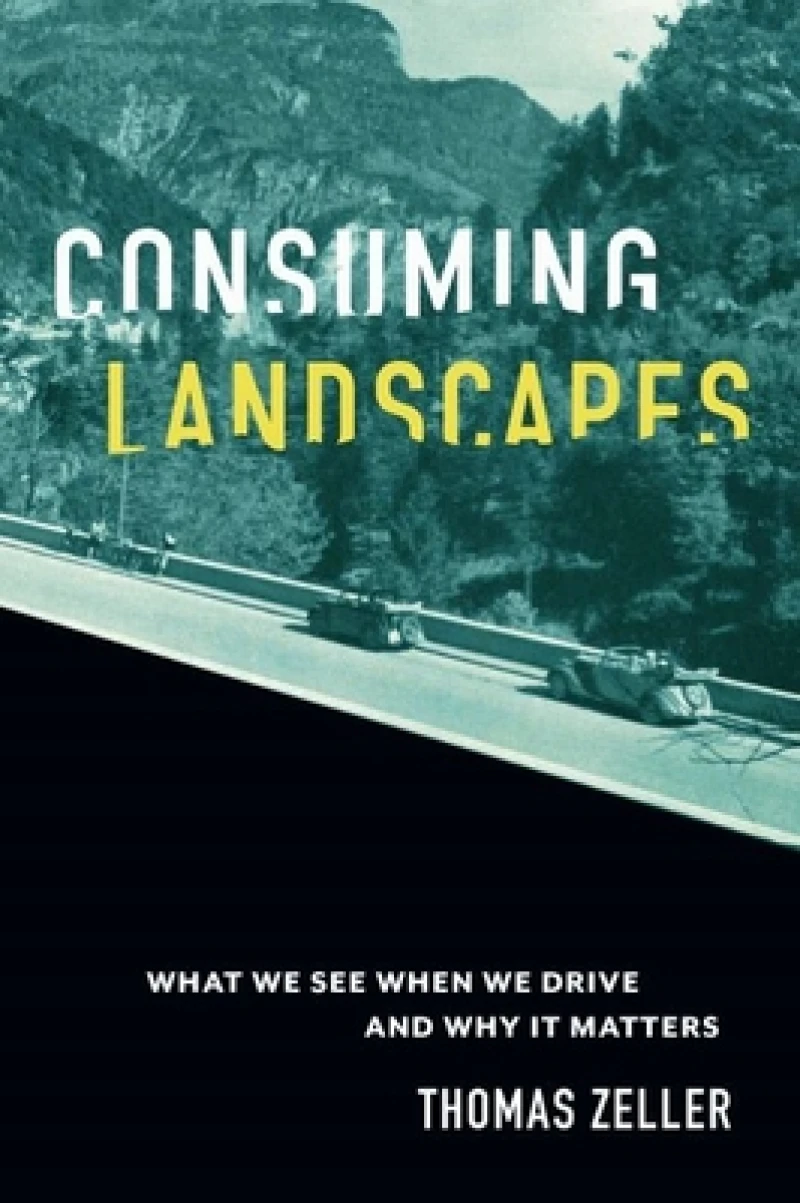
Consuming Landscapes : What We See When We Drive and Why It Matters
Book Details
Format
Hardback or Cased Book
ISBN-10
1421444828
ISBN-13
9781421444826
Publisher
Johns Hopkins University Press
Imprint
Johns Hopkins University Press
Country of Manufacture
US
Country of Publication
GB
Publication Date
Nov 29th, 2022
Print length
264 Pages
Weight
548 grams
Dimensions
16.00 x 23.50 x 2.40 cms
Product Classification:
Landscape art & architectureHistory of engineering & technology
Ksh 7,750.00
Werezi Extended Catalogue
0 in stock
Delivery Location
Delivery fee: Select location
Secure
Quality
Fast
What we see through our windshields reflects ideas about our national identity, consumerism, and infrastructure. For better or worse, windshields have become a major frame for viewing the nonhuman world. The view from the road is one of the main ways in which we experience our environments. These vistas are the result of deliberate historical forces, and humans have shaped them as they simultaneously sought to be transformed by them. In Consuming Landscapes, Thomas Zeller explores how what we see while driving reflects how we view our societies and ourselves, the role that consumerism plays in our infrastructure, and ideas about reshaping the environment in the twentieth century. Zeller breaks new ground by comparing the driving experience and the history of landscaped roads in the United States and Germany, two major automotive countries. He focuses specifically on the Blue Ridge Parkway in the United States and the German Alpine Road as case studies. When the automobile was still young, an early twentieth-century group of designers—landscape architects, civil engineers, and planners—sought to build scenic infrastructures, or roads that would immerse drivers in the landscapes that they were traversing. As more Americans and Europeans owned cars and drove them, however, they became less interested in enchanted views; safety became more important than beauty. Clashes between designers and drivers resulted in different visions of landscapes made for automobiles. As strange as it may seem to twenty-first-century readers, many professionals in the early twentieth century envisioned cars and roads, if properly managed, as saviors of the environment. Consuming Landscapes illustrates how the meaning of infrastructures changed as a result of use and consumption. Such changes indicate a deep ambivalence toward the automobile and roads, prompting the question: can cars and roads bring us closer to nature while deeply altering it at the same time?
Get Consuming Landscapes by at the best price and quality guaranteed only at Werezi Africa's largest book ecommerce store. The book was published by Johns Hopkins University Press and it has pages.

