Consuming Stories : Kara Walker and the Imagining of American Race
Book Details
Format
Paperback / softback
ISBN-10
0520383338
ISBN-13
9780520383333
Publisher
University of California Press
Imprint
University of California Press
Country of Manufacture
US
Country of Publication
GB
Publication Date
Feb 23rd, 2021
Print length
216 Pages
Weight
542 grams
Dimensions
17.90 x 25.50 x 1.30 cms
Product Classification:
Art & design styles: from c 1960Individual artists, art monographsBlack & Asian studies
KSh 5,400.00
Currently unavailable
0 in stock
Delivery Location
Delivery fee: Select location
Secure
Quality
Fast
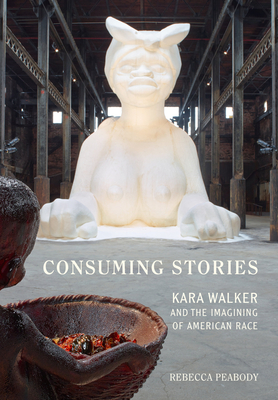
In Consuming Stories, Rebecca Peabody uses the work of contemporary American artist Kara Walker to investigate a range of popular storytelling traditions with roots in the nineteenth century and ramifications in the present. Focusing on a few key pieces that range from a wall-size installation to a reworked photocopy in an artist’s book and from a theater curtain to a monumental sculpture, Peabody explores a significant yet neglected aspect of Walker’s production: her commitment to examining narrative depictions of race, gender, power, and desire. Consuming Stories considers Walker’s sustained visual engagement with literary genres such as the romance novel, the neo-slave narrative, and the fairy tale and with internationally known stories including Roots, Beloved, and Uncle Tom’s Cabin. Walker’s interruption of these familiar works , along with her generative use of the familiar in unexpected and destabilizing ways, reveals the extent to which genre-based narrative conventions depend on specific representations of race, especially when aligned with power and desire. Breaking these implicit rules makes them visible—and, in turn, highlights viewers’ reliance on them for narrative legibility. As this study reveals, Walker’s engagement with narrative continues beyond her early silhouette work as she moves into media such as film, video, and sculpture. Peabody also shows how Walker uses her tools and strategies to unsettle cultural histories abroad when she works outside the United States. These stories, Peabody reminds us, not only change the way people remember history but also shape the entertainment industry. Ultimately, Consuming Stories shifts the critical conversation away from the visual legacy of historical racism toward the present-day role of the entertainment industry—and its consumers—in processes of racialization.
Get Consuming Stories by Rebecca Peabody at the best price and quality guaranteed only at Werezi Africa's largest book ecommerce store. The book was published by University of California Press and it has 216 pages.
Customers Who Bought This Also Bought

Jean-Michel Basquiat
KSh 5,650.00

Basquiat
KSh 3,250.00

Tokyo Ghoul Illustrations: zakki
KSh 3,600.00
Ruth Asawa – Retrospective
KSh 11,750.00

Jean-Michel Basquiat: King Pleasure©
KSh 7,550.00

The Notebooks
KSh 6,300.00

What Artists Wear
KSh 2,700.00

Love and Authority in the Work of Paula Rego
KSh 6,400.00

The Art of Jeffrey Rubinoff
KSh 4,850.00
Mickalene Thomas
KSh 18,000.00

What Is It That Will Last?
KSh 8,500.00

The Street Art Manual
KSh 2,700.00