
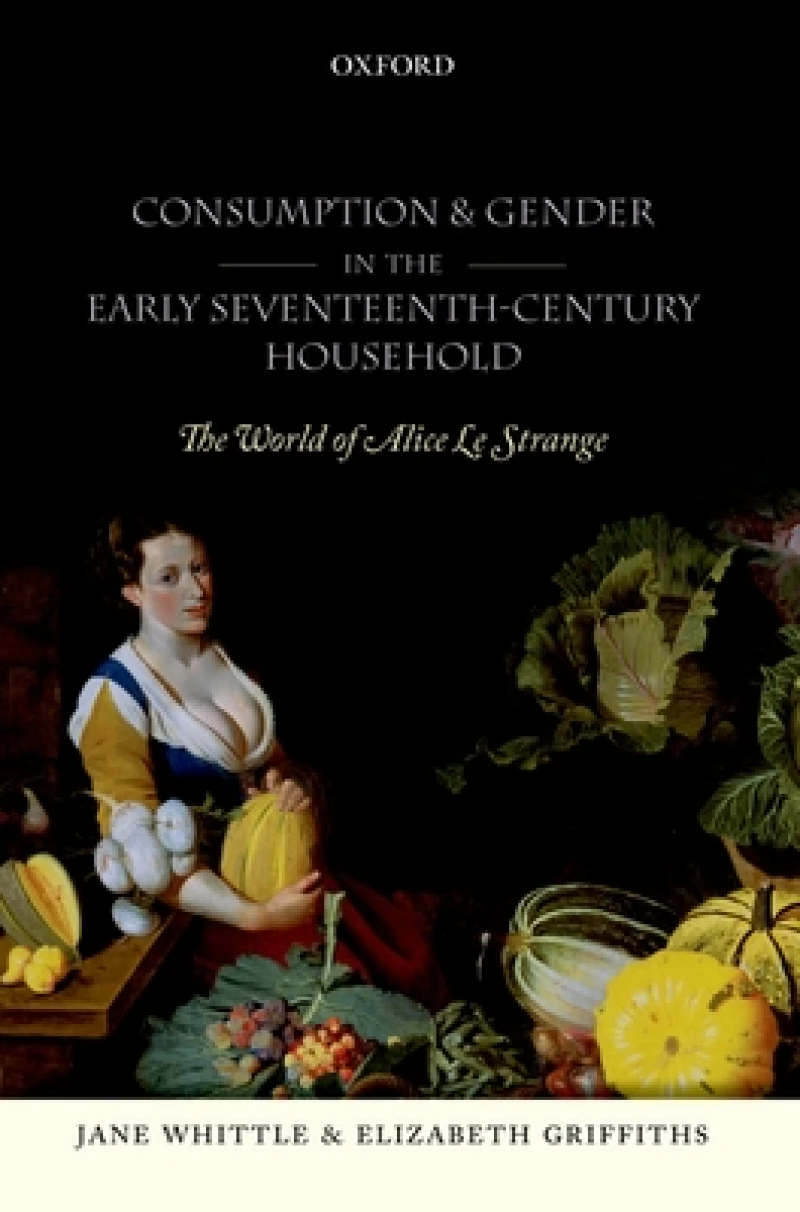
Consumption and Gender in the Early Seventeenth-Century Household : The World of Alice Le Strange
Book Details
Format
Hardback or Cased Book
ISBN-10
0199233535
ISBN-13
9780199233533
Publisher
Oxford University Press
Imprint
Oxford University Press
Country of Manufacture
GB
Country of Publication
GB
Publication Date
Mar 1st, 2012
Print length
286 Pages
Weight
590 grams
Dimensions
15.60 x 24.10 x 2.10 cms
Ksh 25,300.00
Manufactured on Demand
0 in stock
Delivery Location
Delivery fee: Select location
Secure
Quality
Fast
In this vivid reconstruction of life in a seventeenth-century gentry household, the authors delve into the details of everyday life: how did a large, wealthy household in the English countryside acquire the goods and services it needed and wanted? Was household consumption an exclusively female sphere, or did men play an important role, too?
Lady Alice Le Strange of Hunstanton in Norfolk kept a continuous series of household accounts from 1610-1654. Jane Whittle and Elizabeth Griffiths have used the Le Stranges'' rich archive to reconstruct the material aspects of family life. This involves looking not only at purchases, but also at home production and gifts; and not only at the luxurious, but at the everyday consumption of food and medical care. Consumption is viewed not just as a set of objects owned, but as a process involving household management, acquisition and appropriation, a process that created and reinforced social links with craftsmen, servants, labourers, and the local community. It is argued that the county gentry provide a missing link in histories of consumption: connecting the fashions of London and the royal court, with those of middling strata of rural England. Recent writing has focused upon the transformation of consumption patterns in the eighteenth century. Here the earlier context is illuminated and, instead of tradition and stability, we find constant change and innovation. Issues of gender permeate the study. Consumption is often viewed as a female activity and the book looks in detail at who managed the provisioning, purchases, and work within the household, how spending on sons and daughters differed, and whether men and women attached different cultural values to household goods. This single household''s economy provides a window into some of most significant cultural and economic issues of early modern England: innovations in trade, retail and production, the basis of gentry power, social relations in the countryside, and the gendering of family life.
Get Consumption and Gender in the Early Seventeenth-Century Household by at the best price and quality guaranteed only at Werezi Africa's largest book ecommerce store. The book was published by Oxford University Press and it has pages.

