
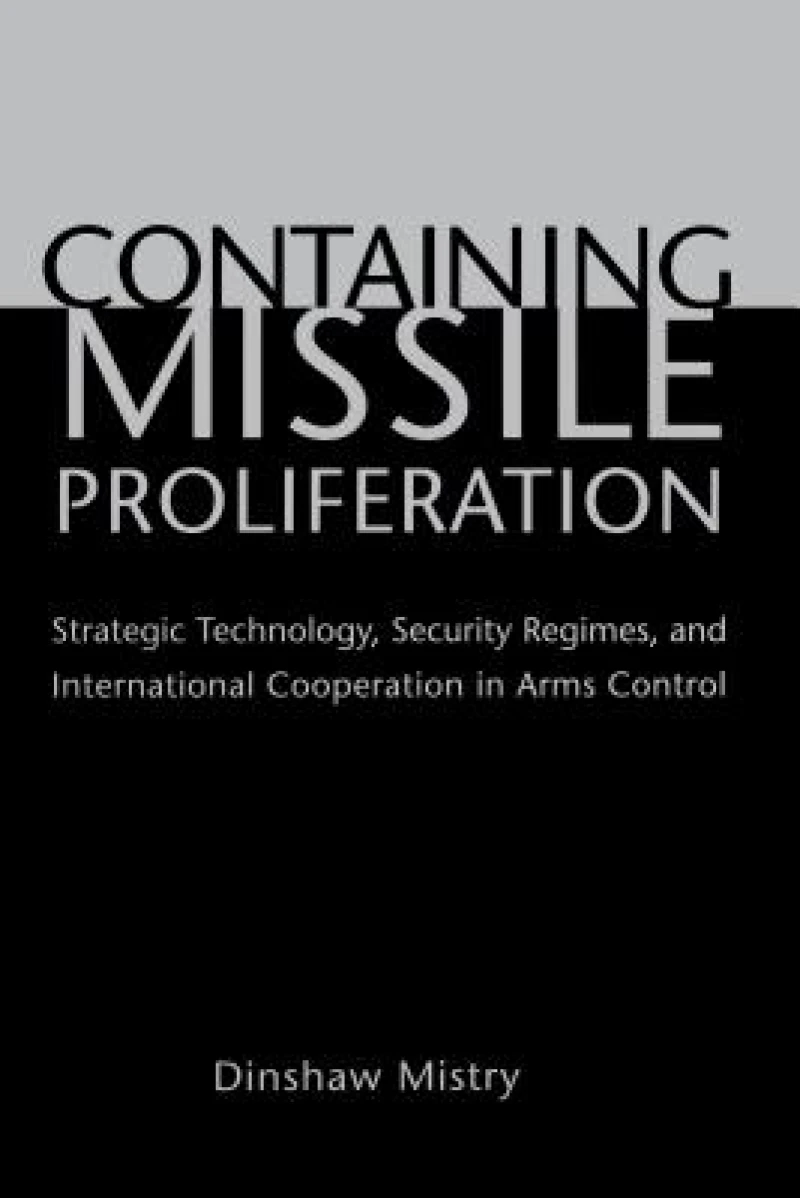
Containing Missile Proliferation – Strategic Technology, Security Regimes, and International Cooperation in Arms Control : Strategic Technology, Security Regimes, and International Cooperation in Arms Control
Book Details
Format
Paperback / Softback
ISBN-10
0295985070
ISBN-13
9780295985077
Publisher
University of Washington Press
Imprint
University of Washington Press
Country of Manufacture
US
Country of Publication
GB
Publication Date
Feb 1st, 2005
Print length
264 Pages
Weight
408 grams
Dimensions
22.90 x 15.60 x 2.00 cms
Product Classification:
United States of America, USAArms negotiation & controlArms negotiation and control
Ksh 5,900.00
Temporarily out of stock, due soon
0 in stock
Delivery Location
Delivery fee: Select location
Secure
Quality
Fast
If defenses fall short, strong security regimes will be necessary to contain missile proliferation. Since 1987, more than thirty states have agreed to restrict their transfer of missiles and related technologies under the Missile Technology Control Regime (MTCR).
The proliferation of ballistic missiles that can deliver weapons of mass destruction halfway across the world is a matter of growing urgency and concern, as is the fate of agreements limiting the development of such deadly weapons. The Bush administration’s scrapping of the ABM Treaty and pursuit of a huge National Missile Defense initiative are dramatic evidence of this concern. Yet there remains much uncertainty about the viability of missile defense. If defenses fall short, strong security regimes will be necessary to contain missile proliferation. Since 1987, more than thirty states have agreed to restrict their transfer of missiles and related technologies under the Missile Technology Control Regime (MTCR). During the MTCR’s first decade, several regional powers were thwarted from advancing their missile ambitions. Subsequently, however, states such as North Korea, Iran, Pakistan, India, and Israel have tested medium-range missiles and others have expanded their missile arsenals. Dinshaw Mistry critically examines the successes and limitations of the MTCR, and suggests five practical ways to strengthen the regime. The author’s exhaustive research offers new and detailed insights on the technology and politics of missile programs in Iran, Iraq, North Korea, Pakistan, India, Israel, Egypt, South Korea, Taiwan, and other countries. Mistry also shows how international cooperation, security regimes, and U.S. foreign policies of engagement and containment with these states can halt their missile programs. Mistry’s book is the first comprehensive study of the MTCR and of international efforts to contain missile proliferation. Policymakers, scholars, and the general reader will find this book a valuable contribution to the subjects of arms control, ballistic missile proliferation, multilateral cooperation, and international security regimes. For the author's update, go to http://www.washington.edu/uwpress/books/UpdateApril2009.pdf
Get Containing Missile Proliferation – Strategic Technology, Security Regimes, and International Cooperation in Arms Control by at the best price and quality guaranteed only at Werezi Africa's largest book ecommerce store. The book was published by University of Washington Press and it has pages.

