
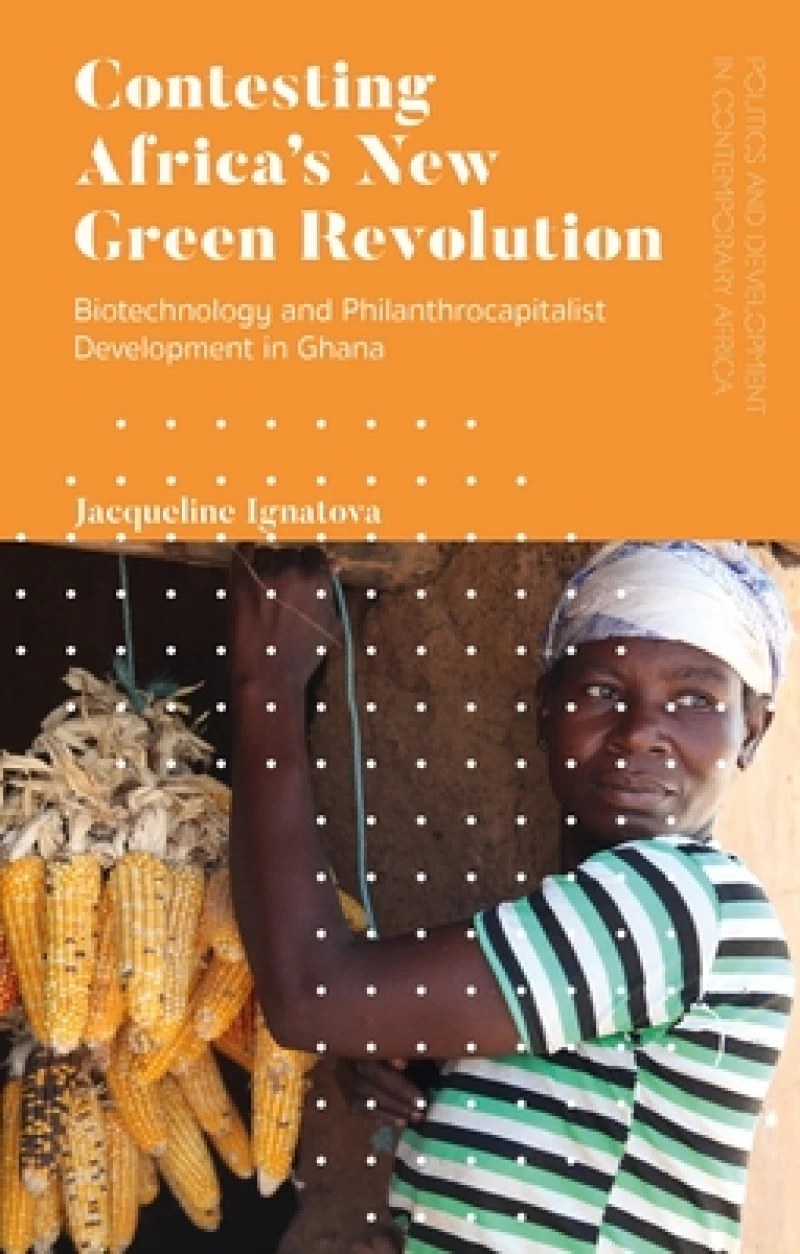
Contesting Africa’s New Green Revolution : Biotechnology and Philanthrocapitalist Development in Ghana
Book Details
Format
Paperback / Softback
Book Series
Politics and Development in Contemporary Africa
ISBN-10
1786996561
ISBN-13
9781786996565
Publisher
Bloomsbury Publishing PLC
Imprint
Zed Books Ltd
Country of Manufacture
GB
Country of Publication
GB
Publication Date
Dec 29th, 2022
Print length
216 Pages
Weight
340 grams
Dimensions
15.60 x 23.40 x 1.50 cms
Ksh 6,100.00
Manufactured on Demand
0 in stock
Delivery Location
Delivery fee: Select location
Secure
Quality
Fast
Genetically modified crops have become a key element of development strategies across the Global South, despite remaining deeply controversial. Proponents hail them as an example of ‘pro-poor’ innovation, while critics regard them as a threat to food sovereignty and the environment. The promotion of biotechnology is an integral part of ‘new Green Revolution for Africa’ interventions and is also intimately linked to the rise of ‘philanthrocapitalism,’ which advances business solutions to address the problem of poverty. Through interviews with farmers, policymakers and agricultural scientists, Jacqueline Ignatova shows how efforts to transform the seed sector in northern Ghana – one of the key laboratories of this ‘new Green Revolution’ – may serve to exacerbate the inequality it was notionally intended to address. But she also argues that its effects in Ghana have been far more complex than either side of the debate has acknowledged, with local farmers proving adept at blending traditional and modern agricultural methods that subvert the interests of global agribusiness.
Genetically modified crops have become a key element of development strategies across the Global South, despite remaining deeply controversial. Proponents hail them as an example of ‘pro-poor’ innovation, while critics regard them as a threat to food sovereignty and the environment. The promotion of biotechnology is an integral part of ‘new Green Revolution for Africa’ interventions and is also intimately linked to the rise of ‘philanthrocapitalism,’ which advances business solutions to address the problem of poverty. Through interviews with farmers, policymakers and agricultural scientists, Jacqueline Ignatova shows how efforts to transform the seed sector in northern Ghana – one of the key laboratories of this ‘new Green Revolution’ – may serve to exacerbate the inequality it was notionally intended to address. But she also argues that its effects in Ghana have been far more complex than either side of the debate has acknowledged, with local farmers proving adept at blending traditional and modern agricultural methods that subvert the interests of global agribusiness.
Get Contesting Africa’s New Green Revolution by at the best price and quality guaranteed only at Werezi Africa's largest book ecommerce store. The book was published by Bloomsbury Publishing PLC and it has pages.

