
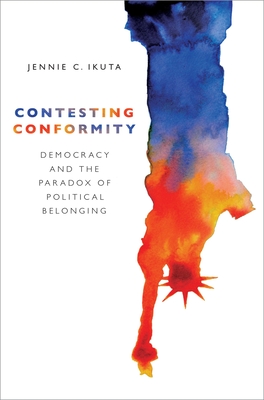
Contesting Conformity : Democracy and the Paradox of Political Belonging
Book Details
Format
Hardback
ISBN-10
0190087846
ISBN-13
9780190087845
Publisher
Oxford University Press Inc
Imprint
Oxford University Press Inc
Country of Manufacture
US
Country of Publication
GB
Publication Date
Jun 22nd, 2020
Print length
192 Pages
Weight
440 grams
Dimensions
17.50 x 24.20 x 2.10 cms
KSh 11,050.00
Temporarily out of stock, due soon
0 in stock
Delivery Location
Delivery fee: Select location
Secure
Quality
Fast
Contesting Conformity investigates the writings of Tocqueville, Mill, and Nietzsche in order to examine the relationship between non-conformity and modern democracy. Jennie Ikuta argues that non-conformity is an intractable issue for democracy while non-conformity is often important for cultivating a just polity, non-conformity can also undermine democracy. Democracy therefore needs non-conformity, but not in an unconditional way. This book examines this intractable relationship, and offers resources for navigating the relationship in contemporary democracies in ways that promote justice and freedom.
Americans valorize resistance to conformity. "Be yourself!" "Don''t just follow the crowd!" Such injunctions pervade contemporary American culture. We praise individuals such as Martin Luther King Jr. and Steve Jobs who chart their own course in life and do something new. Yet surprisingly, recent research in social psychology has shown that, in practice, Americans are averse and at times, even hostile to individuals who express traits associated with non-conformity, such as individuality, free judgment, and creativity. This disjunction between our public rhetoric and practice raises fundamental questions: Why is non-conformity valuable? Is it always valuable-or does it pose dangers as well as promise benefits for democratic societies? What is the relationship between non-conformity as an individual ideal and democracy as a form of collective self-rule? Contesting Conformity provides a new interpretive lens to the writings of Alexis de Tocqueville, John Stuart Mill, and Friedrich Nietzsche to investigate non-conformity and its relationship to modern democracy. While there are important differences among them, all three thinkers worry that certain aspects of democracy--namely, the power of public opinion, the tyranny of social majorities, and the commitment to moral equality--encourage conformity, thus suppressing dissent, individuality, and creativity. Taken together, Tocqueville, Mill, and Nietzsche show us that to the extent that we are committed to democracy, we must find ways to foster non-conformity, but we must do so within certain moral and political constraints.Drawing new insight from their work, Jennie Ikuta argues that non-conformity is an intractable issue for democracy. While non-conformity is often important for cultivating a just polity, non-conformity can also undermine democracy. In other words, democracy needs non-conformity, but not in an unconditional way. This book examines this intractable relationship, and offers resources for navigating the relationship in contemporary democracies in ways that promote justice and freedom.
Get Contesting Conformity by Jennie C. Ikuta at the best price and quality guaranteed only at Werezi Africa's largest book ecommerce store. The book was published by Oxford University Press Inc and it has 192 pages.
Customers Who Bought This Also Bought

End of History and the Last Man
KSh 2,700.00

12 Rules for Life
KSh 2,350.00

The 48 Laws of Power
KSh 4,700.00

Second Treatise of Government – Norton Library
KSh 1,600.00

Discipline and Punish
KSh 2,350.00

The Prince The Original Classic
KSh 2,150.00

How to Be a Leader – An Ancient Guide to Wise Leadership
KSh 2,800.00

The Origin of Others
KSh 3,600.00
Outlines of the Philosophy of Right
KSh 2,500.00

How Fascism Works
KSh 2,900.00

The Prince
KSh 1,800.00

Who''s Afraid of Gender?
KSh 2,350.00
