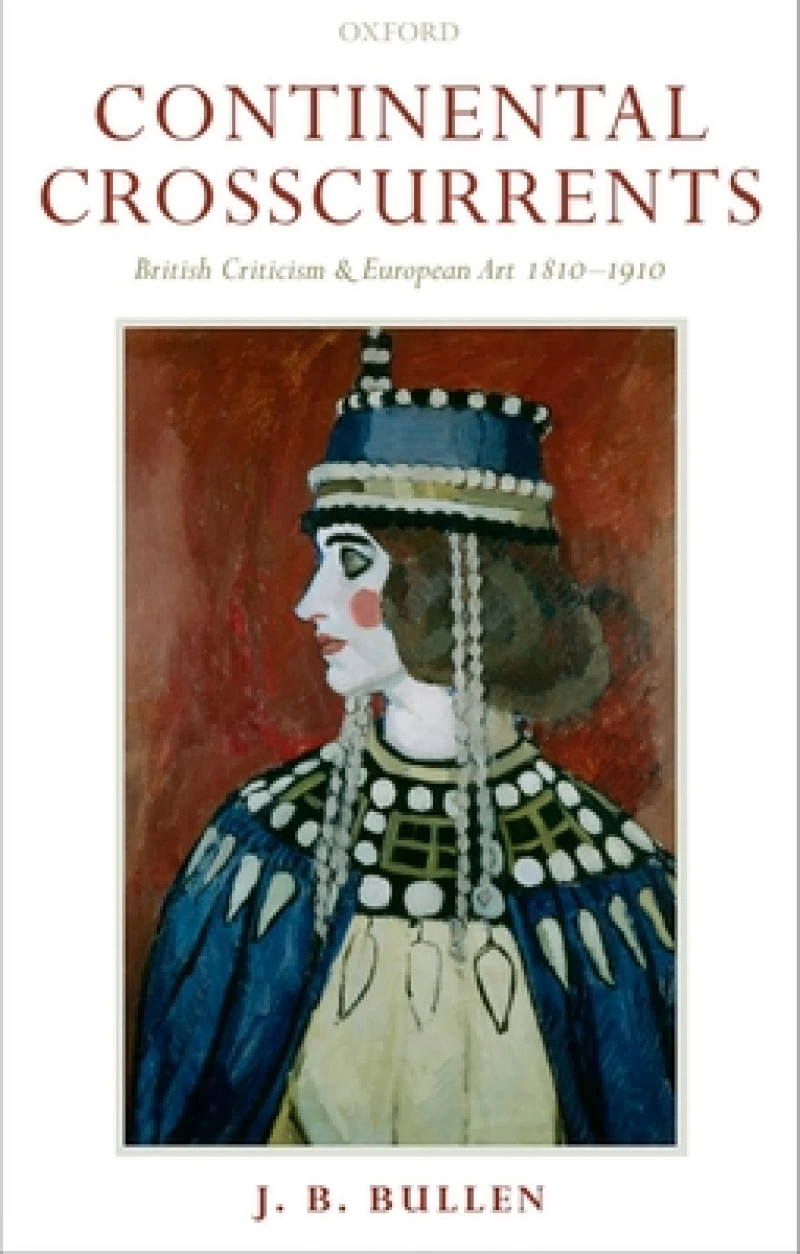
Continental Crosscurrents : British Criticism and European Art 1810-1910
by
J. B. Bullen
Book Details
Format
Hardback or Cased Book
ISBN-10
0198186916
ISBN-13
9780198186915
Publisher
Oxford University Press
Imprint
Oxford University Press
Country of Manufacture
GB
Country of Publication
GB
Publication Date
Aug 25th, 2005
Print length
308 Pages
Weight
532 grams
Dimensions
22.60 x 14.20 x 2.70 cms
Ksh 5,450.00
Temporarily out of stock, due soon
0 in stock
Delivery Location
Delivery fee: Select location
Secure
Quality
Fast
Explores British attitudes to continental art during the nineteenth and early twentieth centuries and reveals some connections. This book explores Coleridge's enthusiasm for medieval art and Browning's distaste for Nazarene painting. It concludes with the British reaction to the primitivism of Gauguin.
Continental Crosscurrents is a series of case studies reflecting British attitudes to continental art during the nineteenth and the early twentieth centuries. It stresses the way in which the British went to the continent in their search for origins or their pursuit of sources of purity and originality. This cult of the primitive took many forms; it involved a reassessment of medieval German and Italian art and offered new ways of interpreting Venetian painting; it opened up new readings of architectural history and the ''discovery'' of the Romanesque; it generated a debate about the value of returning to religious subjects in art and it raised the question of the relationship between modern art and Byzantine art in the early twentieth century.J. B. Bullen''s original study presents some exciting findings. Few critics have noticed how much in advance of his time was Coleridge''s passion for medieval art; Ruskin''s debt in the Stones of Venice to Victor Hugo''s Notre Dame de Paris has hardly been noted, and Browning''s involvement with the debate on the morality of Christian art is explored more extensively than previously. Three chapters are devoted to the role of British criticism in identifying the Romanesque style in architecture and differentiating it from the Gothic. They trace the concept as it arose in criticism at the beginning of the nineteenth century; its employment in the remarkable buildings of Edmund Sharpe and Sara Losh and the way in which it reached a climax in Waterhouse''s enigmatic choice of Romanesque for the Natural History Museum in London. The collection concludes with two continental episodes from the history of modernism. One is the explosive British reaction to the primitivism of Gauguin; the other involves the identifying of one of the characters in D. H. Lawrence''s novel Women in Love. Curious evidence suggests that the malevolent figure of Loerke was based on a German sculptor whom Lawrence met in Italy before the First World War.
Get Continental Crosscurrents by at the best price and quality guaranteed only at Werezi Africa's largest book ecommerce store. The book was published by Oxford University Press and it has pages.