
Search

Categories

    • categories-img Jacket, Women
    • categories-img Woolend Jacket
    • categories-img Western denim
    • categories-img Mini Dresss
    • categories-img Jacket, Women
    • categories-img Woolend Jacket
    • categories-img Western denim
    • categories-img Mini Dresss
    • categories-img Jacket, Women
    • categories-img Woolend Jacket
    • categories-img Western denim
    • categories-img Mini Dresss
    • categories-img Jacket, Women
    • categories-img Woolend Jacket
    • categories-img Western denim
    • categories-img Mini Dresss
    • categories-img Jacket, Women
    • categories-img Woolend Jacket
    • categories-img Western denim
    • categories-img Mini Dresss

Filter By Price

$
-
$

Dietary Needs

Top Rated Product

product-img product-img

Modern Chair

$165.00
product-img product-img

Plastic Chair

$165.00
product-img product-img

Design Rooms

$165.00

Brands

  • Wooden
  • Chair
  • Modern
  • Fabric
  • Shoulder
  • Winter
  • Accessories
  • Dress

Welcome and thank you for visiting us. For any query call us on 0799 626 359 or Email [email protected]

Offcanvas Menu Open

Shopping Cart

Africa largest book store

Sub Total:

Search for any Title

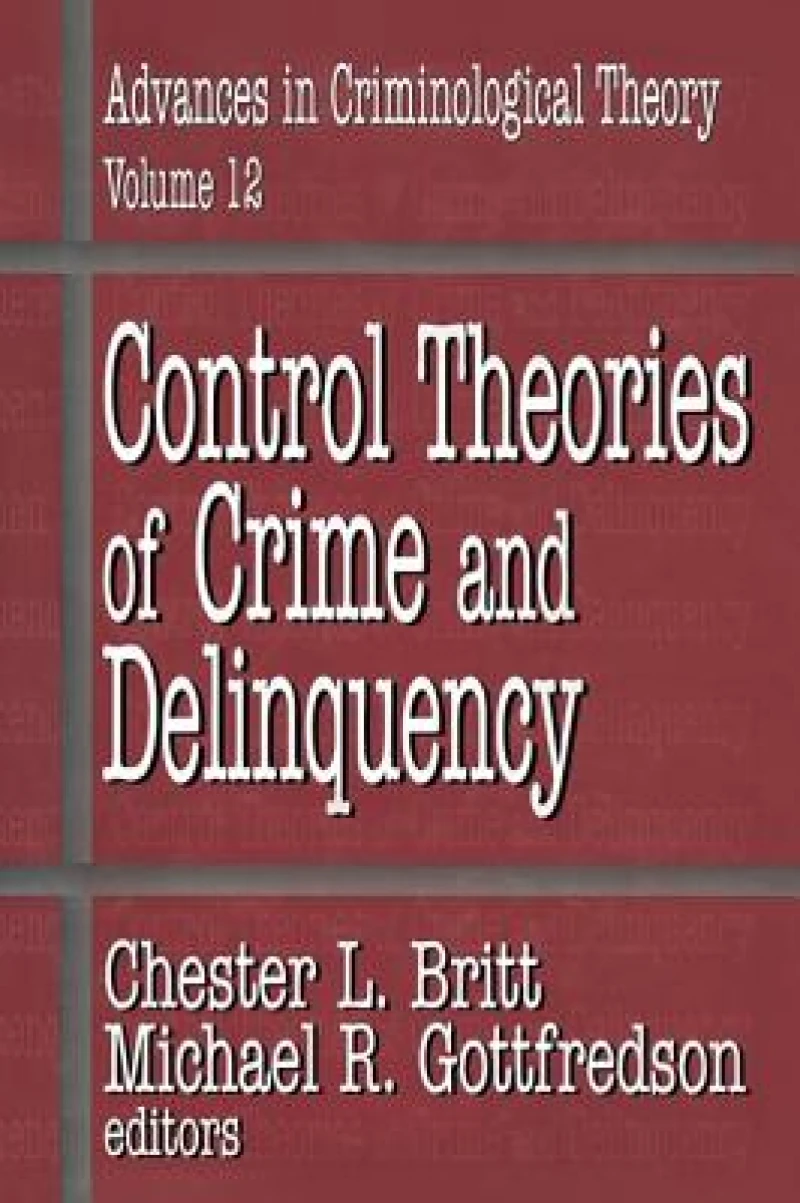
Control Theories of Crime and Delinquency

By: (Edited by) Chester L. Britt , (Edited by) Michael R. Gottfredson

Werezi Extended Catalogue
Delivery in 34 days

Ksh 8,300.00

Format: Paperback / Softback

ISBN-10: 1138508594

ISBN-13: 9781138508590

Series: Advances in Criminological Theory

Publisher: Taylor & Francis Ltd

Imprint: Routledge

Country of Manufacture: GB

Country of Publication: GB

Publication Date: Jan 29th, 2018

Print length: 290 Pages

Weight: 436 grams

Dimensions (height x width x thickness): 15.40 x 22.80 x 2.80 cms

Product Classification: Crime & criminology

Choose your Location

Shipping & Delivery

Door Delivery

Delivery fee

Delivery in 34 days

  • Description

  • Reviews

Amajor shift in critical attitudes toward the arts took place in the eighteenth century. The fine arts were now looked upon as a group, divorced from the sciences and governed by their own rules. The century abounded with treatises that sought to establish the overriding principles that differentiate art from other walks of life as well as the principles that differentiate them from each other. This burst of scholarly activity resulted in the incorporation of aesthetics among the classic branches of philosophy, heralding the cognitive turn in epistemology. Among the writings that initiated this turn, none were more important than the British contribution. The Arts in Mind brings together an annotated selection of these key texts.A companion volume to the editors'' Tuning the Mind, which analyzed this major shift in world view and its historical context, The Arts in Mind is the first representative sampling of what constitutes an important school of British thought. The texts are neither obscure nor forgotten, although most histories of eighteenth-century thought treat them in a partial or incomplete way. Here they are made available complete or through representative extracts together with an editor''s introduction to each selection providing essential biographical and intellectual background. The treatises included are representative of the changed climate of opinion which entailed new issues such as those of perception, symbolic function, and the role of history and culture in shaping the world.>

For the past twenty to thirty years, control theories of crime have been at the center of theoretical development in criminology. Key to the control theory perspective is the notion that crime is an inherently individual act, and its explanation requires that we focus on the characteristics of individuals who commit crimes. Consequently, control theory focuses on such issues as self-control and social control.

The contributions to this volume explicate and extend the application of control theory. It is divided into three general areas. Part 1 focuses on key assumptions and components of control theories. Contributors discuss the notion of learning, or socialization, in the context of control theory and the effects that families, peers, and the criminal justice system have on self-control, social ties, and criminal behavior.

Part 2 applies control theory to areas typically assumed to be out of the domain of self-control theory and social control theory, such as gender differences in crime, domestic violence, and group crime. Considering control theory''s emphasis on explaining individual criminal acts, these chapters suggest an interesting area of development by highlighting the possibility that differences in crime across or within groups may begin with individual characteristics and then making inferences about groups and group processes.

Part 3 approaches the explanation of crime cross-nationally and at the macro-level. Although the authors take different approaches, they all illustrate that a theory of crime does not require culture-specific elements in order to be a valid cross-cultural explanation. Contributors to this volume include: Robert Agnew, Todd Armstrong, Leana Allen Bouffard, Augustine Brannigan, Chester Britt, Barbara Costello, Maja Dekovic, Matt DeLisi, Michael Gottfredson, Henriette Haas, Kelly H. Hardwick, Travis Hirschi, Marianne Junger, Martin Killias, Helen Mederer, Kevin Thompson, and Alexander Vazsonyi.


Get Control Theories of Crime and Delinquency by at the best price and quality guranteed only at Werezi Africa largest book ecommerce store. The book was published by Taylor & Francis Ltd and it has pages. Enjoy Shopping Best Offers & Deals on books Online from Werezi - Receive at your doorstep - Fast Delivery - Secure mode of Payment

Customer Reviews

Based on 0 reviews

Mind, Body, & Spirit
