
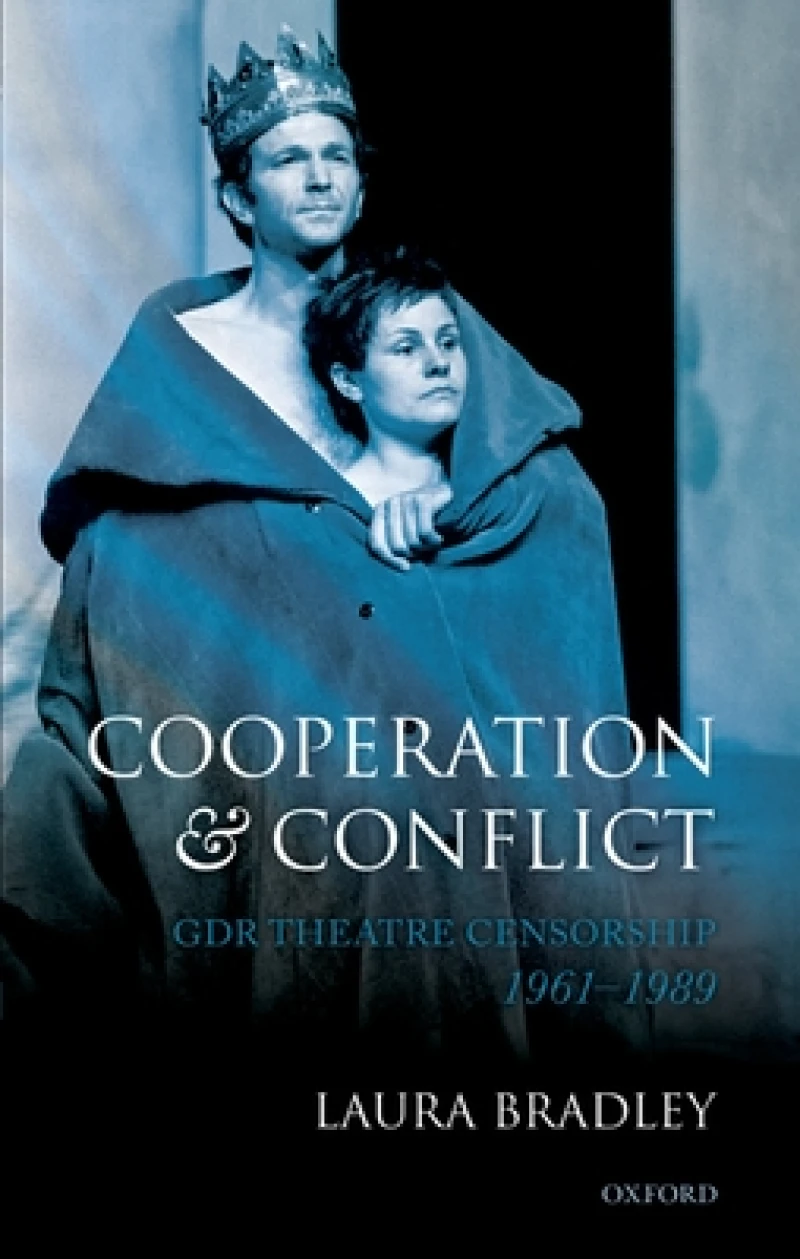
Cooperation and Conflict : GDR Theatre Censorship, 1961-1989
Book Details
Format
Hardback or Cased Book
ISBN-10
0199589631
ISBN-13
9780199589630
Publisher
Oxford University Press
Imprint
Oxford University Press
Country of Manufacture
GB
Country of Publication
GB
Publication Date
Oct 28th, 2010
Print length
328 Pages
Weight
530 grams
Dimensions
22.30 x 14.80 x 2.70 cms
Ksh 27,300.00
Werezi Extended Catalogue
0 in stock
Delivery Location
Delivery fee: Select location
Secure
Quality
Fast
Drawing on material from previously secret archives, this study explores how theatre was censored in the GDR from 1961 to 1989. By examining a range of case studies, from banned stagings to those that met with official approval, the book reveals the shifting patterns of cooperation and conflict that shaped the space for theatrical experimentation.
Despite all the evidence to the contrary, the authorities in the German Democratic Republic always denied that they practised censorship. In this fascinating new study, Laura Bradley explores how the authorities'' denial affected the language and experience of theatre censorship. She shows that it left theatre practitioners doubly exposed: they remained officially responsible for their productions, even if the productions had passed pre-performance controls. In the absence of a fixed set of criteria, cultural functionaries had to make difficult judgements about which plays and productions to allow, and where to draw the line between constructive criticism and subversion. Drawing on a wealth of new archive material, the study explores how theatre practitioners and functionaries negotiated these challenges between 1961 and 1989. The chapters in Part I explore theatre censorship in East Berlin, asking how the controls affected different genres, and how theatre practitioners responded to the construction of the Berlin Wall, the Prague Spring, and the expatriation of Wolf Biermann. Part II broadens the focus to the regions, investigating why theatre practitioners complained of strong regional variations in theatre censorship, and how they responded to Mikhail Gorbachev''s policies of glasnost and perestroika. By examining a range of case studies, from banned stagings to those that met with official approval, the book puts high-profile disputes back into context. It shows how censorship operated through human negotiation, illuminating the shifting patterns of cooperation and conflict that influenced the space available for theatrical experimentation.
Get Cooperation and Conflict by at the best price and quality guaranteed only at Werezi Africa's largest book ecommerce store. The book was published by Oxford University Press and it has pages.

